


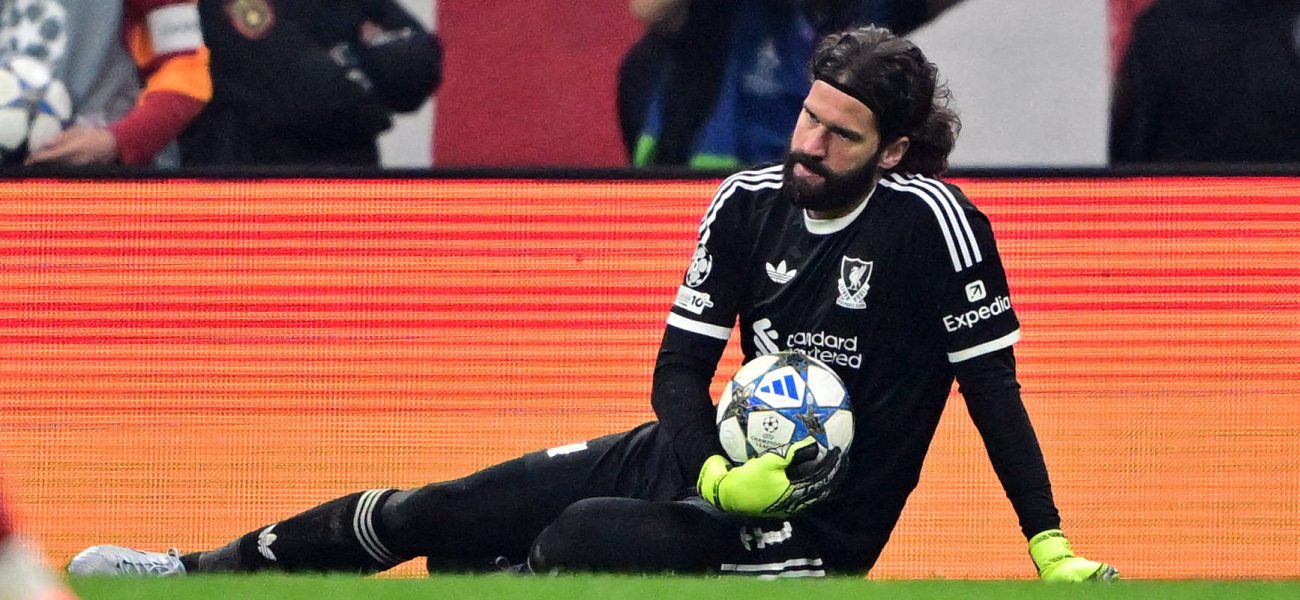
The Price of Poise: Alisson Becker’s Potential Turin Tango and Anfield’s Economic Reckoning
POLICY WIRE — London, UK — The silent trade routes of Europe’s top-tier football are bustling again, less with flashy promises and more with the quiet inevitability of professional calculation....

POLICY WIRE — London, UK — The silent trade routes of Europe’s top-tier football are bustling again, less with flashy promises and more with the quiet inevitability of professional calculation. Alisson Becker, Liverpool’s stoic Brazilian sentinel, appears to be charting a course for Turin, a move that speaks volumes about the ruthless churn of modern sports — and about Juventus’s desperate need for a calm, influential presence after a season marred by uncertainty. This isn’t just a player swap; it’s a recalibration, a strategic chess move on the global pitch.
It’s a peculiar thing, this magnetism of perceived decline. Gazzetta dello Sport recently whispered (and loudly, by all accounts) that Juventus had made fresh contact for the keeper. And the shocker? Alisson, it seems, remains utterly convinced by the Old Lady’s ‘project,’ even if their immediate future is clouded by the specter of Europa League nights instead of the glittering Champions League. But doesn’t that make sense? For a player whose career has been a masterclass in resilience and consistent excellence, the challenge of elevating a fallen giant might hold a deeper allure than cruising in an established juggernaut.
Liverpool, for their part, aren’t exactly caught flat-footed. After eight extraordinary seasons, where Alisson transformed their backline into a bastion of calm, the club has been pragmatic. They’ve planned for succession. But that doesn’t make the departure of such a foundational piece any easier to swallow for the Anfield faithful. He’s been their rock, the steady hand amidst chaos. But even rocks erode, don’t they?
“We’re always planning for evolution, not just reaction,” a Liverpool FC Director of Football Operations, who requested anonymity to speak candidly about player movements, told Policy Wire. “No individual is bigger than the collective project, and financial prudence demands a proactive approach to squad management.” It’s a sentiment as old as the transfer window itself, yet still stings when applied to beloved figures. They’ll argue it’s merely business. And in this brutal economic landscape, they’re probably right.
Meanwhile, in Italy, Juventus isn’t just seeking a goalkeeper; they’re scouting a saviour, a figurehead. Their fan base, still reeling from a tumultuous few years—including points deductions and off-field drama—is restless. “Alisson brings more than just saves; he brings a presence, a winning mentality that frankly, we’ve missed,” Paolo Montero, Juventus’ interim Sporting Director, reportedly stated during a press briefing. He was careful, of course, referring to the potential recruit’s general attributes, but the underlying message was clear: they need someone who doesn’t just stop shots, but stops the rot.
Consider the scale: Football’s global revenue, estimated by Deloitte to reach nearly $55 billion in 2024, is fuelled by exactly this kind of narrative. This constant churn of elite talent isn’t just about trophies; it’s a global commodity, passionately consumed from the bustling markets of Lahore to the quiet villages of Andalusia. European clubs, keenly aware of their vast, distant fan bases—millions of them in the Subcontinent and the broader Muslim world—often factor in global brand resonance and accessibility for merchandise and media rights when making these colossal financial and personnel decisions. It’s an economy built on emotion, with very hard fiscal implications.
What This Means
This transfer saga, far from being just a footnote in sports pages, offers a fascinating glimpse into the current geopolitical and economic currents coursing through European football. For Liverpool, letting Alisson go, even with Giorgi Mamardashvili seemingly waiting in the wings, highlights the cold reality of managing elite assets. They’re weighing the emotional capital against the financial injection (and potential wage relief) a big sale provides, especially when planning significant squad overhauls under a new managerial era. But it also demonstrates a confidence in their analytics-driven succession planning, which few clubs can truly boast. This isn’t a blind sale; it’s calculated.
For Juventus, securing a player of Alisson’s caliber—a proven winner who’s been part of multiple successful projects—is a bold statement of intent. It says they’re not just accepting their Europa League fate, but actively strategizing to climb back to the top table. But it’s also a significant gamble, financially — and in terms of player integration into a possibly dispirited squad. The economic ramifications are considerable; even if a deal happens, the substantial transfer fee and wages reflect an underlying financial strength or perhaps, a daring fiscal leveraging in the hope of immediate sporting dividends. The decision has a ripple effect beyond the pitch, influencing everything from sponsorship deals to broadcasting revenues that hinge on a club’s continental standing. Because prestige sells, in football as much as anything else. The whole thing underlines how Old Europe’s established giants are scrambling to retain their grip in a rapidly evolving, financially aggressive landscape.
The global reach of such transfers can’t be overstated. Millions across the world, from Karachi to Casablanca, track these sagas, cementing their allegiances to clubs far removed from their physical borders. This intense viewership provides the monetary lifeblood for these European behemoths, making player valuations and transfer movements central to their business models. So, when a figure like Alisson, an emblem of peak performance, shifts allegiances, it resonates through fan bases and financial markets alike. It’s not just a game; it’s big business.