


Kyiv’s Shadow Play: Hopes of a Family Shattered by the Routine Thunder of War
POLICY WIRE — Kyiv, Ukraine — Another Wednesday. Another missile barrage. The residents of Ukraine’s capital, frankly, have grown grimly accustomed to the siren’s shriek, the...

POLICY WIRE — Kyiv, Ukraine — Another Wednesday. Another missile barrage. The residents of Ukraine’s capital, frankly, have grown grimly accustomed to the siren’s shriek, the subsequent thud-and-tremor of Russian ordnance finding its mark somewhere in their expansive city. But even as this chilling routine calcifies, its brutal arithmetic continues to claim lives, to erase futures with an almost surgical — and sometimes terribly random — precision. It isn’t just about buildings collapsing; it’s about the very concept of ‘tomorrow’ being detonated.
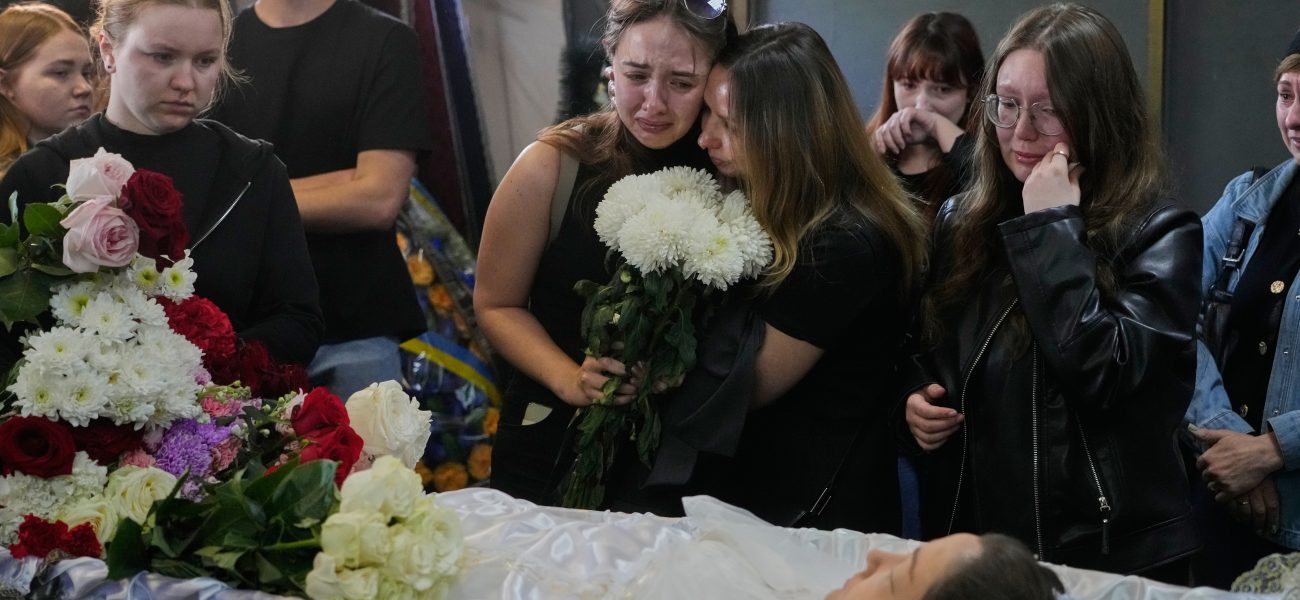
Take Olena and Dmytro, for instance. They weren’t soldiers. They didn’t run a government office. They were just, well, a young couple, navigating life in a warzone. Both in their late twenties, their days apparently revolved around work, quiet evenings, and the mundane joy of simply existing together. Mourners, cloaked in the somber Kyiv twilight, spoke of their dreams — ordinary dreams, mind you, like starting a family. And just like that, with one sickening concussive blow from a Russian cruise missile, that quiet future became, as so many here have learned, another unwritten chapter.
It’s this intimate destruction, this shattering of micro-futures, that often gets lost amidst the macro-narratives of geopolitical struggle and casualty counts. The UN High Commissioner for Human Rights (OHCHR) has documented at least 10,000 confirmed civilian deaths in Ukraine since Russia’s full-scale invasion began in February 2022. But that’s a number, isn’t it? Olena and Dmytro? They were two individuals who became part of that tally, indistinguishable statistical increments in a horror story that never seems to end.
Ukrainian Presidential Advisor Mykhailo Podolyak didn’t mince words following the strike. “They talk about ‘precision strikes’,” he seethed, his voice dripping with barely concealed fury. “But these are simply terror. Terror designed to break our spirit. It won’t work, but the world shouldn’t forget what that ‘precision’ costs.” He’s right. The cost isn’t just financial, though Ukraine’s economy struggles mightily under the weight of sustained conflict, forcing Kyiv to eye long-term recovery plans and international aid with a desperation that can be tough for outsiders to grasp.
Across continents, the reverberations of this distant thunder are also felt. Pakistan, for example, along with other South Asian and Muslim-majority nations, finds itself increasingly buffeted by the economic ripples of this conflict. Grain prices fluctuate wildly, and global energy markets — disrupted by the war and subsequent sanctions — send inflationary spikes tearing through economies already stretched thin. This isn’t just Europe’s problem; it’s a global hemorrhage. Countries already wrestling with their own domestic stability challenges — some engaged in their own delicate diplomatic dances like India and Pakistan — watch the global financial chessboard shift beneath their feet, impacted by events thousands of miles away.
📄 POLICY WIRE WHITEPAPER PUBLISHED: PAKISTAN'S NATIONAL SECURITY POLICY PRIORITIES
👉 READ BY CLICKING HEREThe human toll — immediate — and indirect — is truly breathtaking. Diplomatic rhetoric from international bodies, while important, often seems to glide over the visceral realities. “We’ve expressed our deep concern over the escalating violence targeting civilian infrastructure,” stated a UN Security Council diplomat, speaking on background. “Such acts contravene international humanitarian law, and we urge all parties to de-escalate.” Fine words, aren’t they? But Olena — and Dmytro aren’t around to hear them. Nor are they around to benefit from any future ‘de-escalation.’ That’s the bitter pill.
What This Means
The tragedy of Olena and Dmytro isn’t an isolated incident; it’s a stark, bloody underscore of Russia’s strategy: attrition. They aim to wear down Ukraine’s will, both military and civilian, and to cripple its ability to function as a sovereign nation. The relentless targeting of urban areas, often under the dubious guise of striking ‘military targets,’ isn’t incidental. It’s part of a design to create a persistent state of fear, to drain morale, — and to force a political concession.
Economically, these strikes, while geographically focused, have consequences that ripple far wider. They destabilize crucial supply chains for goods ranging from foodstuffs to industrial materials, influencing commodity prices globally. For nations already teetering on the edge of economic instability — in the Middle East, South Asia, and Africa — this conflict adds another layer of unwelcome volatility. It’s a harsh reminder that what happens in Kyiv can profoundly impact someone’s dinner plate in Karachi. the constant humanitarian crisis strains global aid mechanisms, redirecting resources and attention from other areas in desperate need. This war isn’t just about Ukraine; it’s about the fracturing of an international order — and its consequences touch everyone.