


Erie’s Nightly Reckoning: A Plea for Darkness as Avian Commuters Face City Lights
POLICY WIRE — Erie, Pennsylvania — They don’t hold protests, these transient sky-travelers. They don’t file formal complaints or send terse diplomatic communiques. But for millions of birds...

POLICY WIRE — Erie, Pennsylvania — They don’t hold protests, these transient sky-travelers. They don’t file formal complaints or send terse diplomatic communiques. But for millions of birds passing through Erie each year, the city’s nightly glow has become an existential obstacle, prompting officials to issue an unusual directive: turn down the wattage, please.
It’s a peculiar plea in a world obsessed with illumination, a tacit acknowledgment that humanity’s perpetual night-time blaze might just be, well, too much. This isn’t about saving a few bucks on the electric bill. It’s about a silent, mass casualty event playing out annually—an avian massacre, really—largely unnoticed by the very people causing it. But the scientists? They’re definitely noticing.
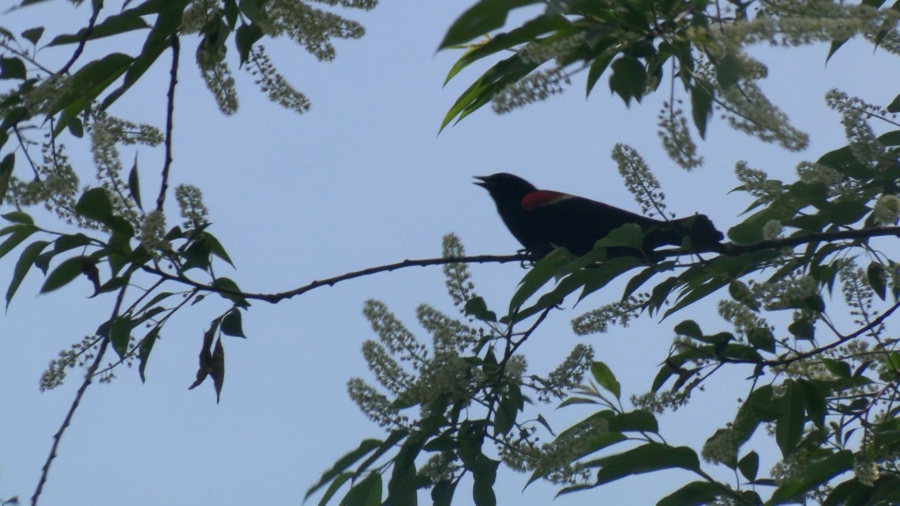
Because spring, like clockwork, brings hordes of migrating birds to the Lake Erie shoreline. These aren’t casual tourists; they’re creatures on an epic, instinct-driven odyssey, some traveling thousands of miles. They navigate by the stars, by Earth’s magnetic field—ancient maps encoded in their DNA. And then, wham. City lights. Confused, disoriented, they fly into buildings, circle until exhaustion grounds them, or become easy prey.
And it’s a colossal problem, too, not some niche concern. According to research published by the Cornell Lab of Ornithology, an estimated 1 billion birds meet their end annually in the United States alone due to collisions with structures, with artificial light pollution identified as a major contributing factor. One billion. Let that number sink in. That’s a lot of feathered fatalities just because we’re leaving the porch light on.
“We’re asking folks for a small sacrifice for a huge ecological gain,” said Dr. Eleanor Vance, an avian biologist with the Pennsylvania Department of Environmental Protection, her voice tinged with a weariness that only years of fighting an uphill battle can instill. “These birds, they’re just following millennia-old paths. Our lights throw them completely off course. It’s like trying to navigate by a lighthouse that’s suddenly sprung up in your backyard.”
The call to action from Erie’s environmental agencies — and wildlife groups isn’t exactly new. But what’s noteworthy is the intensified urgency, coupled with a broader awareness campaign. It isn’t just about residents flicking a switch; businesses and municipal buildings are being asked to participate, too, often through ‘lights out’ campaigns during peak migration periods. It’s a logistical nightmare for some, sure, but the biological stakes, they contend, couldn’t be higher.
“It’s about being good neighbors, even to those who just pass through our airspace,” mused Councilwoman Brenda K. Davies of the Erie City Council during a recent community outreach event. “It’s easy to focus on human squabbles — political football or neighborhood grievances. But sometimes, the bigger picture—the natural world around us—demands our attention. It demands action. And it doesn’t cost us much, financially anyway, to just dim it down a bit.”
But this isn’t just a quaint, local Erie issue. Oh no. The problem echoes globally. From the ever-expanding metropolises of Western Europe to the rapidly industrializing plains of South Asia, the artificial glow of human endeavor disrupts nocturnal ecosystems with increasing ferocity. Birds navigating crucial flyways that stretch from Siberia to the Arabian Sea face similarly disorienting urban light traps in places like Lahore or Karachi. They don’t recognize international borders, these birds; they just know instinct and the deadly pull of an unnaturally bright horizon. Just as global diplomacy often calls for careful navigation and shared understanding, a sentiment echoed in analyses like Pakistan Keeps the Peace Alive, conservation efforts now demand a globally coordinated, borderless approach to these shared ecological challenges. It’s a collective mess, this light pollution.
Casual observers might chuckle at the notion, maybe call it an overly sensitive concern in a world ablaze with bigger conflagrations. But scientists warn it’s one more thread frayed in the environmental tapestry, one more small thing contributing to a much larger decline in biodiversity. It’s not just the glamour species, the raptors or the shorebirds, but common songbirds, essential for insect control and ecosystem health, that are suffering.
What This Means
The campaign in Erie, and similar efforts popping up across North America, holds more weight than a simple request to darken windows. Politically, it represents a slow but definite shift in urban environmental policy, pushing past grand, expensive infrastructure projects to embrace subtle behavioral changes. Expect to see more municipal ordinances or incentives aimed at reducing light trespass, especially in cities situated along major migratory corridors. Economically, while initial compliance might incur minor costs for smart lighting upgrades, the long-term impact on biodiversity can’t be understated, with implications for agriculture, pest control, and ecotourism. And, parenthetically, less unnecessary lighting means lower energy consumption, which has its own downstream effects. But it also underscores a growing public recognition that even our smallest, seemingly innocuous actions have widespread environmental repercussions—a sobering thought when considering the vast, complex web of life that sustains us all.