


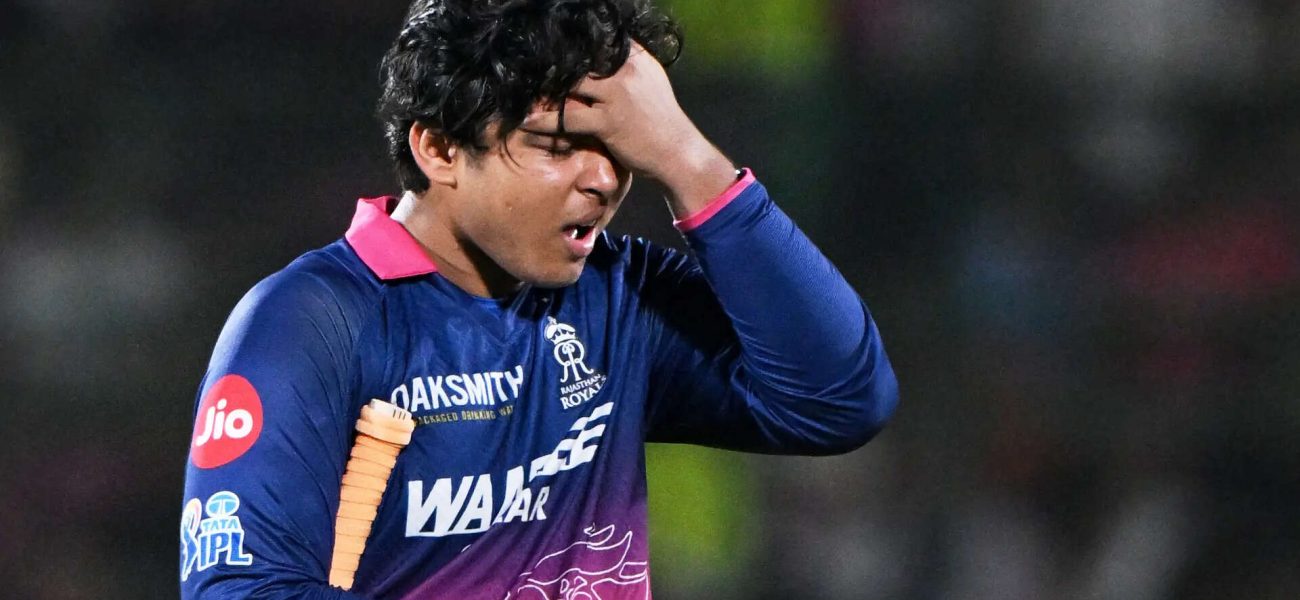
Jaipur’s Teenage Gambit: When Economic Recklessness Pays Off on the Green Felt
POLICY WIRE — New Delhi, India — Forget the genteel afternoon tea at Lord’s, or the slow, strategic chess of Test cricket. India’s premier Twenty20 circus—the Indian Premier League (IPL)—is less...

POLICY WIRE — New Delhi, India — Forget the genteel afternoon tea at Lord’s, or the slow, strategic chess of Test cricket. India’s premier Twenty20 circus—the Indian Premier League (IPL)—is less sport and more a rolling, high-stakes financial derivatives market, played out on manicured green pitches under dazzling floodlights. And when a 15-year-old kid—yes, a literal teenager—starts smacking balls for fun, it’s not just a cricketing story; it’s an economic indicator. A loud, booming one.
Vaibhav Sooryavanshi, a name few outside the deepest corners of Rajasthan’s cricketing faithful knew just weeks ago, has abruptly changed all that. The kid isn’t old enough to drive a car, but he’s already driving multi-million dollar franchise hopes, swinging a wooden plank with the abandon of a street fighter and the precision of a day trader. In Jaipur, against the Lucknow Super Giants, he put on a performance that wasn’t merely thrilling; it was a brutal demonstration of raw, marketable power. He hammered 93 runs off a paltry 38 deliveries, orchestrating an improbable chase of 221 runs, a score that usually sends shivers down veteran spines. Rajasthan Royals didn’t just win; they swaggered away, Sooryavanshi leading the charge.
It was a breathless display, punctuated by ten soaring sixes. Each ball disappearing into the stands wasn’t just a cheer for the Royals; it was a testament to the immense capital flowing into the Indian sports ecosystem. But really, it shows the sheer audaciousness of youth, particularly when harnessed by professional sports leagues.
“That kid’s not just ready; he’s already signed his future contract in neon lights, demanding top dollar. He just doesn’t know it yet,” observed veteran commentator Ian Bishop, almost incredulously, capturing the zeitgeist of a market perpetually hungry for the next big thing. And Sooryavanshi? He’s it.
His performance didn’t just salvage Rajasthan’s playoff dreams. It injected another surge of interest into an already oversaturated market, validating the astronomical sums teams pay for players, even those who might still need help tying their shoelaces. This particular match felt less like a sporting contest — and more like an IPO launch for a future sporting titan.
Because let’s be honest, the IPL isn’t just about cricket anymore. It’s about national brand building, talent acquisition, and, increasingly, soft power. Consider the immense gap between the IPL’s economic engine — and that of other South Asian cricketing nations. While Pakistan, for instance, grapples with establishing its own league on a similar scale amidst perennial security and financial concerns, India’s juggernaut continues to hoover up talent and advertising revenue at an unprecedented rate. According to a 2023 report by Statista, the IPL’s brand value has soared past $8 billion, a figure that frankly dwarfs the entire annual sports budget of some smaller nations in the region. That’s a chasm, not just a gap.
Alok Singh, a former Indian Ministry of Commerce and Industry spokesperson, once remarked, “These young players aren’t just scoring runs; they’re generating immense economic value, creating a new wave of aspiration and investment in our sporting economy. It’s a prime example of India’s demographic dividend playing out on the global stage.” And this performance, it pretty much shouts that from the rooftops.
The Lucknow Super Giants, despite Mitchell Marsh’s own bruising 96 off 57 balls—a superb knock that somehow feels diminished by the context—found their playoff hopes officially evaporating. Their batters set a monstrous total. They tried to impose their will. But when a force of nature like Sooryavanshi gets going, previous calculations go right out the window. It’s like a company with a solid product pipeline getting blindsided by a disruptive startup with no fear and a viral marketing campaign.
The disciplined last over by Jofra Archer? Sure, that was good. And young spinner Yash Raj Punja managed to pick up a couple of wickets, a minor comfort. But the real story is the relentless assault of a barely legal individual, whose game makes even India’s established pace bowlers like Mayank Yadav look flustered. Sooryavanshi is now within spitting distance of several IPL records, including Chris Gayle’s legendary mark for most sixes in a season. What does that tell you? It tells you this is a player, and a league, operating at warp speed, gobbling up old milestones and spitting out new ones.
Rajasthan now head into their final league game with qualification hanging tantalizingly within reach. But whatever happens, the headlines will belong to the kid. He might’ve missed his century by seven runs—a statistic that suddenly feels utterly irrelevant—but he’s probably already cleared millions for his brand endorsements. This isn’t just a sport anymore; it’s a cold, hard business, — and Vaibhav Sooryavanshi is its latest, youngest prodigy.
What This Means
The rise of players like Vaibhav Sooryavanshi isn’t just about sports pages. It’s a significant policy matter. For starters, it showcases the sheer depth of India’s cricketing talent pool, a direct consequence of massive grassroots investment and the professionalization of the IPL. This has broader implications for India’s position as a global sports power, not just in cricket but as a template for other sports, much like Japan has weaponized its cultural exports from manga to gaming. The league, a self-sustaining financial behemoth, is an engine for youth employment, creating opportunities far beyond the field for coaches, analysts, and support staff. And, it’s also a powerful tool for projecting soft power regionally, with its dazzling display of entertainment and economic vibrancy often eclipsing cricketing achievements in other South Asian nations. The sheer amount of capital flowing into player salaries and sponsorships signifies a maturation of India’s sports economy, moving it closer to models seen in North American leagues, albeit with its own distinctly South Asian flair and political undercurrents. For a policy maker, the question isn’t whether this will continue, but how to harness this immense, youth-driven energy for even broader economic and diplomatic gain, without burning out the talent that drives it all.