


Paradise Postponed: Mexico Scuttles Royal Caribbean’s Cozumel Dream
POLICY WIRE — Mexico City, Mexico — Forget the glossy brochures promising crystal-clear lagoons and artificial thrills; Mexico’s government just splashed cold water on Royal Caribbean’s ambitions for...

POLICY WIRE — Mexico City, Mexico — Forget the glossy brochures promising crystal-clear lagoons and artificial thrills; Mexico’s government just splashed cold water on Royal Caribbean’s ambitions for a new mega-resort in Cozumel. It’s a quiet but rather firm assertion of national sovereignty over ecological destiny, delivered without much fanfare, but loaded with implications. The cruise giant’s proposed ‘Perfect Day at Cozumel’ project, slated to feature sprawling water parks and pristine beaches – or rather, *engineered* pristine beaches – won’t be setting anchor anytime soon. The word from officialdom is simple: it’s not happening.
This isn’t about mere red tape. But it’s a policy move reflecting a palpable shift in Mexico City, a subtle turning away from the ‘anything for a tourist dollar’ mantra that has, for decades, shaped much of the nation’s coastal development. The project, reportedly eyeing a massive investment north of $200 million, was quietly deemed environmentally unviable by Mexico’s Secretariat of Environment and Natural Resources (SEMARNAT). Its reasoning: potential irreversible damage to Cozumel’s fragile coral reefs and delicate ecosystems, the very attractions drawing those lucrative tourist dollars in the first place. You can’t eat your cake — and have the reef too, apparently.
And what a reef it’s. Cozumel sits along the Mesoamerican Barrier Reef System, the second-largest coral reef system on Earth, a biodiversity hotspot teeming with life. Experts, — and frankly, anyone who’s ever snorkeled there, understand its irreplaceable value. Building a gargantuan aquatic playground right on its doorstep would’ve been like erecting a Walmart in the middle of a national park, just because the views are good. The environmental impact assessment—or EIA, in bureaucratic jargon—flagged numerous potential hazards, from altered ocean currents leading to erosion, to pollution from the sheer volume of waste a project of that scale would generate. Because, let’s face it, ‘eco-friendly’ sometimes means ‘less destructive,’ not truly ‘beneficial.’
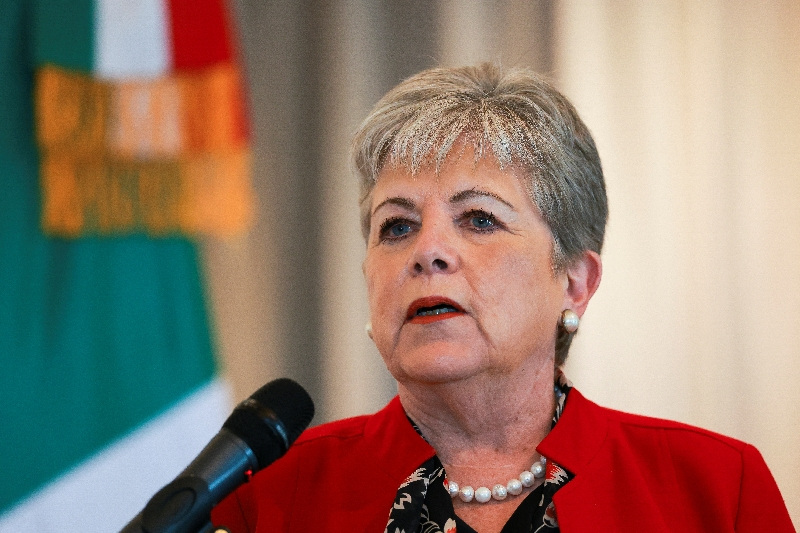
María Elena Villalobos, Mexico’s Undersecretary for Environmental Protection, didn’t mince words, even if her statement was delivered with all the customary government gravitas. “Our natural heritage isn’t for sale, nor is it a blank canvas for unchecked development. We’re prioritizing long-term ecological health over ephemeral revenue streams,” she declared, painting a clear line in the sand. Or rather, by the coral. Her sentiment reflects a growing global awareness, but it also reflects a renewed nationalism where some governments are questioning foreign mega-projects with short-term gains but long-term environmental headaches.
For Royal Caribbean, the rejection is undoubtedly a financial blow — and a reputational hiccup. The company’s ‘Perfect Day’ brand is their signature line of private island destinations, a money-spinning concept offering exclusive, curated experiences. This would’ve been a land-based expansion, meant to pull even more cruise passengers off their ships and into a captive, cash-generating environment. But Mexico isn’t some backwater keen on selling its patrimony on the cheap. Michael Bayley, President and CEO of Royal Caribbean International, expressed his firm’s ‘disappointment, naturally.’ He maintained, in a statement, “We believed ‘Perfect Day at Cozumel’ would have delivered a tremendous boost for local communities, all while adhering to the strictest environmental standards. We will, of course, review this decision and consider our options going forward.” Which, translated from corporate speak, means they’re figuring out where they went wrong, or where else they can try this.
It’s a push-and-pull familiar across swathes of the developing world, from the pristine atolls of the Maldives — where similar battles over coral reef destruction and foreign tourism dollars routinely flare — to the coastal ambitions dotting the Arabian Gulf. Even in regions as disparate as Southeast Asia and North Africa, environmentalists watch with a grim sort of solidarity when a nation asserts ecological sovereignty against the juggernaut of global tourism. This isn’t just a Mexican fight; it’s a worldwide one.
Tourism in Mexico alone accounts for roughly 8.5% of its GDP, a statistic cited by the World Bank in 2022, so this isn’t a government indifferent to money. But there’s a creeping realization that once pristine environments are paved over, the goose stops laying the golden eggs. It’s a calculated gamble on long-term sustainability over short-term gain, a move that would surely make other governments (say, those eyeing pristine coastlines in Pakistan or other parts of South Asia for their own mega-resort dreams) take note. The economic benefits of such developments are often skewed, favoring foreign corporations and a small cadre of local elites, rather than widely distributing wealth to indigenous communities or bolstering truly sustainable local enterprises. And don’t forget the logistical nightmares of fresh water, power, and waste disposal for operations catering to thousands daily.
What This Means
Mexico’s refusal marks a significant policy precedent, particularly for a nation heavily reliant on the tourism sector. It suggests a growing governmental will to prioritize ecological preservation even when significant foreign investment hangs in the balance. Politically, this plays well with environmental groups and local communities who’ve long pushed back against such mega-projects. It also signals to other large foreign developers that the regulatory landscape in Mexico, particularly concerning sensitive ecological zones, isn’t as pliable as it once might have been. Economically, while Cozumel might miss out on some short-term construction jobs and tourist dollars tied directly to a Royal Caribbean project, the longer-term play is about safeguarding the natural assets that are its foundational appeal. A dead reef doesn’t bring anyone back, does it? This could also nudge other nations towards a more conservative approach to high-impact tourism development, encouraging smaller, more integrated eco-tourism ventures over expansive, privately-owned destination hubs. For companies like Royal Caribbean, it forces a re-evaluation of their expansion strategies; they might have to think harder about ‘local impact’ beyond just the jobs created, extending to the long-term ecological footprint. It’s a strong signal in a world increasingly wrestling with the balance between economic growth and environmental stewardship, suggesting that for some, the scales are slowly tipping. It shows environmental concerns are rising on policy agendas everywhere. it speaks to an ongoing tension between global corporate capital and local environmentalism, a phenomenon not confined to North America. We’re witnessing a slow but steady shift, where the dynamics of global capital flows are increasingly scrutinized through an environmental lens. Cozumel might just be the latest, but probably not the last, battleground.