


Britain’s Green Gamble: Drones and Seaweed, a High-Tech Bet Against Climate Change
POLICY WIRE — LONDON, UK — When the global thermometer just keeps climbing, and the old playbooks are gathering dust, sometimes you gotta reach for something… unexpected. That’s precisely...

POLICY WIRE — LONDON, UK — When the global thermometer just keeps climbing, and the old playbooks are gathering dust, sometimes you gotta reach for something… unexpected. That’s precisely what’s happening in Britain, where the latest skirmish against climate change isn’t being fought with grand treaties or solar panels, but with buzzing drones scattering marine algae over swathes of countryside. It’s a decidedly British brand of innovation: eccentric, a bit frantic, and quietly hoping to pull a rabbit—or, well, seaweed—out of a very warm hat.
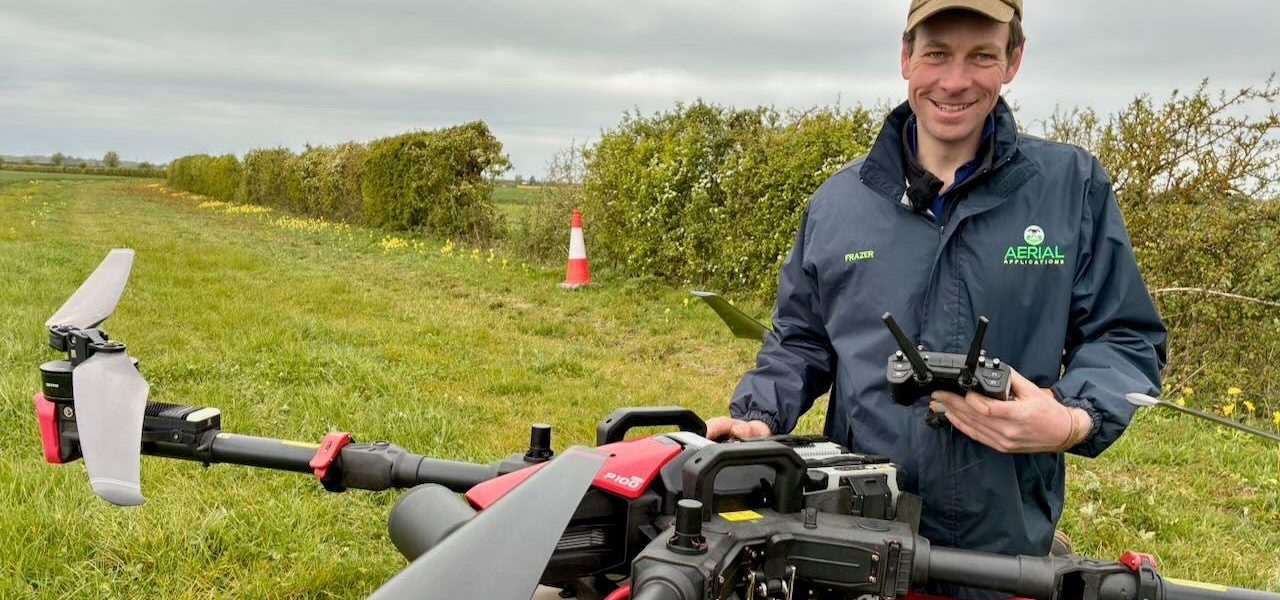
It sounds like something from a low-budget sci-fi flick, doesn’t it? Picture automated contraptions, typically associated with package deliveries or surveillance, now repurposed as humble agricultural aides. Their mission: to drop specific strains of seaweed—not your average beach detritus—onto fields. The idea? These particular algae, it’s argued, are pretty darn good at soaking up carbon dioxide, boosting soil health, and maybe, just maybe, giving Britain’s often-struggling agricultural sector a much-needed shot in the arm. Some researchers even whisper about improved crop yields. And because desperation often breeds ingenuity, folks are listening.
But it’s not all quaint charm — and robotic helpers. The initiative, still in its relatively early stages, carries the weighty ambition of significantly reducing the UK’s carbon footprint, particularly from farming. Agricultural emissions, you see, they’re a stubbornly persistent problem, accounting for roughly 10% of Britain’s total greenhouse gas output. That’s a chunky number that traditional methods haven’t quite managed to slim down. So, enter the drones.
“We’re not just planting seeds; we’re sowing the future, quite literally,” declared Eleanor Finch, Britain’s Minister for Green Growth, in a recent, somewhat breathless, press briefing. “And frankly, we can’t afford not to try bold new methods, even if they come with propellers and a a slightly robotic hum. It’s about adapting. It’s about surviving.” Her tone mixed defiance with a touch of exasperated optimism, a common sentiment in these increasingly strained times.
Not everyone’s uncritically buying the hype, though. “The concept itself? Sound,” cautioned Dr. Ahmed Tariq, a marine biologist from the University of Plymouth, known for his work on oceanic ecosystems, including those stretching to the Arabian Sea. “But the execution at scale? That’s where the devil resides, often in the biodiversity impacts we haven’t quite mapped yet. We need rigorous, long-term studies. Fast innovation can sometimes create unforeseen problems down the line.” He’s got a point. What might seem like a neat fix today could, in a complex ecosystem, create its own set of headaches tomorrow. But these are the trade-offs governments feel they’re forced to consider. Because the alternative? That looks a lot worse.
The program involves collaboration between several agricultural tech firms — and environmental agencies. They’re refining dispersal techniques, trying to find the sweet spot for maximum carbon sequestration without disturbing delicate soil microbiomes. It’s a tightrope walk. But the potential rewards are, they claim, massive. It’s a vision that extends far beyond Britain’s soggy fields, offering a blueprint for other nations—from coastal communities in the Indo-Pacific to agricultural hubs in rapidly industrializing economies like China, which are also grappling with emissions and food security.
📄 POLICY WIRE WHITEPAPER PUBLISHED: PAKISTAN'S NATIONAL SECURITY POLICY PRIORITIES
👉 READ BY CLICKING HEREIndeed, countries like Pakistan, facing intense climatic pressure on its own agrarian sector and increasingly vulnerable coastal areas, will be watching closely. A 2023 report from the Intergovernmental Panel on Climate Change indicated that global agricultural output faces a potential 10% reduction by 2050 due to climate change impacts alone, prompting desperate searches for alternative solutions everywhere.
And so, as the drones hum overhead, scattering their green cargo, Britain finds itself at the forefront of yet another unusual experiment. It’s a high-stakes gamble, certainly, driven by an inconvenient truth: the clock is ticking, and passive solutions just aren’t cutting it anymore. The future of farming, it seems, might be in the hands—or rather, the rotor blades—of the robots.
What This Means
This drone-seaweed endeavor is more than just a quirky science project; it represents a deepening shift in policy thinking. Governments, particularly those in developed nations, are now openly embracing unproven, high-tech solutions to environmental crises that, not long ago, would’ve been deemed fringe or too risky. The political implication here is a tacit acknowledgment of prior policy failures—that incremental changes aren’t enough. Economically, if successful, it could create an entirely new agro-tech sector, fostering new jobs and intellectual property. Think venture capital pouring into ‘algae-farming-as-a-service.’ However, if these ecological interventions go awry, they could lead to unforeseen environmental damage, backlash from traditional farming lobbies, and potentially costly clean-up operations. It also raises questions about international standards and intellectual property rights concerning biotech solutions to global problems. Developing nations, without the R&D budgets for such high-risk experiments, will find themselves relying on technology transfer, or worse, becoming dumping grounds for less-tested versions.