


Stadium of Dreams, Factory of Doubts: Sunderland’s Premier League Odyssey Nears Fraught Close
POLICY WIRE — SUNDERLAND, England — Another season’s curtain call approaches on the hallowed — and these days, rather commercially branded — turf of the Hill Dickinson Stadium, yet for...

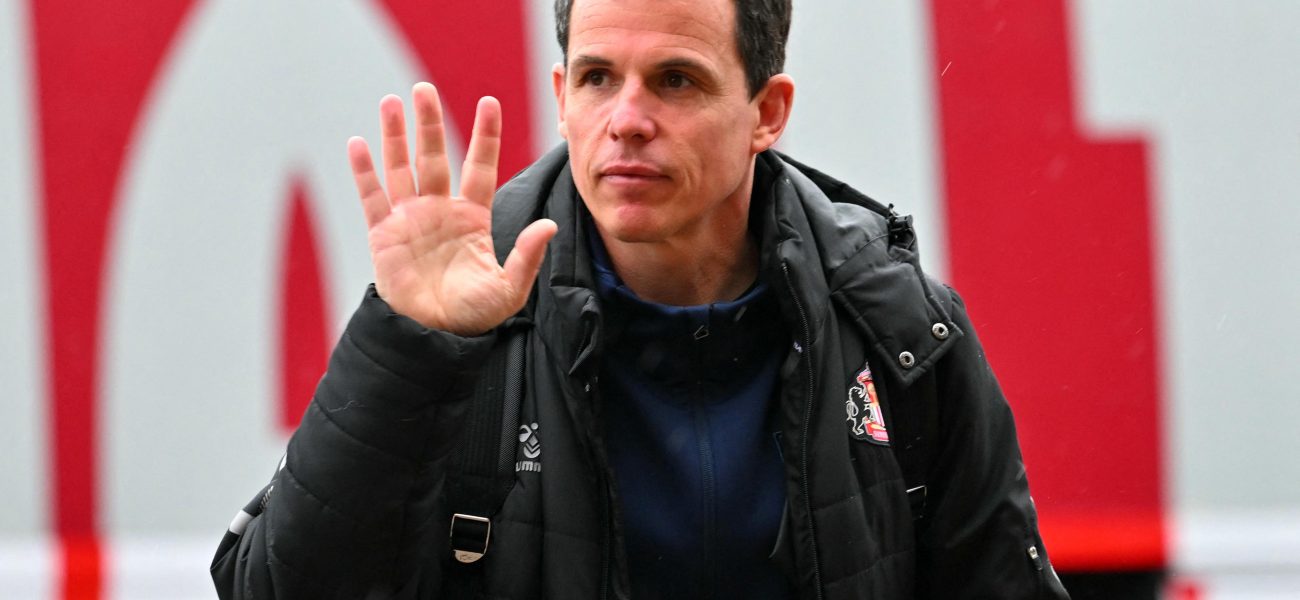
POLICY WIRE — SUNDERLAND, England — Another season’s curtain call approaches on the hallowed — and these days, rather commercially branded — turf of the Hill Dickinson Stadium, yet for Sunderland, it’s rarely just about the 90 minutes. Not really. It’s about a city’s stubborn pride, the long, arduous climb back from the abyss of lower-tier football, and the perpetual, nagging question of sustainability in an economic landscape as brutal as a mid-winter tackle. Coach Regis Le Bris—the quiet Frenchman who arrived with an almost academic precision—faces Manchester United not merely in a sporting contest, but in a symbolic clash of philosophies: the industrial-grit underdog versus the global, commercial leviathan.
It’s the final stretch, and while some clubs are sweating over European slots or relegation traps, the Black Cats find themselves in that peculiar, unburdened space. They’ve done enough to stave off the dreaded drop, but haven’t soared high enough to genuinely challenge the league’s lofty peaks. This Sunday’s clash, ironically against a Manchester United side still—perplexingly—managed by former Sunderland boss David Moyes, offers a moment of reflection. A chance to gauge how far they’ve truly come, — and how much further the purse strings might allow them to stretch.
Le Bris, whose stoic demeanor belies a calculating tactical mind, is widely expected to stick with a remarkably consistent lineup. But whispers from the dressing room hint at a single, deliberate alteration, one designed more to test emerging talent than to gain a critical edge. You see, these matches are glorified try-outs now for many of the young lads. The Frenchman has championed a youth-first approach, cultivating talent that, frankly, some might view as commodities rather than club stalwarts. Robin Roefs, the young Dutch goalkeeper, will stand between the posts—a reward, perhaps, for his penalty heroics earlier in the season. Up front, Brian Brobbey, who can often resemble a battering ram in human form, aims to finally put away one of the chances he’s become adept at creating.
Defense, with the formidable Lutsharel Geertruida having — unexpectedly, but impressively — slotted in last week, pretty much picks itself. He was brilliant. The seasoned partnership of Nordi Mukiele and Omar Alderete remains central, flanked by Reinildo, a fan-favorite from Mozambique whose tireless runs embody the team’s working-class spirit. Midfield, though, that’s where the chess game really happens. Nilson Angulo, whose earlier tangle with Bruno Fernandes ignited a firestorm of digital punditry, might offer the wider threat Le Bris yearns for, particularly with Trai Hume more comfortable defensively. Chemsdine Talbi, of Moroccan descent and a rising star in his own right, is also slated for another outing on the left wing, embodying the league’s increasingly diverse talent pool that stretches from Sunderland’s cold shores to the sunny landscapes of the Maghreb and beyond.
“We’ve established a foundation, a belief system here,” Le Bris stated earlier this week, his eyes fixed somewhere beyond the immediate press scrum. “It’s about evolving, not just winning. Every game is an opportunity to forge our identity, to show our younger players what it means to wear this badge and contribute to something bigger. We’re building something substantial, brick by laborious brick, you know?”
📄 POLICY WIRE WHITEPAPER PUBLISHED: PAKISTAN'S NATIONAL SECURITY POLICY PRIORITIES
👉 READ BY CLICKING HERECouncillor Ahmed Khan, a local government representative deeply invested in the region’s economic revitalization, echoed this sentiment. “This isn’t just about football, is it? It’s about pride, tourism, bringing investment into a city that’s fought tooth and nail for every opportunity post-industrial collapse. The Premier League brings £3.3 billion to the UK economy annually, with a significant chunk filtering down to clubs like Sunderland through broadcasting and commercial deals. A solid season translates to local jobs, to packed pubs, to a tangible buzz that’s otherwise hard to conjure. It’s the lifeblood for our recovery.”
What This Means
Sunderland’s careful stewardship of its Premier League status — earned after years in the wilderness — offers a compelling case study in regional economic resurgence tied to national sporting success. The strategic approach of Regis Le Bris, favoring youth development over expensive, short-term fixes, isn’t just a coaching preference; it’s a financial imperative for a club without limitless petrodollars. Because while they compete on the field with global powerhouses, their real victory lies in solidifying their position and—more importantly—channeling that elite league income back into the regional economy, helping lift a city once defined by shipbuilding and coal. The international appeal of the league, fueled by global broadcasting rights and fan bases stretching into the Middle East and South Asia (where Premier League games routinely draw hundreds of millions of viewers), ensures a constant financial flow, even for teams like Sunderland. That influx helps local businesses, creates employment, — and even fosters a renewed sense of civic identity. For example, last year, a report by Ernst & Young showed that a single Premier League home game can generate an estimated £2 million in local economic activity for host cities, a number Sunderland hopes to keep amplifying.
But the tightrope walking act continues. Every player transfer, every commercial deal, becomes a carefully calculated gamble. The margin for error is razor-thin, a perennial concern for clubs navigating the high-stakes world of elite European football, a drama unfolding not just on the pitch, but in boardrooms across the continent as explored in Europe’s Grand Stadiums: Where Fortunes Flicker and Empires Shift. This is what it’s about: the economics, the politics of hope, and the sheer audacity of trying to build something lasting in a game that often only celebrates fleeting moments of glory. The battle against United is a final check-in, a report card, a chance for players to cement their futures – and for the club to quietly prepare for the next, equally demanding, campaign, striving to avoid the epitaph of frustration that has marked other former giants.