


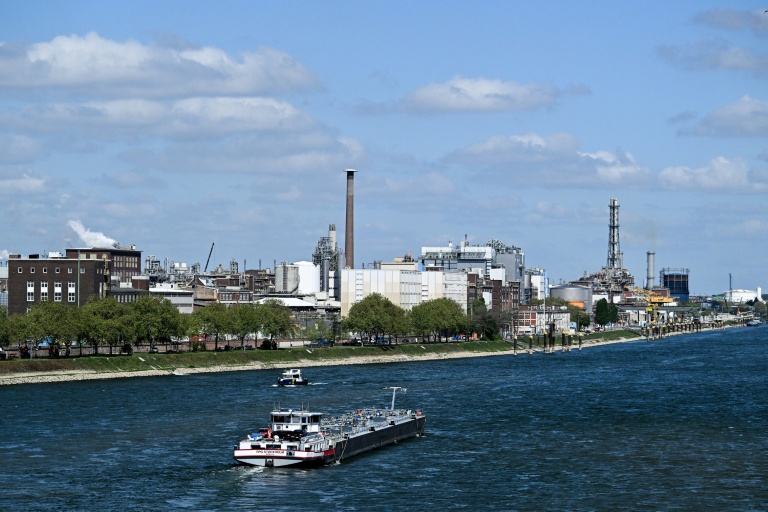
Germany’s Industrial Crucible Cools: Leuna’s Chemical Heartbeat Fades, Europe Holds its Breath
POLICY WIRE — Leuna, Germany — The scent of progress used to be thick in Leuna, a distinct, synthetic aroma that meant jobs and certainty. For generations, this German town, tucked into...

POLICY WIRE — Leuna, Germany — The scent of progress used to be thick in Leuna, a distinct, synthetic aroma that meant jobs and certainty. For generations, this German town, tucked into Saxony-Anhalt, thrived on the complex alchemy of its sprawling chemical park. But lately, the air here feels thinner, a bit less potent, laced not with industrial promise but with something akin to dread. They’re watching their economic bedrock erode, bit by agonizing bit—and it’s not just Leuna; it’s a shivering tremor running through Europe’s largest economy.
It’s not just about a few factories shutting down, mind you. This is about Germany’s manufacturing soul. Because for decades, the nation built its wealth on exporting finely engineered goods, powered by dependable, relatively cheap energy. Not anymore. Gas prices, which rocketed after Russia’s full-scale invasion of Ukraine, haven’t entirely retreated. They’re still a brutal arithmetic problem for industries that rely on high heat — and intensive processes. And when the base chemical producers struggle, it sends ripples far — and wide. Imagine trying to build a sophisticated car without a reliable supply of specialized plastics, or making advanced medicines without the basic compounds. It simply doesn’t work.
“We’ve always been the engine, haven’t we? Now it feels like someone’s siphoning the fuel, and the politicians in Berlin just don’t get the fumes,” grumbled Klaus Richter, the veteran Mayor of Leuna, leaning across a well-worn desk in his office. He wasn’t shy about it, either. His town’s identity, its very rhythm, is inextricably linked to the hum of those reactors, the flash of those pipes. To watch it falter? It’s like seeing a grandparent lose their memory. It’s disorienting, horrifying. Companies aren’t just cutting back; they’re packing up. Or worse, not expanding at all. And then what?
But the challenges stretch beyond immediate energy woes. Environmental regulations, often well-intentioned, pile onto operating costs. Fierce international competition—particularly from East Asian powerhouses with their own economies of scale and differing regulatory frameworks—eats into profit margins. The sheer cost of doing business in Germany is becoming prohibitive for many foundational industries. It’s forcing a brutal reckoning, one that challenges the very myth of Germany’s industrial invincibility.
Take, for instance, the recent downturn. The German chemical industry’s production volumes reportedly shrank by 8% in the past year, according to preliminary data from VCI, the German Chemical Industry Association. That’s not a blip, it’s a trend, and it means fewer jobs, less tax revenue, and a whole lot of anxious households wondering what the next pay slip (or lack thereof) will bring.
And this economic tremor doesn’t just stay in Saxony-Anhalt, you see. This ripple effect plays out across global supply chains. Consider Pakistan. Their textile manufacturers, often operating on thin margins and reeling from their own domestic energy crises, rely on a steady supply of dyes and specialty chemicals. If Germany’s sophisticated chemical sector falters, those downstream impacts—like price hikes for their crucial inputs or disruptions to finely tuned procurement —could sting. Or what if they need to pivot to other suppliers, perhaps in China or India? It just shows you how deeply interwoven this world is.
📄 POLICY WIRE WHITEPAPER PUBLISHED: PAKISTAN'S NATIONAL SECURITY POLICY PRIORITIES
👉 READ BY CLICKING HEREGerman Economy Minister Robert Habeck, though often framing things with an optimistic gloss, can’t wholly escape the gravity of the situation. “It’s a bumpy road, no question. But Germany isn’t static; we’re innovating. These transitions are hard, yet they’re also opportunities for green growth and reshoring strategic production lines,” he offered recently to a Berlin audience, an admirable show of resilience, even if it feels a little like whistling past the graveyard to those staring down pink slips in places like Leuna.
This isn’t some fleeting concern. It’s an urgent conversation about the future, about how a nation, renowned for its industrial might, navigates an economic landscape that no longer plays by its old rules. Can it reinvent itself, or will it simply fade, like an old photograph bleached by the sun? Only time, — and some serious policy shifts, will tell.
What This Means
Germany’s industrial malaise in towns like Leuna represents far more than just local job losses; it’s a systemic stress test for Europe and a global recalibration of manufacturing power. Politically, the deepening economic anxieties in traditional industrial strongholds are fertile ground for populist movements. We’re likely to see intensified pressure on the current German coalition government, perhaps sparking calls for protectionist measures or a dramatic reevaluation of environmental policies that some industries argue hinder competitiveness. This could fray unity within the EU as member states prioritize national economic interests over collective environmental goals, potentially creating ‘Beijing Banquets Yield to Homefront Headaches: Trump’s Ghost Haunts America’s Pocketbook‘ level disruptions in internal markets and policy coherence.
Economically, if this trend persists, it means a long-term erosion of Germany’s export-led model and a potential brain drain from specialized sectors. It will necessitate immense investment in new, perhaps ‘green’ industries—a transition that won’t be seamless or immediate. Supply chains across the EU, deeply reliant on German industrial outputs, could become more brittle, forcing diversification that adds costs and complexity. this shifts global economic power dynamics. Countries in South Asia and the Muslim world, like Pakistan, might see opportunities to fill certain manufacturing gaps or face reduced demand for their raw materials if Europe’s manufacturing base shrinks, forcing their own industries to navigate tricky new currents. The economic ripples of a struggling industrial heart in Europe, then, touch almost every corner of the planet, revealing vulnerabilities even in seemingly distant markets. It’s not a good sign. Not at all.