


Silent Shake-Up: New Mexico’s Primaries Signal a Shifting Electoral Ground
The Unseen Hand: New Mexico’s Independents Whisper a New Tune POLICY WIRE — Santa Fe, N.M. — They’re often overlooked, the silent electoral masses that defy the comfortable confines of...

The Unseen Hand: New Mexico’s Independents Whisper a New Tune
POLICY WIRE — Santa Fe, N.M. — They’re often overlooked, the silent electoral masses that defy the comfortable confines of party labels. But in New Mexico, these unaligned citizens — previously bystanders in primary skirmishes — are now stepping onto the field, making their voices heard long before Election Day. It’s a subtle rumble, an early indicator perhaps, but it’s making politicos in the Land of Enchantment sit up and pay attention.
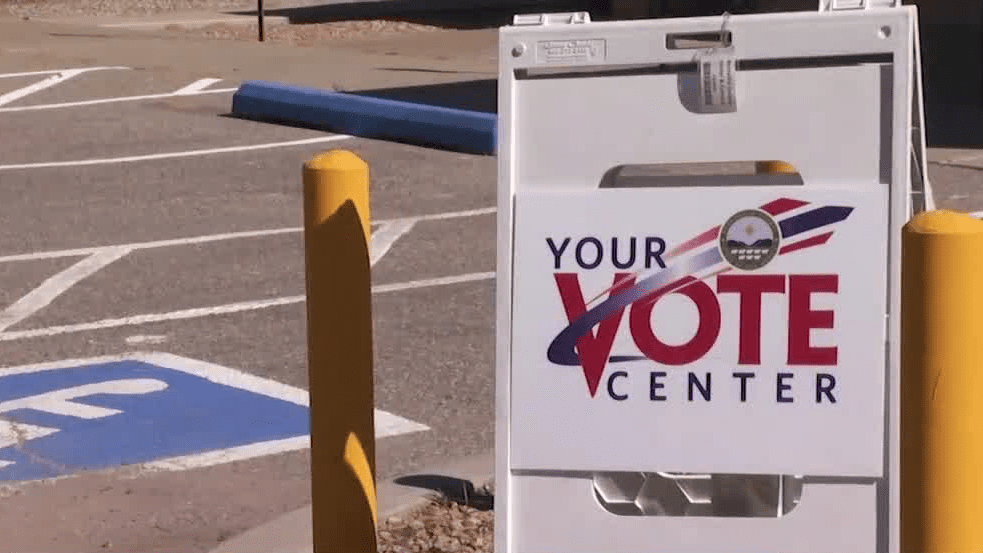
Over 15,000 citizens have already cast ballots in New Mexico’s nascent primary elections. And sure, most wore the expected Democratic or Republican badges. Over 9,200 registered Democrats turned up, playing their part. Another 4,600 Republicans have done the same. But here’s the rub, the unexpected twitch in the usual political script: more than 1,300 voters who’d simply ‘declined to state a party’ have also pulled levers or filled bubbles. That number, small as it might seem in isolation, carries a disproportionate weight. Why? Because this — 2026, for those keeping score (and believe me, campaigns are)—marks the first year independent voters can choose to participate in a major party’s primary. It’s a quiet revolution, no fireworks, just a lot of pens crossing names off lists.
We’re still in the dark, naturally, about how those 1,300-plus ‘undeclared’ votes actually broke down. The Secretary of State’s office, always diligent in its slow, methodical data release, is crunching numbers, promising a fresh report on where those swing voters actually swung. But their sheer participation is a statement in itself, isn’t it? It suggests a hunger for choice, a weariness perhaps, with the rigidity of old-school party lines.
“The early turnout, especially from our independent voters, it’s heartening,” remarked Secretary of State Maggie Toulouse Oliver, her voice carefully modulated during a recent virtual presser. “It means people are engaged. They’re seeing the opportunity for their voices to shape the future of both major parties, and they’re taking it.” But, beneath the diplomatic veneer, you can bet her office, and every campaign outfit worth its salt, is feverishly trying to dissect just *which* primaries those independents chose to influence. It’s an information void they’re all desperate to fill, isn’t it?
Because this isn’t just some local curiosity. This burgeoning independent bloc in New Mexico mirrors a growing disaffection globally. From the multi-party scrambles in Europe to the complex allegiances shaping narratives in nations like Pakistan—where voters often grapple with established power structures and a yearning for fresh, untainted leadership—the demand for political agency outside traditional two-party or dynastic systems is on the rise. They want a say. They’re tired of the old choices, and they’re looking for new pathways. And sometimes, those pathways aren’t as clear-cut as a donkey or an elephant.
“We’ve always known New Mexicans are independent thinkers,” asserted State Republican Party Chair Steve Pearce, in a rare moment of bipartisan-sounding observation. “They’re not going to be told how to vote, or which tent they have to camp in. This primary process now acknowledges that. It’s about genuine voter choice.” His words, while seemingly broad, hold a hint of strategizing: woo the ‘no-party-affiliate’ voter, for they are the new swing, the true arbiters.
📄 POLICY WIRE WHITEPAPER PUBLISHED: PAKISTAN'S NATIONAL SECURITY POLICY PRIORITIES
👉 READ BY CLICKING HEREEarly voting? It’s just getting started. If you’re keen to jump into the fray, ballots are being accepted at county clerk offices right now. Expanded early voting, the big show, kicks off on May 16, a mere fortnight away. Then it’s a mad dash to May 19 for mail-in requests. Finally, May 30 marks the last day of in-person early voting, before the whole thing culminates in the main event on June 2. It’s a compressed sprint, isn’t it? Lots of time for momentum to shift, for whispers to turn into shouts.
This early enthusiasm suggests a potent mix of political awareness and a novel electoral mechanism catching fire. In a state often pegged as a battleground—especially federally—these internal maneuvers, these nascent changes to who can pick a team, they could reshape general election dynamics for years to come. One hard statistic from the New Mexico Secretary of State’s preliminary data indicates that a full 8.6% of all early ballots cast thus far came from these formerly sidelined independent voters, suggesting a significant, and unexpected, initial uptake.
What This Means
This influx of independent voters into the primaries isn’t just procedural tinkering; it’s a potential tectonic shift. Politically, it means parties can no longer take their primaries for granted as exclusive ideological purity tests. Candidates now must appeal to a broader base even in the preliminary rounds, dampening the effectiveness of hardline primary challenges and potentially leading to more moderate — or at least more broadly palatable — general election candidates. It’s a calculated gamble by state legislators, likely hoping to curb political polarization by giving centrists a stronger voice. Economically, while not a direct financial lever, a less polarized political landscape could foster more stable policy-making, which in turn might appeal to businesses seeking predictability. Think about states like Kyiv, where graft fights erupt when stability is uncertain, impacting foreign investment. For New Mexico, attracting and retaining talent, driving investment in sectors like renewable energy or technology—all hinge on perceptions of governmental efficacy. The integration of independent voters is also a global conversation; countries wrestle with questions of representation and efficacy. For instance, the discussion around what constitutes a truly democratic or representative body is often a flashpoint for reforms, much like discussions in South Africa where political labels have tangible consequences for governance and crisis response. The impact won’t be immediate or dramatic. But it certainly changes the underlying calculus for every candidate aiming for state or federal office here. It just might be the quiet correction American politics has been hinting at for a while, isn’t it?
New Mexico might just be offering a template, a modest proving ground, for broader electoral adjustments. For now, we watch these quiet independents. They’re not making headlines, but they might be writing the script for elections to come.