

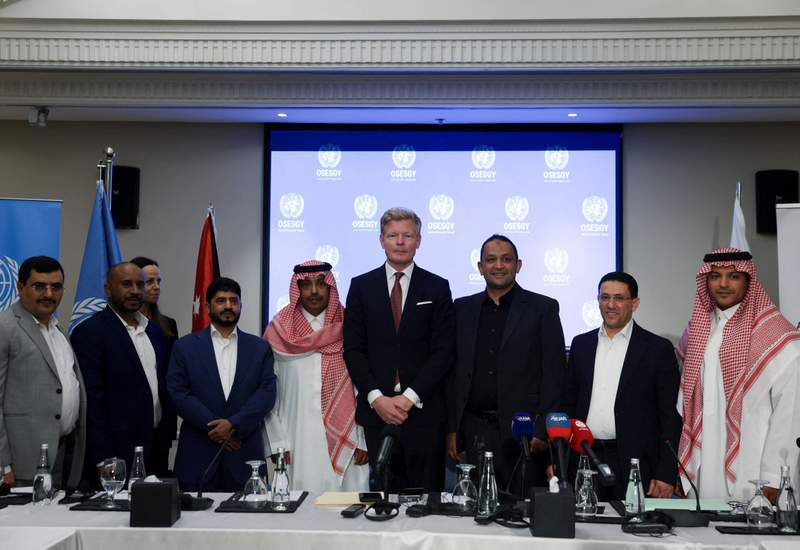
After Years of Bleeding, Yemen’s Warlords Agree to a Human Transaction
POLICY WIRE — Sana’a, Yemen — After eight grinding years, a conflict often dismissed by the world’s powerbrokers as just another messy regional skirmish, sometimes offers glimmers of...

POLICY WIRE — Sana’a, Yemen — After eight grinding years, a conflict often dismissed by the world’s powerbrokers as just another messy regional skirmish, sometimes offers glimmers of something approaching negotiation. Not peace, mind you, that’s a different beast entirely. But the sort of cold, calculated transaction that only battle-hardened enemies can strike. Like swapping prisoners—not exactly an olive branch, but at least a temporary cease-fire in the brutal logistics of war.
And that’s precisely what’s unfolded. Yemeni government forces, backed by a Saudi-led coalition, and the Iran-aligned Houthi rebels have sealed their biggest prisoner exchange to date, setting the stage for more than 1,600 souls to trade cramped cells for – well, something a little less harrowing, one hopes. This isn’t just a numbers game; it’s a moment, however fleeting, when the sheer exhaustion of endless combat pushes adversaries to the table, even if it’s only to negotiate over who gets to go home first.
The deal, brokered through the United Nations and the International Committee of the Red Cross (ICRC), marks a flicker of something almost hopeful in a landscape utterly scorched by famine, airstrikes, and internal displacement. One might almost call it a concession to basic humanity, a pause in the ceaseless political jockeying and strategic posturing. Because even hardened fighters, it seems, have families they’d like to see, or at least leverage their captured brethren for. That’s just the ugly economics of it all.
Dr. Rashad al-Alimi, Chairman of Yemen’s Presidential Leadership Council, issued a statement reflecting the government’s official line, all measured diplomacy and solemn commitment. “This agreement,” he told Policy Wire, his voice a practiced calm, “reaffirms our dedication to peace and to alleviating the suffering of our people. Every life returned to its family is a step towards a Yemen free from conflict.” A sentiment that rings a little hollow to those scraping for food, but perhaps one that’s needed for the cameras. And who are we to argue with a bit of public relations, even in wartime?
On the Houthi side, Muhammad Abdulsalam, the group’s chief negotiator and spokesman, had a predictably defiant, yet pragmatic, take. “Our patience — and resilience have brought us this far,” Abdulsalam stated firmly. “While we welcome the return of our brothers, let no one mistake this for weakness. We remain resolute in defending our sovereignty, but we will always pursue avenues for the release of our unjustly detained people.” It’s a classic play: humanitarian gesture wrapped in a cloak of unyielding resolve. You’ve seen it before.
This exchange comes as tentative talks between the Houthis and Saudi Arabia have made—you guessed it—some headway, even if that headway feels more like slogging through quicksand. Oman, the perennial mediator in the Gulf’s labyrinthine geopolitics, has been working overtime, pulling strings, nudging reluctant parties. But for ordinary Yemenis, a staggering 80% of the population requires some form of humanitarian assistance, according to the UN’s Office for the Coordination of Humanitarian Affairs (OCHA). So while prisoner swaps are good PR, they don’t fill empty bellies. They don’t rebuild hospitals.
📄 POLICY WIRE WHITEPAPER PUBLISHED: PAKISTAN'S NATIONAL SECURITY POLICY PRIORITIES
👉 READ BY CLICKING HEREThe protracted conflict in Yemen, a bitter proxy war between Riyadh and Tehran, casts a long shadow across the broader Muslim world, resonating from Pakistan to Indonesia. It’s not just about territorial disputes or geopolitical dominance; it’s about the heart-wrenching spectacle of one Muslim nation torn asunder by internal strife, often fueled by external actors. Families in Lahore and Karachi watch news of the devastation, feeling a shared cultural and religious pain, and wondering when this particular bleed-out will finally end. The ripple effect on regional stability—economic, political, humanitarian—is undeniable, an ongoing concern for leaders from Islamabad to Cairo, constantly navigating the fierce rivalries that define the Middle East.
What This Means
This prisoner swap, as welcome as it might be for the families directly impacted, doesn’t herald a grand peace, but it does signal something. It signals fatigue. Saudi Arabia, seemingly eager to extract itself from a costly, unwinnable war that’s done little for its international reputation—or its budget—is seeking an exit. But establishing lasting peace means navigating a tangled web of local grievances, tribal loyalties, and international interests. Iran, always a player, always subtle, will continue to leverage its Houthi allies to maintain influence in the Arabian Peninsula. And Yemen’s myriad factions, after years of war, have grown accustomed to their new power dynamics.
Economically, any hint of stability, however marginal, offers a whisper of possibility for the world’s worst humanitarian crisis. Reopening ports, clearing roads for aid—these practical steps would save lives. But genuine economic recovery, the kind that might actually rebuild a devastated nation, needs more than just a prisoner exchange; it requires a durable political settlement, something everyone talks about but no one seems truly capable of delivering. The question now isn’t if more people will go free, but whether these small, difficult concessions can truly pave a path away from the precipice, or if they’re just tactical respites before the next round of violence. Because history, alas, isn’t always on the side of peace in Yemen.