


Fantasy’s Fervor: Inside the Hyper-Real Economy of Predictive Entertainment
POLICY WIRE — New York, USA — Forget for a moment the global crises — the spiraling debts, the shadow wars, the simmering geopolitical anxieties. Forget the macroeconomic forecasts — and the...

POLICY WIRE — New York, USA — Forget for a moment the global crises — the spiraling debts, the shadow wars, the simmering geopolitical anxieties. Forget the macroeconomic forecasts — and the pronouncements from Davos. For millions, the real, gnawing uncertainty doesn’t reside in inflation figures or shifting allegiances, but in the performance of a third-string wide receiver on an indifferent Sunday afternoon. We’re talking, of course, about fantasy sports, that peculiarly American — though increasingly global — obsession. It’s no longer just a hobby; it’s a hyper-real, data-intensive economy unto itself, a vibrant subculture grappling with predictive analytics, human error, and the intoxicating illusion of control. And frankly, the questions people are asking are intense.
As the offseason meanders toward training camps, the air isn’t thick with the scent of freshly mown grass, but with speculative algorithms and hushed debates about injury recoveries. The official rosters might be somewhat set, they’ll tell you, but the real battles — the ones determining bragging rights and often, sizable sums of money— are only just beginning in the minds of armchair strategists. These aren’t simple ‘who wins?’ scenarios. They’re intricate webs of personnel evaluations, statistical regressions, — and psychological warfare among participants.
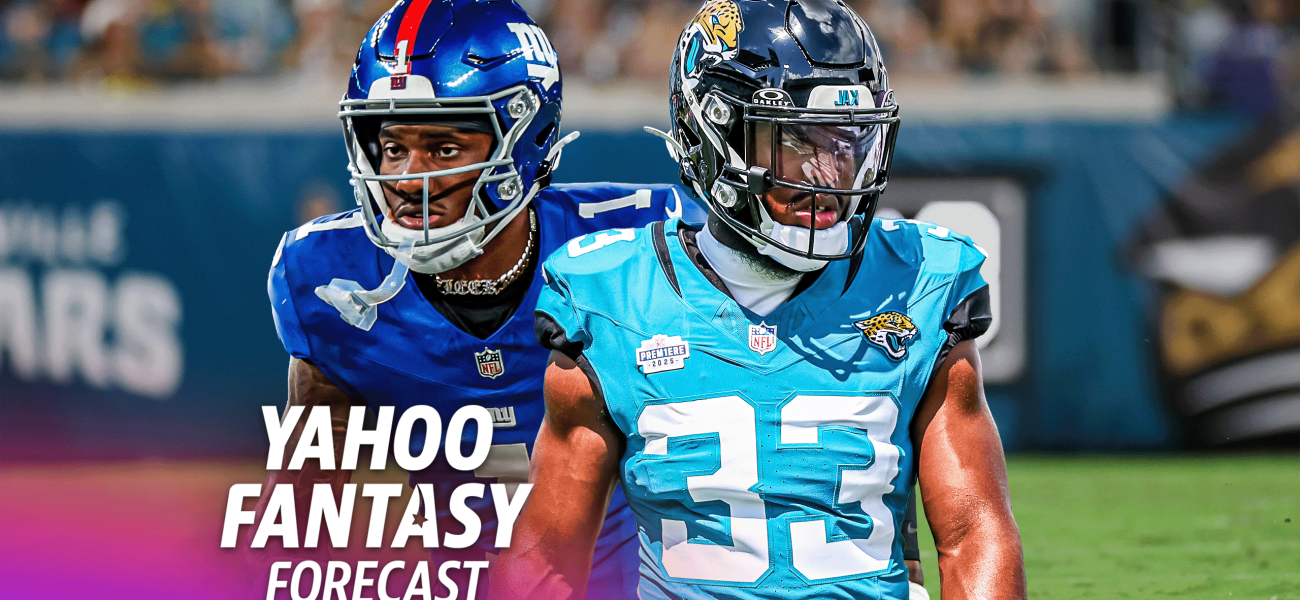
It’s fascinating, really. You’ve got platforms asking: Which wideout should lead the charge in Jacksonville? Does a rookie like Bhayshul Tuten out-produce a veteran like Chris Rodriguez? These aren’t trivial quandaries for the people pouring hours into this stuff. It’s a full-time, self-appointed portfolio management gig. They want to know when a signal-caller like Mendoza finally steps onto the field, because that doesn’t just change one team’s fortunes; it reverberates across dozens, maybe hundreds, of fantasy lineups. And what about Brock Bowers’ numbers if that happens? It all comes down to probability, to mitigating risk in a landscape defined by chaotic variables.
This quest for predictive accuracy, however localized, mirrors the larger global appetite for forecasting — in finance, in politics, in climate. “What we’re seeing in fantasy leagues isn’t just fan engagement; it’s a democratized, gamified investment landscape,” observes Dr. Eleanor Vance, a prominent market psychologist. “People are grappling with uncertainty on a Sunday, training for the deeper, more impactful uncertainties of their real-world portfolios. It’s a low-stakes proving ground for high-stakes decisions.” That’s not just hyperbole; it’s an economic engine. Industry estimates suggest that the global fantasy sports market, including related data subscriptions and advertising, will top $33.1 billion by 2030, according to a recent report by Grand View Research.
Consider the intense scrutiny. Is David Montgomery, for instance, a reliable asset in Houston? Is Rome Odunze’s drop-off a portent of larger issues, a red flag flapping in the pre-season breeze? And can an older player like those grizzled 49ers still justify an ‘all-in’ strategy? These aren’t casual questions for some folks; they’re the difference between profit and loss, between vindication and ridicule.
This hyper-analytical approach, focused on individual player metrics and their ripple effects, extends well beyond Western borders. In cities like Karachi and Lahore, while traditional sports loyalties run deep, the digital migration means younger generations are increasingly engaging with these platforms. They’re following international leagues, crunching numbers, — and joining virtual communities that cross continents. It’s a way for young, digitally-savvy Pakistanis to tap into global trends, to participate in a speculative pastime that offers both entertainment and—for some—the promise of a payout. But that’s where the waters get a bit murky, aren’t they?
📄 POLICY WIRE WHITEPAPER PUBLISHED: PAKISTAN'S NATIONAL SECURITY POLICY PRIORITIES
👉 READ BY CLICKING HEREBut how much influence does one truly have? Even with sophisticated projection models and reams of data, the human element—the fumbled catch, the unexpected injury, the ‘bad beat’—still reigns supreme. That’s what makes it so addictive, isn’t it? The belief that this time, this time, the stars will align precisely as one predicted. You couldn’t ask for a better distillation of hope in the face of statistical improbability. “Regulating the fringes of the gaming economy is a hydra-headed challenge,” commented Deputy Undersecretary Farhan Sheikh from an economic oversight body in Pakistan. “It blurs the lines between entertainment, speculation, — and pure data consumption. The digital frontier moves fast; the legal frameworks… well, they don’t.” That sentiment certainly resonates globally.
Can Bryce Young, a young quarterback, truly improve? Can Daniel Jones resurrect a floundering career? For millions, these are not mere curiosities. They’re deeply personal, financially intertwined investigations into the unpredictable mechanics of professional sports and the fragile nature of human performance. It’s a lesson in humility, sometimes a very expensive one. The game, it seems, always finds a way to remind us of its sovereign unpredictability.
What This Means
The intense focus on offseason ‘burning questions’ in fantasy sports highlights a significant sociological and economic shift. It’s indicative of a broader trend towards gamification in speculative markets and the widespread adoption of data analytics in everyday decision-making. We’re seeing ordinary citizens, empowered by sophisticated platforms, engaging in complex predictive analysis—often without realizing they’re developing skills akin to those used by Wall Street quant funds. The phenomenon underscores not only the massive commercial value locked in leisure but also humanity’s relentless pursuit of order and control in a fundamentally disorderly world. This isn’t just about football; it’s about a cultural pivot towards an immersive, statistically driven engagement with reality itself, blurring the lines between sport, investment, and speculative entertainment. It also offers a quiet window into how readily populations adapt to digital economies, regardless of geographic or cultural barriers, something global policymakers are just beginning to grapple with.