


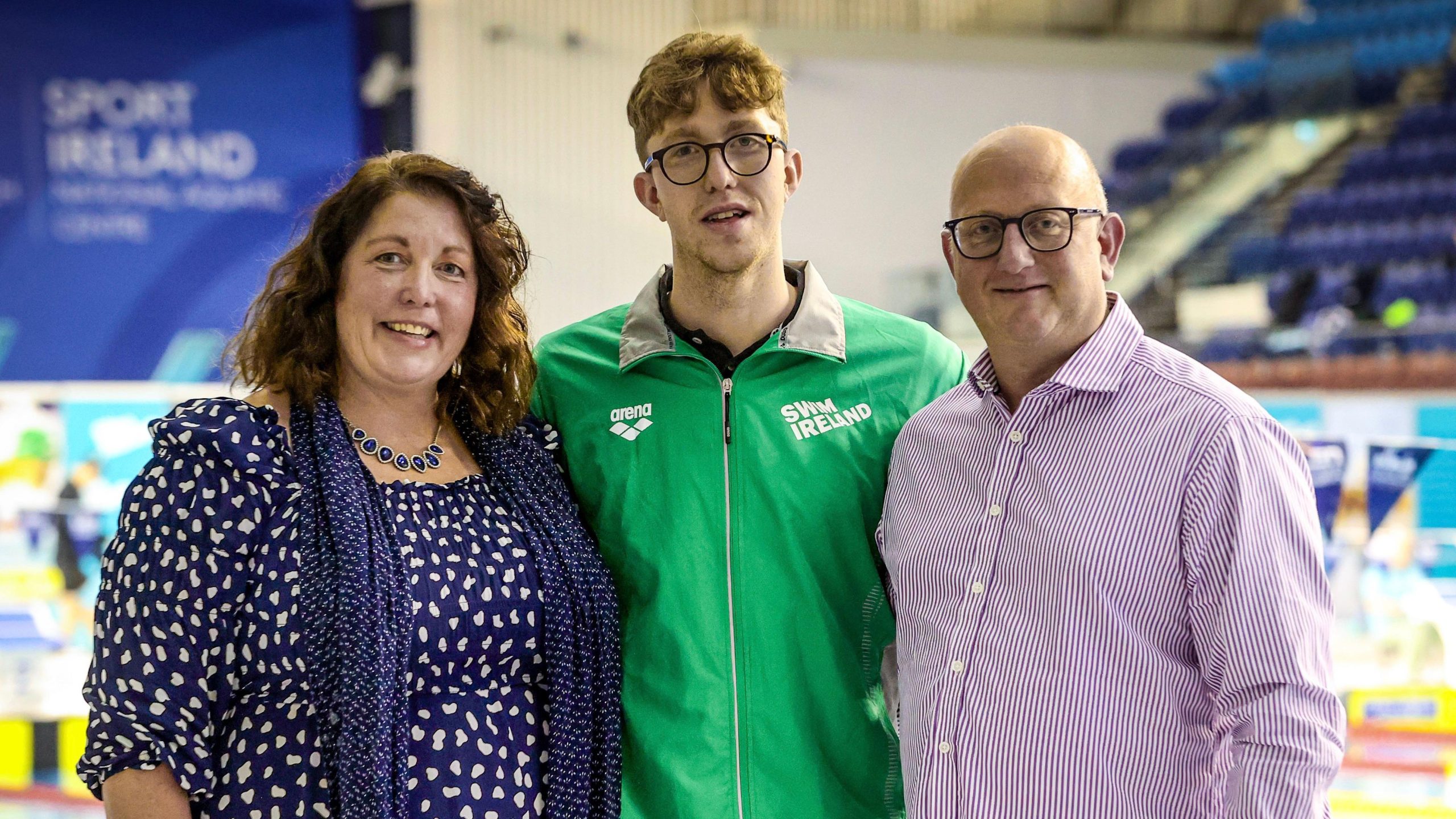
Beyond the Blocks: Olympic Champion Wiffen’s Fight Echoes Deeper Battles
POLICY WIRE — Belfast, Northern Ireland — The glare of the Olympic spotlight can feel all-consuming, a stark measure of triumph and failure etched in tenths of a second. But for Daniel Wiffen,...

POLICY WIRE — Belfast, Northern Ireland — The glare of the Olympic spotlight can feel all-consuming, a stark measure of triumph and failure etched in tenths of a second. But for Daniel Wiffen, Ireland’s reigning 800m freestyle gold medalist, a far more intimate and terrifying race played out away from the chlorined lanes, far from the roaring crowds. This past year, while he was honing his superhuman craft, his mother, Rachel, was fighting leukemia—a silent, grinding war whose victory, her recent remission, now provides a new, perhaps stronger, current for his own relentless drive.
It’s an awkward collision, isn’t it? The dizzying heights of athletic glory suddenly dwarfed by the brute reality of disease. Rachel Wiffen’s diagnosis hit their family just before the European Championships last November. And Daniel, training halfway across the world in America, felt the distance keenly. But he was coming back for the Europeans, a fortunate turn of events. “The news kind of broke at a time where I was happy because I could come back,” he recounts, a candid admission that belies the polished ease of a public figure. His twin, Nathan, remained stateside, grappling with it from afar. Because, let’s be honest, mums are the linchpin, aren’t they? Rachel, Daniel’s “number one supporter,” ferried him to those ungodly early morning sessions, backed him through thick and thin. He’d probably not even be in the water today, he says, if it weren’t for her — and his dad.
Her illness kept her from his European Championships debut, a gut-punch for a son accustomed to her familiar face in the stands. It stung, definitely. But now, seeing her back, if a little frailer, has flipped the script. He’s back in Dublin now, moving his training base from sunny California—not because of family illness, he insists, but for pure swimming logistics, a chance to really knuckle down. “It was an easy process to come back and I definitely identified some things that I wasn’t doing right in California,” he shared. That’s the grind, the relentless pursuit of perfection that demands honesty. But it’s the quiet strength of his mother that now fuels something deeper.
Rachel received her grueling treatment at the Northern Ireland Cancer Centre at Belfast City Hospital. Their experience, like so many others who confront such an illness, shines a harsh, but ultimately hopeful, light on the public health infrastructure. “Thanks to all the nurses and doctors because they’re the reason my mum is still here,” Daniel articulated, a clear note of genuine gratitude cutting through the typical athlete-speak. He even brought his Olympic and European medals to show them—a small gesture, perhaps, but a heartfelt acknowledgement of the everyday heroes whose battles rarely make headlines. In many societies, including those across South Asia and the Muslim world, such family-driven motivation and community reliance on public health institutions form the bedrock of personal and societal resilience. There, too, a champion’s victory is often considered a victory for the entire lineage, and struggles like Rachel’s evoke widespread empathy.
Rachel’s journey, from diagnosis to remission, is an intense — and personal saga, yet it speaks to broader themes. It brings to mind how approximately 1 in 2 people in the UK will develop cancer in their lifetime, as reported by Cancer Research UK, highlighting the universal struggle many families confront daily. She stood at the squad announcement, beaming, a symbol of tenacity. “I’m very proud, because everybody says you need to have a strong woman leading your life. And for me, that’s my mum — and she’s very strong,” Wiffen remarked. It’s not just about winning shiny baubles; life keeps coming at you. Her fight? “That’s just new motivation for me,” he confirms, promising to dedicate his upcoming Commonwealth Games victories to her.
What This Means
This isn’t just a feel-good sports story, though it has all the hallmarks. Daniel Wiffen’s very public acknowledgement of his mother’s cancer battle—and her recovery—carries weight far beyond the pool. For starters, it humanizes an elite athlete, reminding a public often fixated on performance metrics that even champions have families, anxieties, and profoundly personal struggles. From a policy perspective, it inadvertently shines a light on the Northern Ireland Cancer Centre. Every time Wiffen credits the staff, it’s an unspoken endorsement for public healthcare systems often under strain. It serves as a stark counter-narrative to stories focused purely on national economic figures or geo-political jostling, asserting the quiet, indispensable role of foundational services like healthcare.
His story, too, touches on the immense emotional capital invested in professional sports. For a sports council, a public figure like Wiffen sharing such vulnerability only enhances their profile and perhaps—just perhaps—encourages a deeper public investment in the people, not just the performance. The trajectory of star athletes, even in global spectacles like the IPL, isn’t solely about contracts and glory; it’s deeply interwoven with personal narratives that resonate universally. This saga, though deeply personal, illustrates a point often missed in the high-stakes world of sports: genuine human connections can be an unparalleled source of power, influencing more than just medal counts.
“Daniel Wiffen’s journey, both in the pool and with his family, captures the very essence of human spirit,” commented Aisling Gallagher, Director of Sport NI. “His dedication, especially in light of recent challenges, isn’t just about athletic prowess; it’s a powerful illustration of the resilience we champion right across Northern Ireland, inspiring countless others.” And Dr. Niamh Brennan, Lead Oncologist at Belfast City Hospital, noted, “We see countless battles fought within these walls daily. Rachel Wiffen’s remission, particularly following a challenging leukemia diagnosis, serves as a poignant reminder of the relentless commitment of our medical staff and the profound strength of those we care for, a strength that propels them, and us, forward.” As Wiffen readies for a busy summer in the pool, his fastest form yet, it seems he’s not just swimming for records. He’s swimming with, — and for, the quiet strength of his biggest fan, now herself a champion of sorts.