


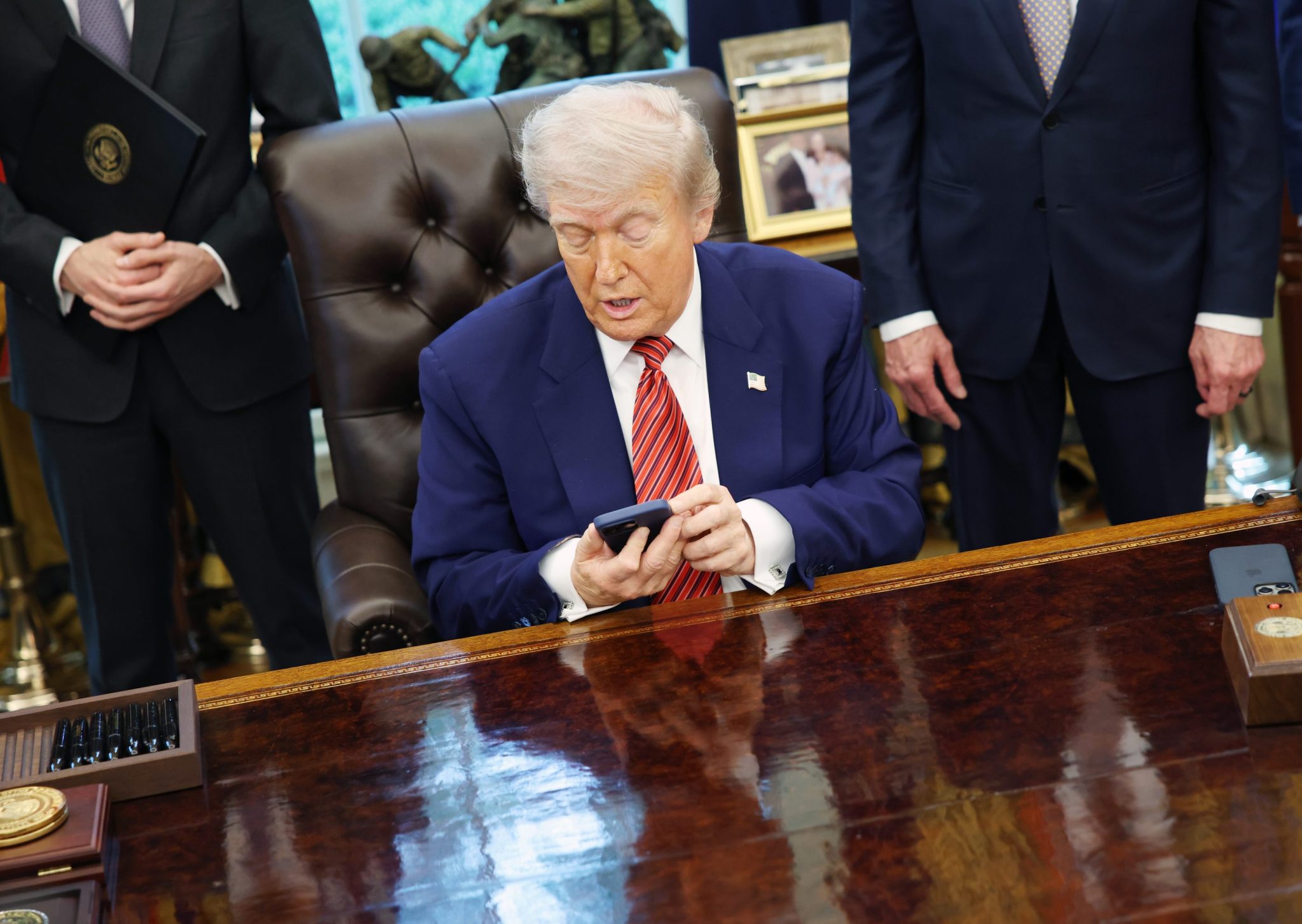
Gold-Plated Illusion? Trump Mobile Rewrites Terms, Consumers Left Holding the (Imaginary) Bag
POLICY WIRE — Washington D.C. — You’d think by now people would read the fine print. But then again, maybe that’s the whole point. A year after loyal customers—some, no doubt, still sporting their...

POLICY WIRE — Washington D.C. — You’d think by now people would read the fine print. But then again, maybe that’s the whole point. A year after loyal customers—some, no doubt, still sporting their ‘Make America Great Again’ caps—shelled out a crisp hundred bucks for the promise of a “gold Trump phone,” the venture known as Trump Mobile has done something particularly subtle, yet entirely on brand: it quietly, meticulously rewrote the terms and conditions. The upshot? That shimmering, supposedly gilded device? It might not ever see the light of day. Just another day in the wild west of brand loyalty, I guess.
It wasn’t a blaring headline or a press conference. No, these changes, enacted a year into the project’s life and long after initial deposits were banked, appeared as unceremoniously as a forgotten footnote in a long-winded legal document. The original promise, tied to an affiliation with “Patriot Mobile,” dangled a phone “exclusive for America,” powered by the supposed gold standard of patriotism. Now, a new clause — added seemingly out of nowhere — suggests the company reserves the right to deliver a “standard device with equivalent functionality and features” should the fabled gold phone prove “unavailable,” or even “unfeasible.” Unfeasible. That’s a rather polite way of saying, “might not happen.” But they’ve got your money, don’t they?
And so, another chapter unfolds in the increasingly complex saga of political merchandising, where the boundary between product and ideological totem blurs into an almost unidentifiable smear. This isn’t merely about a phone; it’s about the enduring faith placed in a persona, a brand so potent it seems to inoculate against basic consumer skepticism. “It’s a classic bait-and-switch, but with an ideological twist,” stated Sheila Raman, director of the National Consumer Rights Council. “Consumers are banking on a promise that seems to have more in common with wishful thinking than concrete delivery. We process thousands of these kinds of complaints every year — a recent survey found that over 30% of online pre-orders lead to some form of customer dissatisfaction due to delays or unmet expectations. But the political component here makes it…stickier.”
Because, really, who’s going to demand their $100 back when the item in question carries the weight of a movement? The genius, or perhaps the cunning, lies in understanding the market: a demographic so deeply invested in the brand that inconvenience becomes a small price for perceived solidarity. And that’s where the transaction shifts from commercial to symbolic. It’s not just a purchase; it’s an affirmation.
A spokesperson for Trump Mobile, who declined to be named but hinted at close ties to the former president’s marketing efforts, scoffed at the “so-called controversy.” “We’re delivering great service and patriotic devices, period,” they insisted, over a rather spotty connection (oh, the irony). “Terms evolve. It’s common business practice. The gold phone remains a goal, but frankly, what our customers truly value is the principle, the connection. They understand market realities.” Or maybe they just trust the brand. Blindly.
This whole situation echoes sentiments we see in emerging markets, frankly. Think about the aspirational consumption in, say, Karachi or Lahore, where the allure of an ‘American dream’ product, even a mobile phone, can hold sway beyond its intrinsic value. Consumers there, just like some here, often find themselves navigating a murky world of product launches where promised features vanish into vaporware, all under the halo of powerful, almost unassailable, brands or political figures. It’s a shared human vulnerability, I suppose — the desire to belong, to be part of something grander, even if it comes with undisclosed caveats.
The incident forces us to consider the evolving contract between consumer and vendor, particularly when the vendor is tied to a powerful political figure. It raises questions not just about ethical business practices, but about the unique legal loopholes that appear to materialize when politics and commerce merge. Who regulates aspiration? And how exactly do you get a refund on patriotism?
What This Means
This latest Trump Mobile revision isn’t just a hiccup in product development; it’s a stark illustration of how carefully crafted political branding can operate outside conventional consumer protections. The company effectively leveraged an emotionally charged connection — a powerful political identity — to secure advance payments for a product that now carries a massive asterisk. Economically, this model relies on a form of ‘loyalty tax,’ where consumers prioritize ideological alignment over scrutinizing contractual obligations. It further erodes general consumer trust, making it harder for legitimate businesses to launch pre-order campaigns, because consumers get burned by these types of situations. Politically, it signals a strategy where narrative control and brand mystique can effectively insulate a venture from the kind of scrutiny an ordinary telecom provider would face. It underscores how easily enthusiasm, when skillfully channeled, can blind people to transactional minutiae. And in a globalized world where charismatic figures routinely blur the lines between politics, entertainment, and commerce (you see it often in India, for instance), this case serves as a cynical playbook: promise big, collect early, then let the fine print quietly do the dirty work.