


Berlin’s Draft Debate: A Generation Says ‘Not So Fast,’ Sticking it to an Awakened Germany
POLICY WIRE — Berlin, Germany — For a nation that spent decades carefully cultivating a pacific, demilitarized self-image—a sort of geopolitical conscientious objector—the recent clamor for defense...

POLICY WIRE — Berlin, Germany — For a nation that spent decades carefully cultivating a pacific, demilitarized self-image—a sort of geopolitical conscientious objector—the recent clamor for defense preparedness feels a bit like a cultural whiplash. But you know what else feels like a whiplash? Being told, after years of peace dividends, that maybe, just maybe, it’s time to shoulder a rifle. That’s the reality settling in, particularly among Germany’s youth. They’re not exactly thrilled about the prospect. In fact, they’re downright irritated.
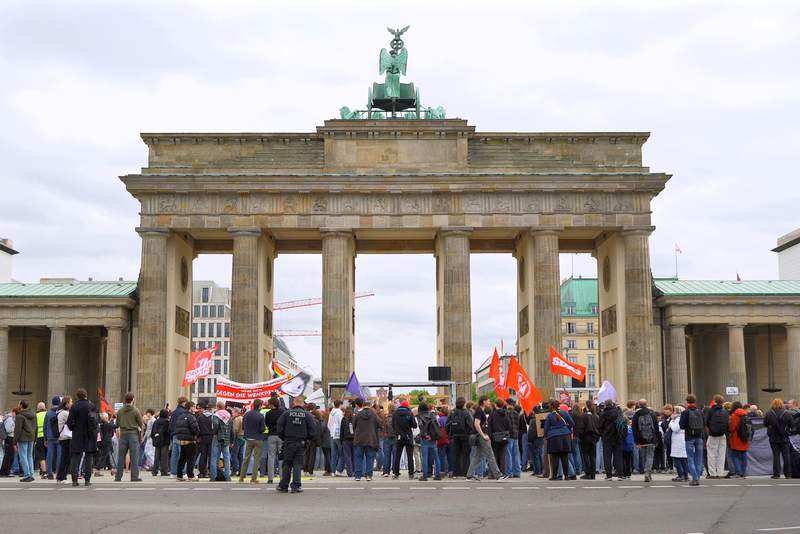
Thousands of students across Germany recently traded textbooks for placards, hitting the streets to express their profound disdain for any talk of reinstating compulsory military service. This isn’t just a handful of starry-eyed idealists. No, this was a nationwide outcry, loud and clear, suggesting that while the government might be on an express train to re-militarization, a significant chunk of the next generation missed the memo—or, more accurately, actively rejected it.
Germany shelved its conscription—or Wehrpflicht—in 2011. It’d been around since 1956, a rather long run for a system the kids these days barely remember. Now, with the continent in a constant state of jitters, there’s serious talk, often murmured in hushed tones over expensive Berlin coffee, about bringing it back. Not everyone’s sold. Young people? Forget about it. They’ve grown up in a decidedly post-heroic era. You can practically hear the collective sigh of resignation from government mandarins. These protests? They’re more than just noise; they’re a barometer of deep generational fault lines.
“Look, my parents never had to do this. My grandparents did, sure, but that’s ancient history for us,” remarked Sarah Weber, a 17-year-old student from Hamburg, her voice strained from chanting. “We’ve been taught peace. We’ve learned from our history, for crying out loud. Why are they suddenly pretending we didn’t? I don’t want to go to war, not for anyone’s profit margin.” She’s got a point. And it’s one a lot of her peers echo.
Because while the Bundestag grapples with budgets — and strategic alignment, the streets tell a different story. These aren’t abstract debates about deterrence or NATO Article 5 for these kids. It’s about their own future, their perceived loss of autonomy. They don’t want to play soldier. They want climate action, affordable housing, maybe a half-decent job that doesn’t require them to be cannon fodder. One recent Bertelsmann Stiftung survey, for instance, showed a rather telling 62% of young Germans aged 18-29 strongly opposing the return of mandatory military service. The older demographic, bless their pragmatic hearts, weren’t quite so uniform in their objection, mind you. But the government’s going to need more than just grey hairs if they plan on beefing up the Bundeswehr.
Defense Minister Boris Pistorius, never one to mince words, offered a blunt retort. “The security landscape has changed dramatically. Anyone ignoring that lives in a dangerous fantasy,” Pistorius stated in a recent press conference, his jawline looking particularly chiseled. “We’re not talking about endless wars, but about basic defense, about resilience. This isn’t an option; it’s a necessity.” You can almost taste the frustration. He’s talking global threats, they’re talking Instagram filters. That’s the gap he’s trying to bridge, — and it isn’t an easy one.
📄 POLICY WIRE WHITEPAPER PUBLISHED: PAKISTAN'S NATIONAL SECURITY POLICY PRIORITIES
👉 READ BY CLICKING HEREThis isn’t just about German borders, either. Germany’s role on the world stage, its contributions to multinational forces—these matters resonate far beyond Europe. Consider its involvement in Afghanistan, a mission that had its own complex reception in Muslim-majority nations like Pakistan. A re-militarized Germany, perhaps one with a reinvigorated, younger fighting force, could mean an even more assertive presence in areas of global tension. That shift wouldn’t go unnoticed in places where Western military intervention carries significant baggage. It changes the diplomatic calculus, the perception of European intentions. And it definitely influences conversations about aid versus arms expenditure in places often struggling with both.
What This Means
The youth protests against reintroducing compulsory military service aren’t just some fleeting annoyance for Chancellor Olaf Scholz’s government; they’re a flashing red light on a very complex policy dashboard. On one hand, you’ve got Berlin trying desperately to project strength and commitment to NATO allies—a Germany finally shedding its post-war pacifist skin, ready to punch its weight. An invigorated military is key to that image, and conscription, proponents argue, ensures both numbers and societal buy-in. It’s supposed to normalize the idea of defense again. Good luck with that.
But the backlash from the youth shows that normalization is a steep hill to climb. Politically, alienating a whole generation isn’t exactly a winning strategy. Economically, diverting significant budget allocations and human capital into a larger, more structured defense force would impact other sectors, perhaps stifling innovation or diverting funds from sorely needed social programs. It’s a zero-sum game, darling. You spend on tanks, you don’t spend on schools, or on, say, renewable energy. Plus, the debate itself signals a deeper European unease. It mirrors the larger, global anxieties about security versus entrenched societal values, forcing uncomfortable questions about peace dividends and national sovereignty in a fractured world. This generation might not want to march, but their dissent certainly speaks volumes, shaping not just Germany’s future, but perhaps the tenor of European defense for decades to come.