


Brazil’s ‘Green’ Compromise: Thermal Plants Power Development Despite Eco Whispers
POLICY WIRE — Brasília, Brazil — Another infrastructure announcement in a developing nation. Not exactly headline material for many, is it? Yet, look closer, and you’ll find a recurring drama:...

POLICY WIRE — Brasília, Brazil — Another infrastructure announcement in a developing nation. Not exactly headline material for many, is it? Yet, look closer, and you’ll find a recurring drama: the grinding tension between economic aspiration, grid reliability, and the whisper – sometimes a shout – of environmental urgency.
Down in Brazil, a sprawling economy constantly thirsting for more juice, two heavyweights are making their play. Wärtsilä, the Finnish technology conglomerate, has locked arms with Origem Energia, a Brazilian powerhouse. Their mission? To deliver flexible gas-fired power plants to a country grappling with both the bounties of hydro energy and its maddening unpredictability.
It’s a tale as old as industrialization itself, just with modern trappings. Brazil’s grid, heavily reliant on monumental hydroelectric dams, hums along beautifully during the rainy season. But when the skies dry up—and they do, with increasing frequency, thanks to erratic climate patterns—the country stares down the barrel of blackouts. And that, frankly, scares everyone from São Paulo’s industrialists to a grandmother trying to keep the perishables cool in Salvador.
So, into this breach step Wärtsilä — and Origem, pitching quick-start, agile thermal solutions. We’re talking about units that can jump to life in minutes, plugging the gaps left by a flagging hydro system or intermittent solar and wind farms. They call it ‘flexibility.’ Many others call it natural gas – a fossil fuel, but one often touted as a ‘transition’ fuel, a cleaner cousin to coal or diesel. A pragmatic solution, maybe? Or just a delay tactic? Depends on who you ask, doesn’t it?
“Our mandate isn’t just to talk green; it’s to keep the lights on and industry running,” remarked Brazil’s Minister of Mines and Energy, Alexandre Silveira, during a recent energy forum. “These flexible thermal plants provide that stability, a necessary bridge, however temporary it may feel, allowing us to pursue broader decarbonization goals without crippling our growth.” It’s a classic balancing act, deftly played for public consumption.
For its part, the industry line is predictably polished. But let’s be frank, these are savvy businesses. “What we’re offering isn’t just power; it’s resilience,” explains Michel Gaden, CEO of Origem Energia, emphasizing the technical merits. “It’s the ability to integrate renewables without collapsing the grid. It’s smart money backing smart energy solutions that simply work.” One gets the feeling he genuinely believes it. They’ve invested significantly, after all.
📄 POLICY WIRE WHITEPAPER PUBLISHED: PAKISTAN'S NATIONAL SECURITY POLICY PRIORITIES
👉 READ BY CLICKING HEREAnd the money flows. These plants, while ostensibly stop-gaps, represent significant capital. Wärtsilä’s engines—powering, for instance, a 166 MW plant in Santa Cruz—aren’t cheap. But they fulfill a pressing need, especially as the nation tries to solidify its economic foothold on the global stage. That quest for energy independence — and grid robustness isn’t unique to Brazil. Look at nations across South Asia, like Pakistan, wrestling with similar demons of unreliable power supply, an expanding population, and the seemingly endless quest for external investment to keep the economic engine churning. They, too, face the impossible task of developing quickly while attempting to appease the growing global clamor for green accountability. It’s a hard, cold calculus.
But the numbers don’t lie about Brazil’s shifting energy profile. Hydropower, while still dominant, now comprises just under 60% of Brazil’s total installed electricity capacity, down from over 80% just two decades ago, according to the National Electric Energy Agency (ANEEL). That drop vividly illustrates a diversifying—but often more carbon-intensive—energy portfolio. But because, frankly, when the lights go out, rhetoric often gets very dim too.
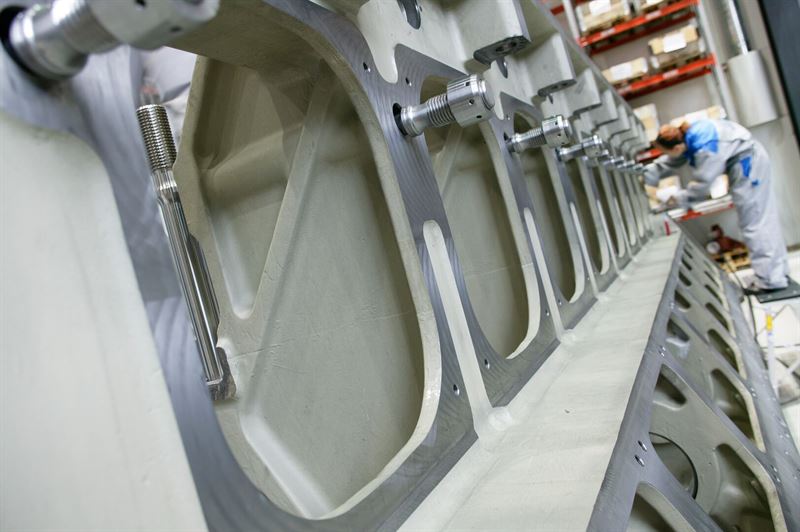
The deal sees Wärtsilä supply 15 of its 50DF dual-fuel engines for two new power projects. That includes the already-mentioned Santa Cruz plant and another for Porto do Açu, strategically located in a burgeoning industrial port complex. The engines will be primed to run on natural gas, with an eye toward future blends incorporating hydrogen or biofuels – a convenient footnote for sustainability reports. It’s a pragmatic hedge, certainly, but one that continues to commit the nation to a fossil fuel infrastructure for the foreseeable future. That’s a decision with long tentacles, as many in the environmental advocacy community will quickly tell you. And, to an extent, they’ve got a point.
What This Means
Politically, this Wärtsilä-Origem partnership solidifies Brazil’s dual strategy: aggressively pursue economic growth and energy security, even if it means leaning on fossil fuels labeled ‘transitional.’ It signals to investors a willingness to prioritize stability over a pure, immediate green transition—a message often echoed by developing nations burdened by growth demands. It also offers a quiet concession to powerful industrial lobbies within Brazil who champion reliable, affordable power above all. Economically, these plants are more than just energy providers; they’re job creators, taxpayer contributors, and attractors of foreign capital, locking Brazil into an industrial narrative that feels far from fully sustainable, even with best intentions. It offers a kind of ‘shock absorber’ for an economy that’s had its share of jolts, allowing industries to forecast energy costs and availability with greater confidence. But it doesn’t resolve the larger paradox of Brazil’s development: how to feed a growing global demand for its resources, be it protein or energy, without exhausting its own environmental capital. It’s a tightrope, — and frankly, they’re not always wearing the steadiest shoes. But hey, it’s progress, isn’t it? Or at least, it’s movement.