

Macron’s African Gambit: Is France Trading Paternalism for Pragmatism, or Just Rebranding?
POLICY WIRE — Paris, France — The grand old edifice of French foreign policy in Africa has always been — let’s be frank — complicated. Cloaked in Gallic notions of civilisation and coopération,...

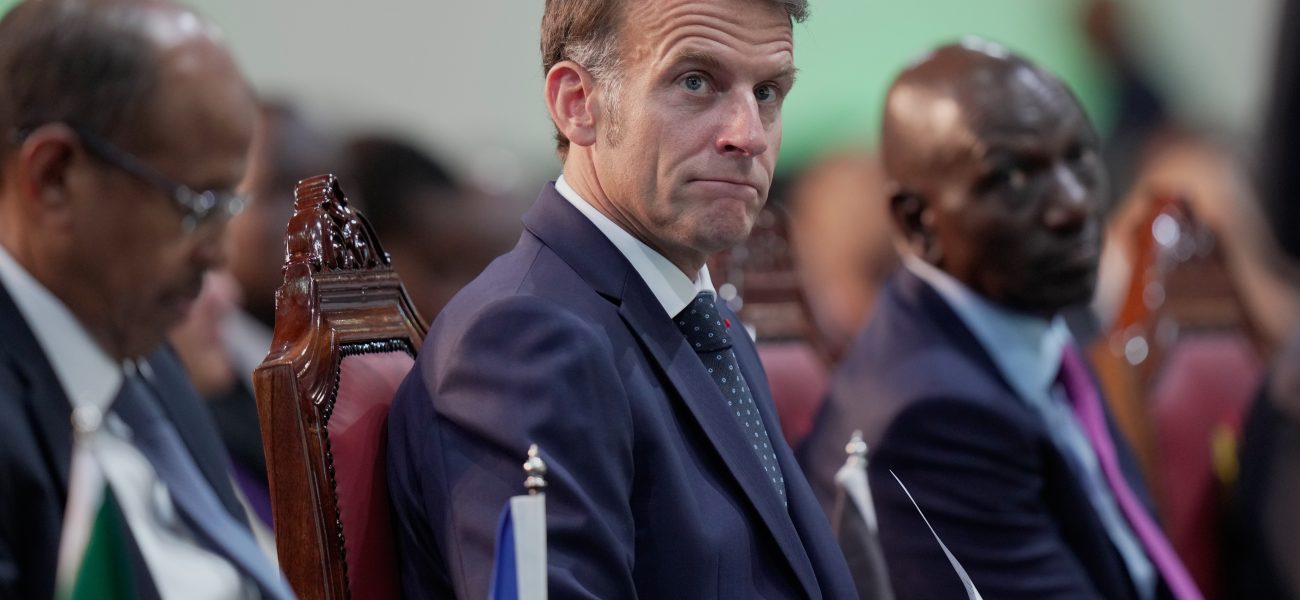
POLICY WIRE — Paris, France — The grand old edifice of French foreign policy in Africa has always been — let’s be frank — complicated. Cloaked in Gallic notions of civilisation and coopération, it often felt suspiciously like an extension of parental guidance, sometimes even disciplinary action. But now, it appears, Paris has grown weary of the persistent cries of neo-colonialism. Enter President Emmanuel Macron, stage right, with a freshly minted script and a briefcase full of promises: billions in new investments, all wrapped in the rhetoric of ‘equal partnership’ and mutual respect. The question isn’t if the money is real, but what, exactly, France expects in return.
It was never going to be simple, extricating the historic ties of blood — and economic self-interest from the continent. Not when the ghosts of past interventions still whisper in dusty West African capitals. And not when burgeoning powers like China and Russia offer alternative blueprints, often with fewer sermons on good governance and a greater appetite for direct deals. But the French approach, at this recent summit in Paris, was markedly different, at least in its framing. Gone were the overtures of charitable largesse; in came the hard talk of venture capital, infrastructure, and indigenous industry. It’s a pragmatic pivot, to be sure, recognizing that Africa isn’t a recipient of aid anymore but a continent of rising economies, if occasionally beleaguered ones.
President Macron, ever the articulate statesman, wasn’t pulling punches. “The era of France managing Africa’s problems from Paris is definitively over,” he reportedly declared, emphasizing the shift toward African-led solutions. That’s a bold statement, isn’t it, especially from a nation whose influence still pervades everything from currency to educational curricula in vast swathes of its former colonial domain? He insisted, quite emphatically, that France sought “a new partnership based on respect, transparency, and a shared agenda.” Fine words. Powerful words. But will they translate to deeds? That’s what skeptics are eyeing closely.
The pledges are substantial: upwards of €10 billion ($10.8 billion) committed across various sectors—green energy, digitalization, entrepreneurship. It’s an attempt to recalibrate a relationship that’s been, at best, strained, and at worst, openly antagonistic in recent years, particularly in the Sahel where French military presence became a lightning rod for anti-colonial sentiment. Because, let’s be honest, those military deployments, even when ostensibly anti-terrorist, often looked like classic French assertiveness to local populations. This financial overture, then, feels like a strategic olive branch—a carrot to accompany the occasional stick that Paris isn’t quite ready to put down.
But how does this land in a region that’s seeing investment flows from all corners? While France ramps up its rhetoric and billions, overall foreign direct investment (FDI) into Africa actually saw a notable dip, falling by an estimated 9% to $48 billion in 2022, according to the United Nations Conference on Trade and Development (UNCTAD). Macron’s injection, while significant, isn’t replacing the whole pie; it’s a slice. And the French are not the only players with big checks. Nations from the Arabian Peninsula, Turkey, and yes, even Pakistan—though on a smaller scale than the major global powers—are engaging economically with parts of Africa. For a country like Pakistan, facing its own economic constraints, any engagement in Africa typically leans towards resource acquisition or strategic port developments, reminiscent, in some ways, of broader competition playing out across the Indian Ocean rim. This diversification of partners challenges traditional hegemonies, forcing France to adapt or risk irrelevance. It’s not just about what France brings to Africa, but what Africa can now demand from France.
📄 POLICY WIRE WHITEPAPER PUBLISHED: PAKISTAN'S NATIONAL SECURITY POLICY PRIORITIES
👉 READ BY CLICKING HERE“We appreciate the engagement, of course,” commented a senior diplomat from Mali, speaking off-the-record during a recent development conference, “but what Africa needs is not charity. It’s fair trade, technological transfer, and an end to policies that keep our primary resources flowing one way without significant value addition here.” There’s a persistent feeling that even ‘partnerships’ can become instruments of control if the underlying power dynamics remain unchanged. But they’re changing anyway.
What This Means
This French pivot isn’t merely about generosity; it’s a desperate, tactical shift in an increasingly multipolar world where the West’s traditional influence is challenged by burgeoning alliances and economic realities. For Macron, a strong relationship with Africa isn’t just about French prosperity—it’s about projecting France as a global player, an independent diplomatic voice on the international stage. Economically, securing resources — and opening new markets remains key. Politically, Paris aims to staunch the bleeding of its influence, especially in Francophone Africa where sentiment against the former colonial power is running high. It’s a calculated risk, betting that financial engagement, even if tinged with historical baggage, will outweigh the appeal of alternatives. But that wager depends heavily on follow-through and genuine shifts in attitude—not just rhetoric. If it fails, France might find itself not merely rebranded, but relegated to the sidelines, watching as other players realign global power structures. And for countries like Pakistan, observing the shift, it means an increasingly competitive global investment landscape, but also potentially more leverage for African nations to pick and choose their benefactors—or rather, their ‘partners’—on their own terms. It’s a delicate dance, this. Very delicate.