

The Disarray That Defines: Why BRICS Thrives on Discord, Not Unity
POLICY WIRE — Washington D.C., USA — International diplomacy, despite all its starched suits and lofty pronouncements, often comes down to this: what exactly binds these folks together? Because it...

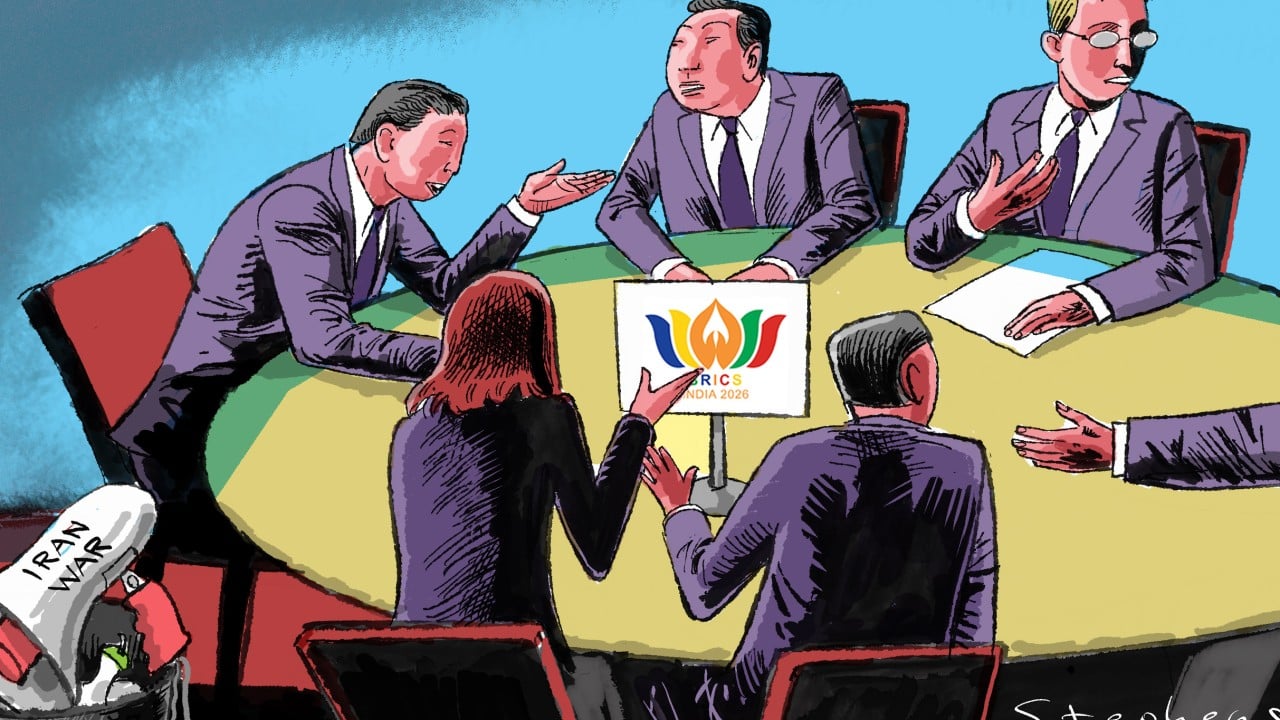
POLICY WIRE — Washington D.C., USA — International diplomacy, despite all its starched suits and lofty pronouncements, often comes down to this: what exactly binds these folks together? Because it sure isn’t always shared values. Sometimes, it’s just shared adversaries, or perhaps—more often than not—a collective eye roll at the existing global order. That’s precisely the uncomfortable truth underpinning the expanded BRICS bloc, a group that’s now a unwieldy collection of ten nations, stumbling through an era defined by conflict and — quite frankly — a severe lack of anything resembling unity.
As the Middle East continues its protracted, agonizing spiral into conflict, analysts have been busy scribbling furiously, trying to figure out if BRICS can even whisper, let alone speak, with a single voice. Good luck with that. They can’t, they don’t, — and frankly, they probably shouldn’t. What does a club born from Brazil, Russia, India, China, and South Africa — then recently augmented by heavy hitters like Iran, Saudi Arabia, Egypt, Ethiopia, and the UAE — really expect? A cohesive foreign policy doctrine on, say, regional proxy wars when two of its brand-new members, Iran and the United Arab Emirates, are fundamentally at loggerheads?
It’s an arrangement that’s less about ideological alignment and more about opportunistic pragmatism, a handshake between strange bedfellows keen on carving out new spheres of influence, or at least diluting the old ones. The ongoing hostilities in the Middle East—Iran’s proxies, the regional power struggles, the endless cycle of retaliatory strikes—haven’t just laid bare the fractures within the region; they’ve showcased BRICS’ intrinsic inability to forge consensus. You’d think common membership might temper these rivalries, but nope. It’s business as usual, with a new badge to wear.
The situation casts a long shadow, not just over the immediate theater of conflict, but across the broader Muslim world, including nations like Pakistan, which has its own delicate balancing act with regional powers and global blocs. Pakistan, often a front-row spectator to regional turmoil and domestic insecurity, understands implicitly that these multi-polar groupings are, at their heart, about leverage, not affection. And leverage, darling, isn’t always a unifying force. It’s about advantage. And for BRICS, that advantage largely stems from challenging a perceived unipolar dominance, not from establishing a new one themselves.
And that’s why the collective shrug over Tehran’s missile launches or Riyadh’s nuanced diplomacy isn’t a bug; it’s a feature. This isn’t the G7, where a nod — and a wink usually mean everyone’s reading from the same script. This is BRICS, a gathering where shared economic aspirations (read: less dependence on the dollar) often trump messy geopolitical commitments. But this kind of practical indifference doesn’t faze them, it empowers them.
“The idea that a diverse collective like ours must speak with one homogenous voice fundamentally misunderstands the emerging multipolar world,” asserted Chinese diplomat Chen Li during a recent economic forum in Beijing. “We seek cooperation — and mutual benefit, not clone-like conformity. Different perspectives are strengths, not weaknesses, in a new global order.” It’s a nice soundbite, though it rather glosses over the active contention between member states.
“BRICS isn’t an alliance; it’s more like a dating app for states with a shared annoyance,” offered Dr. Eleanor Vance, a geopolitical strategist from the Global Governance Institute, during a podcast discussion. “That shared annoyance might bring them together, but it won’t resolve internal family feuds. It’s an exercise in geopolitical window shopping—looking for deals, not commitments.” That’s a brutal, but not inaccurate, assessment.
But the numbers speak, too. Take trade. Despite the rhetoric about a de-dollarized future and increased intra-BRICS commerce, the reality is far more fractured. For example, Saudi Arabia’s total direct investment into Brazil—both now BRICS partners—hovered around just $480 million in 2022, a truly paltry sum when stacked against its substantial investments in European markets. That’s according to data compiled by UNCTAD, which often tracks these flows. It underscores just how tentative these economic bonds truly are, despite the political photo-ops.
What This Means
The persistent lack of a unified front from BRICS on the Middle East crisis, or indeed on much else, won’t cause the bloc to collapse. If anything, it validates its peculiar, amorphous existence. This isn’t a traditional alliance forged in the crucible of common defense or deep ideological ties; it’s a loosely coupled network of convenience. Its very disunity highlights a fundamental shift in global power dynamics. Nations are no longer content to align rigidly with one superpower or another. They’re playing the field, seeking transactional benefits where they can find them, often prioritizing national interest (or sometimes just nationalist sentiment) over bloc solidarity.
Economically, this suggests that while a de-dollarized world remains a distant ambition for BRICS, increased bilateral trade among some members is certainly on the cards—driven by individual needs rather than a collective blueprint. But because they can’t speak with one voice on geopolitical flashpoints, their ability to act decisively as a unified diplomatic force will remain severely limited. They’ll continue to be an economic counterweight, certainly, but a political chameleon, adapting to its surroundings rather than defining them. And in a world desperately craving stability, that kind of non-committal stance might just be BRICS’ most consistent, and ironically, most enduring characteristic.