


Gaza’s Limping Future: Rehabilitation Aid Stranded as Wounds Deepen
POLICY WIRE — Cairo, Egypt — Down to the last nail. That’s how many are now measuring the quiet desperation festering within Gaza. It’s not just the shortage of food or water; it’s...

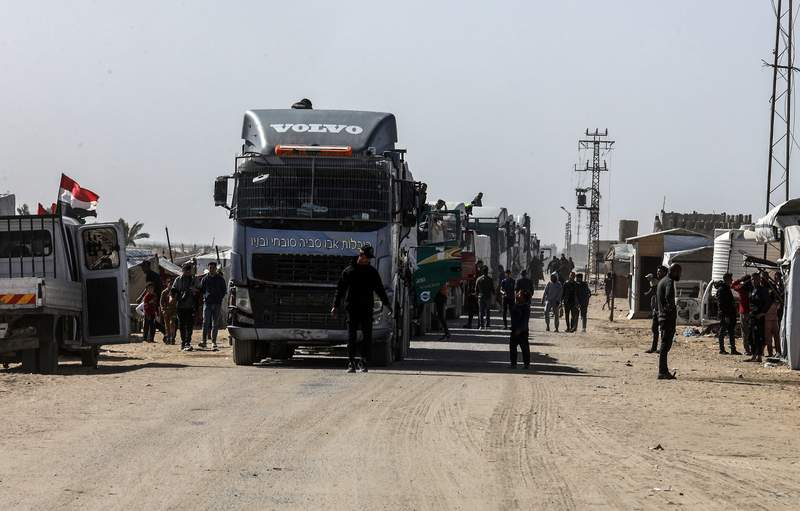
POLICY WIRE — Cairo, Egypt — Down to the last nail. That’s how many are now measuring the quiet desperation festering within Gaza. It’s not just the shortage of food or water; it’s the more insidious, slow-motion decay of bodies and futures, quite literally stuck at a border checkpoint. While headlines blare about diplomatic breakthroughs or breakdowns, something far more grim, if less dramatic, plays out: crutches, wheelchairs, prosthetic limbs—basic gear meant to help shattered lives reclaim a shred of normalcy—are gathering dust, caught in a Kafkaesque tangle of approvals.
The World Health Organization (WHO) has confirmed it. Pallets packed with desperately needed rehabilitation equipment sit idly, just kilometers from thousands who’ve lost limbs, suffered paralyzing injuries, or face a lifetime of chronic pain without proper care. It’s an infuriating paradox, isn’t it? The world pours billions into relief efforts, but then tiny, unyielding bureaucratic mechanisms grind essential supplies to a halt. It’s like pouring water into a bucket with a perfectly placed pinhole, — and no one’s really rushing to plug it.
This isn’t some luxury consignment; we’re talking about everything from simple walking frames for the elderly to sophisticated physiotherapy devices for children—all tools to rebuild what war has torn apart. Think about a seven-year-old who’s lost a leg — and needs a prosthetic fitted. Think about the paralyzed young man whose only hope for regaining movement lies with specialized machines. Their recovery, their very dignity, hinges on these containers, sitting somewhere baking in the desert sun.
And then there’s the long game, the stuff nobody wants to talk about after the bombs stop falling. International humanitarian groups estimate that well over 75,000 Gazans have sustained injuries requiring long-term rehabilitation since the start of the recent intense conflict. These aren’t just numbers; they’re fathers who can’t work, mothers who can’t care for their kids, and children who can’t play. Without this equipment, many face permanent disability, becoming an even heavier burden on a health system already on its knees. It’s a crisis layered upon a catastrophe.
“The frustration is palpable, — and the human cost is immeasurable,” said Dr. Ahmed Al-Mandhari, WHO Regional Director for the Eastern Mediterranean, in a rare, pointed public statement. “We’re not asking for weapons; we’re asking for instruments of healing. Every day this equipment remains at the border, it’s a day stolen from someone’s recovery, a day where hope recedes further. It’s an agonizing delay with direct — and painful consequences for the most vulnerable.”
The blockade, often justified by complex security imperatives, doesn’t distinguish between a crutch and a ballistic missile, at least not in practice. Officials often cite stringent inspections, concerns over dual-use items, or simply—and maddeningly—a backlog. But this administrative limbo, a constant feature of aid efforts into the besieged territory, paints a stark picture: healing simply isn’t the top priority, even when it affects so many. Because, really, who checks a wheelchair for explosives? But they do.
The reverberations of such inaction extend far beyond Gaza’s fences. Across the broader Muslim world, from Islamabad to Jakarta, this systematic choking of basic aid—especially medical—is perceived not merely as bureaucratic inefficiency but as a profound moral failing, even a collective punishment. It fuels a potent narrative of indifference and inequity that corrodes diplomatic goodwill and sparks fresh waves of outrage. This isn’t just about Palestinian bodies; it’s about international trust, about a sense of shared humanity. Such perceived callousness has ripple effects, further destabilizing regions already grappling with internal dissent and external pressures, like those facing Pakistan in its own complex security landscape. Indeed, one could draw parallels to Pakistan’s persistent unrest, where grievances often fester beneath the surface, much like wounds left untreated.
Even a government as embattled as Hamas understands this dynamic, seizing on every delay to cement its narrative of victimization. But that’s cold comfort for families watching their loved ones suffer. Mr. Jameel Al-Sayed, a health ministry official in Gaza, whose brother lost a leg last year, told Policy Wire: “Our people are broken enough. Now, to deny them the very tools to stand again, to walk again, to live again… it’s a cruelty that beggars belief. They’re effectively asking us to live forever in fragments.” It’s hard to argue with that.
What This Means
This persistent bottlenecking of humanitarian aid—specifically life-altering rehabilitation equipment—carries several layers of insidious impact. Politically, it deepens the humanitarian crisis, certainly, but also erodes international efforts to foster stability and trust in the region. Israel’s security concerns, however valid in their broad scope, are often seen globally as being disproportionate when applied to medical supplies. This plays directly into extremist narratives and undermines any semblance of shared values with Western powers, further isolating nations perceived as enabling such blockades. Economically, a populace denied rehabilitation translates directly into a higher burden on an already shattered infrastructure, creating a dependent population unable to contribute meaningfully to any future reconstruction. It’s a vicious cycle that creates an intergenerational legacy of despair — and poverty. It entrenches radicalism — and frustrates every attempt at a lasting peace. For global organizations like the WHO, it exposes the limits of their mandates and the profound gap between declared international humanitarian law and the harsh, often arbitrary, realities on the ground.