

Fleeting Moisture: New Mexico’s Last Winter Gasp Foreshadows a Parched Policy Future
POLICY WIRE — ALBUQUERQUE, N.M. — It’s a meteorological paradox, a final, shivering exhale from a winter that never quite committed: northern New Mexico braces for another unexpected, late-season...

POLICY WIRE — ALBUQUERQUE, N.M. — It’s a meteorological paradox, a final, shivering exhale from a winter that never quite committed: northern New Mexico braces for another unexpected, late-season flirtation with rain and snow. Not a robust deluge, mind you, but a capricious scattering, a watery whisper before the relentless march of summer—a season whose ferocity, many fear, has only just begun to truly assert itself. This isn’t just about a forecast; it’s a stark, if subtle, illustration of a climate system in flux, a precarious dance between momentary relief and an undeniable, long-term aridity that’s rewriting the economic and social calculus for arid regions everywhere.
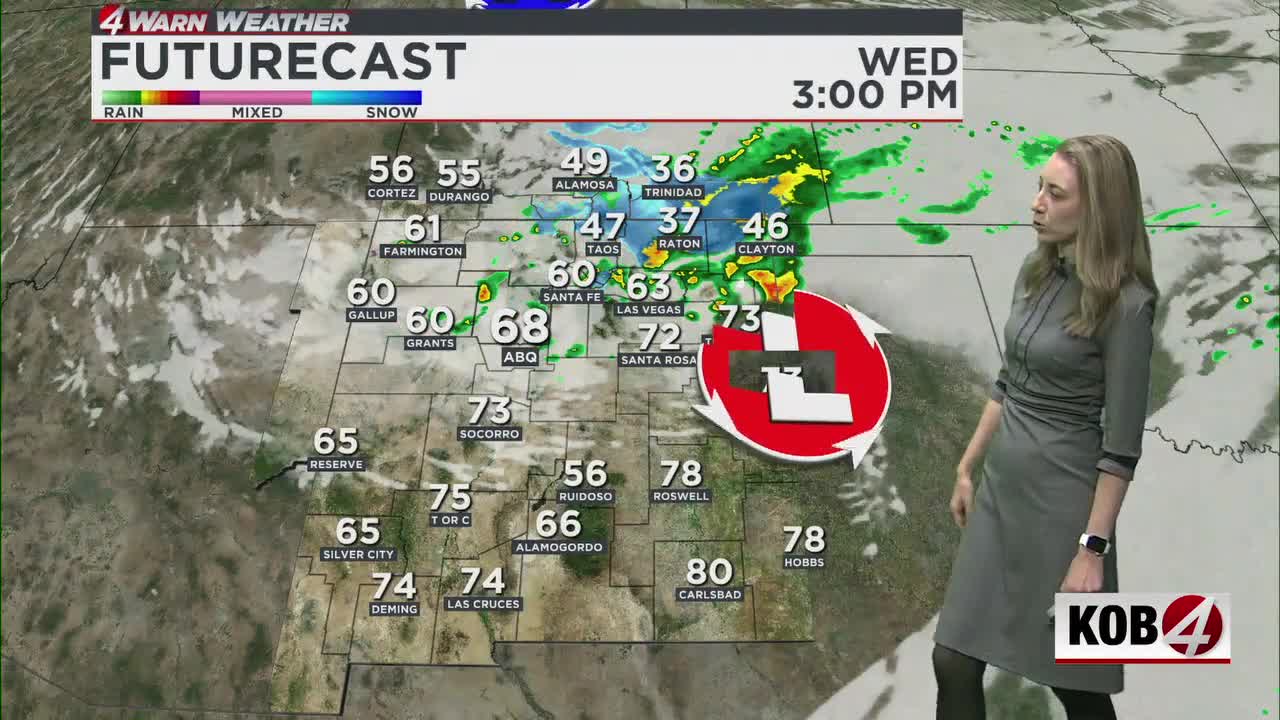
For Wednesday, areas around Raton and Clayton might even see a dusting of the white stuff, a fleeting echo of colder months, while other locales welcome meager rain. Southern New Mexico, meanwhile, anticipates merely dry, breezy conditions, with temperatures soaring into the mid-to-upper 70s and low 80s. Central — and northwest swaths of the state face low-probability isolated showers, tops. But once this fickle system departs, the region — like a patient emerging from a brief, cool fever dream — will snap back to the stark reality of increasingly hotter, drier weather. And just like that, the cycle continues.
This oscillation between transient moisture and entrenched drought isn’t merely weather; it’s a profound policy challenge. It’s about more than just the immediate agricultural outlook, though that’s certainly critical. It’s about the very viability of communities, the future of water rights, and the slow, grinding re-evaluation of what ‘normal’ means in an era of accelerating climate change. “While any moisture is a momentary boon, especially in a state perpetually parched like ours, these late-season fluctuations often mask a more profound and troubling shift in our climate — they’re a band-aid, not a cure, for systemic aridity,” opined Isabella Chavez, New Mexico’s Secretary of Agriculture, during a recent press briefing. Her tone, a practiced mix of hope — and grim realism, reflected the tightrope policymakers walk.
Behind the headlines of sporadic precipitation lies a deeper narrative of water scarcity, a tale told in dwindling reservoirs and diminishing snowpacks. New Mexico, a state that has experienced drought conditions in 19 of the past 22 years, according to data compiled by the U.S. Drought Monitor, finds itself on the front lines of an existential struggle. The current system offers only the briefest of reprieves, a pause before the mercury climbs and evapotranspiration rates skyrocket. It’s a situation that has forced – and will continue to force – difficult conversations about urban growth, farming practices, and interstate water compacts. It’s truly the fragile calculus of survival in a drying landscape.
Still, the broader implications extend far beyond the high deserts of the American Southwest. This regional phenomenon is a microcosm of global climate distress, particularly resonant in the arid and semi-arid zones of the Muslim world, from the Levant to South Asia. Countries like Pakistan, for instance, grappling with an exploding population and the melting glaciers of the Himalayas, face water stress of an almost unimaginable scale. The political instability that can erupt from such environmental pressures is a stark warning. While New Mexico’s challenges aren’t directly comparable in magnitude, the underlying dynamics—unpredictable weather, resource competition, and the imperative for adaptive governance—are unsettlingly familiar. Global policy dialogues on climate change, often seen as abstract, gain visceral urgency when viewed through the lens of a shrinking river or a depleted aquifer, whether it’s the Rio Grande or the Indus.
And what of the local economy? From Pecos to Gallup, businesses relying on tourism or agriculture — think green chile farms, a staple that’s more than just food, it’s an identity — face mounting uncertainty. A brief cold snap can delay planting, while early summer heat can wither crops before maturity. This precarious balance means that even the most resilient local enterprises, those with green chile grit, must innovate at an unprecedented pace.
Dr. Elias Vance, a climatologist at New Mexico State University, didn’t mince words. “We’re observing an increasing volatility in weather patterns; this isn’t merely an anomaly, it’s a symptom. The timing and intensity of precipitation events are becoming less predictable, complicating everything from water resource management to agricultural planning, and frankly, it’s becoming the new normal across arid regions globally,” he underscored, adding a somber note to the state’s fleeting winter reprieve.
What This Means
This intermittent, late-season precipitation in New Mexico, far from being a simple weather update, serves as a crucial policy indicator. Economically, it signifies continued volatility for agricultural sectors, requiring innovative strategies in water conservation and crop selection. The state’s burgeoning tourism industry, particularly ski resorts, faces profound existential questions with shrinking snow seasons. Politically, the situation fuels ongoing, often contentious, debates over water rights — between agricultural interests, urban centers, and Native American sovereign nations — necessitating a more robust, long-term state-federal collaborative framework for water management. The increasing unpredictability also places greater strain on emergency services, preparing for both flash floods from intense, short-duration storms and prolonged wildfire seasons exacerbated by dry conditions. At its core, these weather patterns underscore a critical need for substantial investment in resilient infrastructure and adaptive policy frameworks, not just for New Mexico, but for any region confronting the stark realities of a rapidly shifting climate. It’s a race against time, — and Mother Nature, it seems, isn’t waiting.