

Greenwashing or Greenlight? Brazil Stalls Deforestation Loan Ban Amidst Amazon Crunch
POLICY WIRE — Brasília, Brazil — Another environmental domino tumbled quietly in Brasília this week. No grand, thunderous announcement, just a rather polite, almost apologetic note buried within...

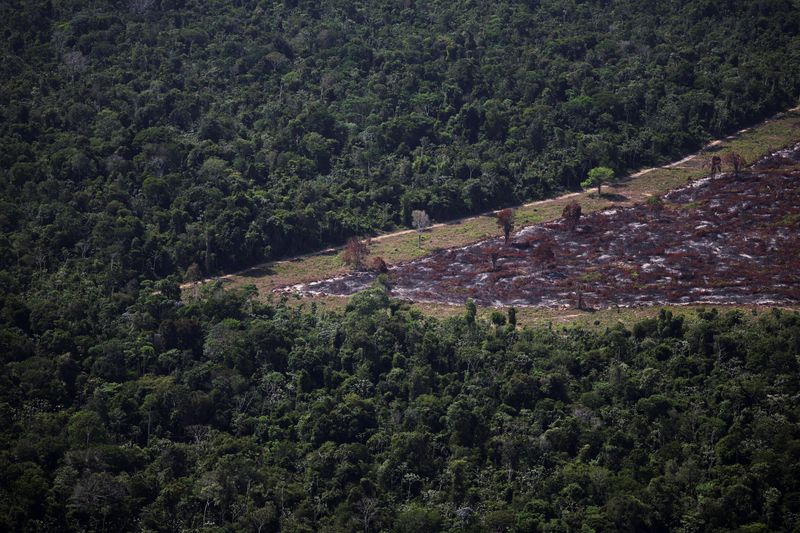
POLICY WIRE — Brasília, Brazil — Another environmental domino tumbled quietly in Brasília this week. No grand, thunderous announcement, just a rather polite, almost apologetic note buried within bureaucratic reams: Brazil’s government—the one supposedly rebooting its global green credentials—is postponing a rather important measure. It’s the kind of decision that barely makes waves in the evening news, but will ripple through the Amazon like a slow, toxic tide. We’re talking about delaying a rule that would slam the door on subsidized rural loans for farmers clearing land illegally.
It sounds mundane, doesn’t it? “Subsidized rural loans.” But scratch that surface, and you’ve got a gut-wrenching tale of economic pressure, political expediency, and a planetary lung slowly being asphyxiated. The rule, initially set to kick in this December, would’ve meant farmers found to have illegally deforested their properties would no longer get a sweet deal from state-backed banks. Seems fair. Reasonable, even. But, nope. The timeline’s now blurry, pushed back until some unspecified point in 2026. Two more years, people. Two more years of potentially cheap money fueling the razing.
President Luiz Inácio Lula da Silva, he campaigned on a promise, a pretty big one, to end Amazon deforestation by 2030. And he’s had some wins. The Brazilian Space Research Institute (INPE) reported a 22.3% drop in Amazon deforestation alerts during his first year back in office compared to the previous administration’s last. Good stuff, right? But then there’s this. This delay feels less like a minor setback — and more like a concession. A big one, too.
The agricultural lobby in Brazil? It’s not just powerful; it’s a behemoth. Their parliamentary caucus, often referred to as the ‘Ruralista bloc,’ controls a significant chunk of votes. You don’t get things done in Brasília without their nod, or at least without appeasing them. And this postponement? It’s pure appeasement. Lula needs their support to pass other parts of his agenda. Politics, huh? It’s always messy, isn’t it?
“We’re not backing down from our climate commitments, let’s be very clear about that,” remarked Marina Silva, Brazil’s Environment Minister, her voice laced with what sounded like weary determination during a recent, tight-lipped press scrum. “We’re simply refining the mechanisms, ensuring our agricultural sector’s transition is—you know—just, and that it considers the realities on the ground. We have to be pragmatic.” Pragmatic. That’s the word they always use when environmental goals get kicked down the road, isn’t it?
But pragmatism has its costs. And the costs here? They’re borne by the planet. And by those populations on the front lines of climate change. Consider South Asia, for instance. Monsoon seasons are already volatile, droughts are getting fiercer, floods more unpredictable. A healthy Amazon influences global weather patterns, including the atmospheric rivers that deliver those life-giving rains to places like Pakistan and India. Mess with the Amazon, — and you’re messing with their weather, their crops, their very survival. New Mexico’s dry despair? It’s a global phenomenon now. Brazil’s choices reverberate. It’s not an isolated decision.
📄 POLICY WIRE WHITEPAPER PUBLISHED: PAKISTAN'S NATIONAL SECURITY POLICY PRIORITIES
👉 READ BY CLICKING HEREBut the powerful don’t see it that way. Jonas Albuquerque, a spokesperson for Brazil’s National Agriculture Confederation (CNA), didn’t mince words in an email exchange. “Farmers feed the world,” he shot back. “Our livelihoods, and the economic backbone of this nation, can’t be held hostage by bureaucratic deadlines and green extremism. This isn’t just about corporate profit; it’s about survival for rural families, securing Brazil’s role as a global food supplier.” Right. Global food supplier, often at the expense of global environmental stability.
It’s a tale as old as—well, as old as land. The conflict between immediate economic gain — and long-term ecological responsibility. And Brazil, for all its rhetoric, appears stuck right in the middle, wiggling, trying to please everyone. It won’t work, of course. Someone always loses. And it’s almost always the environment. The irony? Lula is trying to host COP30 in Belém in 2025. It’ll be a tough sell, pitching Brazil as a climate champion with this particular skeleton rattling in its cupboard. Because actions, as they say, speak louder than carefully crafted press releases. Much louder.
What This Means
This postponement isn’t just a temporal shift; it’s a glaring political signal. For the Lula administration, it represents a difficult tightrope walk between fulfilling ambitious environmental pledges and maintaining parliamentary stability by appeasing the potent agribusiness lobby. Economically, delaying the ban means cheap credit will continue to flow to practices that, while profitable in the short term for certain sectors, impose severe externalities on the environment—costs that eventually global society bears. It incentivizes destructive behavior instead of sustainable land use, locking in unsustainable agricultural models for longer. The delay weakens Brazil’s negotiating position on the international climate stage, potentially inviting skepticism from foreign governments and investors committed to green principles. It complicates efforts to secure climate financing — and erodes trust. Domestically, it could widen the credibility gap between the government’s rhetoric and its on-the-ground policies, fueling discontent among environmentalists and indigenous communities. Geopolitically, it undermines the very narrative Lula has worked to build: Brazil as a global environmental leader. When countries like Brazil falter, it sends a message that economic growth can trump environmental stewardship, a message that impacts climate initiatives far beyond its borders—a disheartening echo across the developing world, even in Muslim-majority nations grappling with their own development-versus-environment choices, places where sustainable models are critical yet often constrained by similar pressures. It really isn’t good.