

Octagon Alchemy: Behind UFC 328’s Geopolitical Grudge Match in Newark
POLICY WIRE — Newark, New Jersey — The pre-fight theater ahead of UFC 328 didn’t just rattle cages; it laid bare the raw, sometimes ugly, appeal of modern combat sports as both spectacle and...

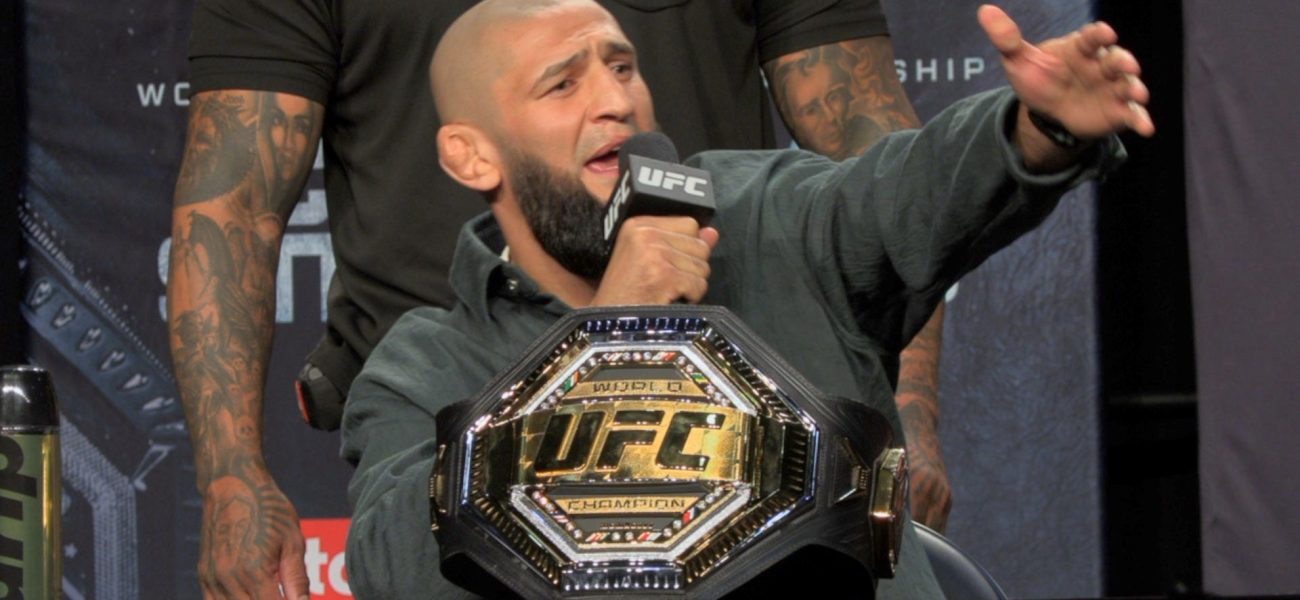
POLICY WIRE — Newark, New Jersey — The pre-fight theater ahead of UFC 328 didn’t just rattle cages; it laid bare the raw, sometimes ugly, appeal of modern combat sports as both spectacle and cultural flashpoint. What began with a routine staredown quickly devolved into an actual physical altercation, Chimaev delivering a kick to Strickland’s shin right under Dana White’s nose. It was pure chaos, a scene expertly manufactured, or perhaps simply allowed to bloom—you decide. But what’s undeniable is this isn’t just two guys looking to throw punches for a belt.
It’s something else entirely. It’s a clash of ideologies, an exercise in carefully cultivated personas, and a masterclass in how fight promotion captures the imagination far beyond the mat. Sean ‘Tarzan’ Strickland, an American fighting out of Las Vegas, plays the unvarnished, often provocatively unfiltered patriot. Khamzat ‘Borz’ Chimaev, the Chechen-Swedish phenom, carries the weight of a warrior heritage, an explicit connection to his faith, and the fervent backing of a global Muslim fanbase. They’re both supremely talented, sure. But their conflict runs deeper than weight classes.
Strickland, ever the provocateur, didn’t pull any punches regarding his adversary. “Look, I ain’t trying to be friends with the guy,” he grumbled in a post-brawl press scrum (a term I use loosely, considering the circumstances). “He represents… well, let’s just say a different way of doing things. When I step in that cage, it’s not just a belt I’m fighting for; it’s what I stand for.” And, you know, he’s probably not wrong. That sentiment resonates with a significant chunk of the audience, craving authenticity, however crude.
Chimaev, for his part, meets such bravado with an icy calm—and, sometimes, a shin-kick. “They talk a lot. Let them talk,” Chimaev reportedly told his corner in the melee’s immediate aftermath, the quote quickly circulating through various channels. “My faith, my family, my brothers—that’s my strength. In the cage, Allah gives me power. I show them what real Chechen warrior is. No more talking, just action.” That’s the narrative fuel the UFC runs on, frankly. It’s what transforms a fight into a moment.
And let’s be frank: the promotion doesn’t just tolerate this; it thrives on it. Dana White, the perpetual puppet master, reportedly just shook his head — and smirked when asked about the dust-up. His empire, built on controlled violence — and unfiltered drama, was just served another piping hot dish of publicity. You couldn’t buy this kind of engagement, could you?
But the raw numbers tell an even bigger story about global reach. Mixed Martial Arts (MMA) now boasts a global audience estimated at over 450 million fans, a significant portion residing in rapidly developing markets across Asia and the Middle East, according to Nielsen Sports data from 2023. These aren’t niche sporting events anymore; they’re bona fide cultural behemoths, weaving themselves into local narratives wherever they touch down. This is particularly relevant when you consider a figure like Chimaev. His persona—the unyielding Muslim warrior—finds a powerful echo chamber in regions hungry for heroes who reflect their values. It transcends the cage, making him more than just an athlete, but a symbol. Think about how this resonates in nations like Pakistan, where faith and martial tradition are deeply intertwined; it’s a potent brew.
The betting odds reflect a stark reality, of course, favoring Chimaev at -550 against Strickland’s +400. That’s a lopsided contest on paper, suggesting a technical mismatch. But the story’s never truly just about the odds, is it? It’s the narratives, the grudges, the simmering animosities—it’s the human element, writ large and bloody. And the promoters? They just count the money.
What This Means
This showdown in Newark isn’t just a high-stakes title fight; it’s a microcosm of the UFC’s shrewd global strategy and, arguably, an exploration of contemporary identity politics playing out with fists. For Policy Wire readers, understanding this fight means seeing the business acumen behind leveraging cultural friction for profit. The UFC, like other global sports organizations, has become incredibly adept at tapping into — and sometimes even exacerbating — geopolitical and social undercurrents, transforming them into marketable rivalries. This isn’t just about selling pay-per-views; it’s about building a global brand that understands the diverse aspirations and tensions of its diverse audience. We’re watching a live-action soap opera where the stakes are incredibly high, where national pride and religious identity get tangled up in fight choreography. It’s a messy, captivating affair, isn’t it?
And for emerging markets, particularly across the Middle East — and parts of Asia, this phenomenon holds a unique grip. Fighters like Chimaev become emissaries, inadvertently or not, of specific cultural or religious narratives. Their successes or failures carry an almost diplomatic weight for ardent supporters. This isn’t an isolated event, either; just look at how Macau’s Octagon Tango reflected Asia’s shifting global sport calculus—it’s all interconnected. We’re observing a potent fusion of combat sport and soft power, where cultural resonance generates eyeballs, drives engagement, and, ultimately, translates to billions for the industry.
Because ultimately, these aren’t just athletic competitions. They’re intricate theatrical productions designed to push boundaries—both physical and ideological. And they sell. Boy, do they ever sell. They don’t simply entertain; they connect, and sometimes, they inflame, global audiences who find a piece of themselves, or their perceived adversaries, embodied in the gladiators locked in the cage.