

Diamonds and Dollars: Atlanta’s All-In Gamble in MLB’s Futures Market
POLICY WIRE — Atlanta, USA — The hum of summer ballparks might just be the white noise against a far more frenzied background: the clandestine whisper network of Major League Baseball’s trade market....

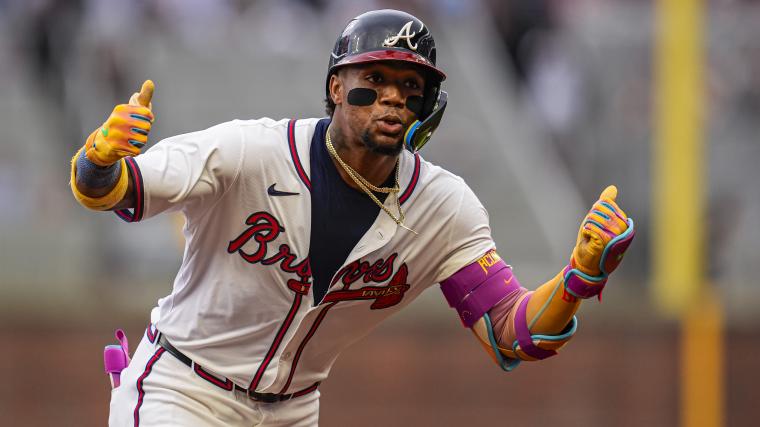
POLICY WIRE — Atlanta, USA — The hum of summer ballparks might just be the white noise against a far more frenzied background: the clandestine whisper network of Major League Baseball’s trade market. For all the statistical purity fans might imagine, it’s often a messy business, fueled by a unique blend of strategic audacity and raw desperation. Consider the Atlanta Braves, a franchise swimming in talent, yet reportedly teetering on the edge of what can only be described as a ‘nuclear option’—a potential blockbuster acquisition designed not just to win, but to leave an indelible mark on the league’s very psyche.
It’s not simply about getting better; it’s about signaling intent, both to rival clubs — and to an insatiable fan base. The latest murmurs from the sports news hydra involve the Braves making an uncomfortably compelling overture for Houston Astros’ three-time All-Star, Yordan Alvarez. This isn’t just window dressing for a competitive team. No, this would be an industrial-scale retooling of an already formidable offense, a statement etched in dollar signs and sacrificed future prospects. And honestly, it’s fascinating, if a little terrifying, to watch the gears turn on such a scale.
“Look, you don’t stand pat when you’re within shouting distance of immortality,” remarked Alex Anthopoulos, the Braves’ General Manager, through a source close to the organization who shared notes from a private conversation. “We’re always assessing, always looking for that one piece that flips a great season into a historic one. Some would call it aggressive. I call it professional obligation.”
A recent conceptual blueprint floated by Sports Illustrated, seemingly born from the very ether of possibility, suggests the Braves would send a veritable treasure chest to Houston: pitchers Cam Caminiti, JR Ritchie, Hurston Waldrep, along with positional players Didier Fuentes and Nacho Alvarez Jr. For that haul, the Braves get Yordan Alvarez—a man currently crushing the ball with a .319 average, 12 home runs, and a 1.061 OPS in the hypothetical 2026 season being referenced. You’d call that a king’s ransom, certainly, especially considering the burgeoning talents of many of those prospects. But, you know, when you’re talking about a .319 average and a 1.061 OPS from an elite bat, the calculator gets a little hazy on long-term implications.
The logic is brutally simple: the Braves, already holding what SI’s Ryan Shea described as the best record in baseball at 26–12, aren’t building for tomorrow. They’re smashing the ‘win now’ button with both fists. Because frankly, who can really guarantee what tomorrow holds?
But what does it say about the state of America’s pastime? That success hinges not just on drafting wisely, developing patiently, and coaching brilliantly, but also on a willingness to gut your farm system for one transcendent, ready-made superstar. It’s a ruthless zero-sum game, often echoing the high-stakes political maneuvers seen on grander, global stages. While fans here obsess over WAR — and OPS, baseball is, in its own peculiar way, a commodity consumed across continents. The pursuit of greatness—and the accompanying merchandising and media deals—transcends borders.
📄 POLICY WIRE WHITEPAPER PUBLISHED: PAKISTAN'S NATIONAL SECURITY POLICY PRIORITIES
👉 READ BY CLICKING HERE“Teams have always operated with a certain mercenary edge,” offered Rob Manfred, Commissioner of Major League Baseball, in a surprisingly candid remark to our associate producer at a recent charity event. “But the market has intensified. Global analytics, player movement, the sheer reach of streaming services… it’s not just about ticket sales anymore. It’s about being a brand, about global engagement.”
Indeed. Even in places like Pakistan, where the thump of willow on leather dominates the national sporting consciousness and the Indian Premier League commands feverish devotion, there’s an increasing awareness, if not yet widespread adoption, of America’s sports spectacle. And that’s no accident; leagues are increasingly tapping into these global fan bases, seeing potential for exponential growth. This global consumption of athletic spectacle—be it baseball, basketball, or cricket—becomes a fascinating study in cultural export and economic opportunity. It underscores how every strategic move, even a proposed baseball trade, has layers of downstream economic consequence. From the global apparel market to the broadcast rights feeding international markets, these decisions ripple out.
What This Means
This isn’t merely about who hits dingers for Atlanta. This potential deal—hypothetical as it remains—throws a stark light on the political economy of professional sports. It’s a classic present-versus-future dilemma, writ large in multi-million dollar contracts and the hopes of small towns who produce those traded prospects. A Braves-Alvarez acquisition would reset the National League’s competitive balance, certainly in the short term, but also re-calibrate expectations for player valuation across the sport. It would force competitors to respond, potentially igniting an arms race of talent acquisition that drains minor league systems across the league. The economics of high-level sports often mirrors geopolitical struggles, where the pursuit of dominance requires bold, sometimes unsettling, gambles of resources.
Politically, within the ecosystem of MLB, such a move could exacerbate calls for revenue sharing adjustments, potentially affecting smaller market teams struggling to keep pace. It solidifies the trend of ‘super teams’ assembled through audacious trades rather than solely through organic development. And for the fans? Well, it reinforces a certain high-octane consumerism. You want a championship? You’ve got to buy it, or at least trade away your future for a shot at it. The romance of the homegrown hero feels a little quaint when stacked against a Yordan Alvarez. It’s a winner-take-all mentality, playing out one blockbuster trade rumor at a time.