


World Cup’s Diplomatic Foul: Iran’s IRGC Visa Push Sows Discord
POLICY WIRE — Doha, Qatar — The beautiful game. It’s supposed to transcend borders, bridge divides, unite humanity, right? Or so they say. But don’t tell that to the political realists...

POLICY WIRE — Doha, Qatar — The beautiful game. It’s supposed to transcend borders, bridge divides, unite humanity, right? Or so they say. But don’t tell that to the political realists watching the run-up to this year’s global football spectacle. Because even in the carefully sanitized bubble of international sport, gritty geopolitics has a nasty habit of crashing the party.
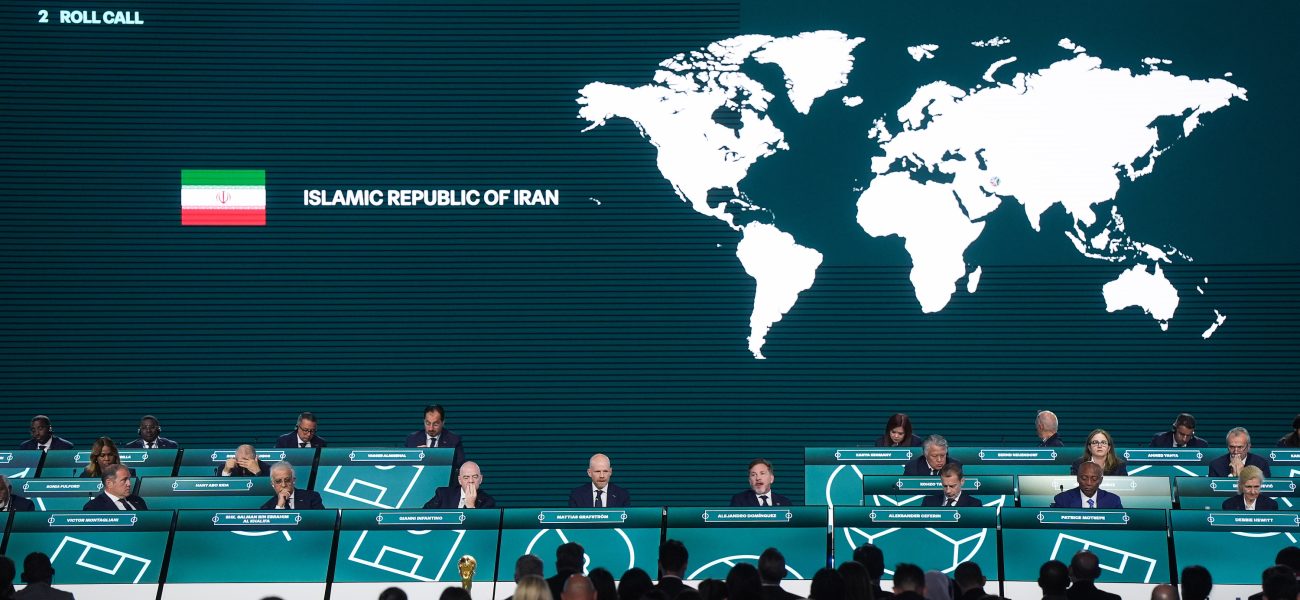
Right now, it’s Tehran that’s lobbing a diplomatic curveball right into FIFA’s—and Qatar’s—court. The Islamic Republic isn’t just asking for run-of-the-mill visitor permits for its football fan contingent. Nope, they’ve gone one step further, openly pushing for visa access for individuals who have served, or are currently serving, in the Islamic Revolutionary Guard Corps (IRGC). Yeah, that IRGC. The organization that many, including Washington, brand a terrorist entity. Awkward, isn’t it?
This isn’t some quiet background murmur. It’s a full-frontal challenge to the delicate international balance, forcing the host nation, Qatar—a state already walking a tightrope between regional rivals and global expectations—into an uncomfortable spot. But they’re not the only ones left scratching their heads.
“We expect nothing less than equal treatment for all our citizens, regardless of their past or current service to our nation,” declared Iranian Foreign Ministry Spokesman Saeed Khatibzadeh, his tone unyielding during a recent press briefing. “The idea that service in the Revolutionary Guard would disqualify a patriotic Iranian from supporting their national team is insulting. We consider this a non-negotiable aspect of our participation.” It’s classic Tehran; wrapping a controversial request in the flag of national pride, daring anyone to object.
The problem? The IRGC isn’t just some glorified national guard. It’s a powerful, sprawling paramilitary force with deep tentacles stretching throughout Iran’s security apparatus and, controversially, into regional conflicts. The U.S., for its part, officially designated the IRGC a Foreign Terrorist Organization (FTO) in 2019—a move few other nations have replicated, but which carries significant legal and diplomatic weight. This isn’t just a squabble over fan club membership; it’s a global headache waiting to happen.
“This request presents a quandary, certainly,” conceded a European diplomatic source, speaking off the record due to the sensitive nature of discussions. “Allowing individuals linked to an organization designated as a terror group by major world powers to freely enter an international event like the World Cup creates immediate security and ethical concerns. And it forces host nations to make difficult choices about their alliances and international obligations.” They’ve got a point.
Consider the logistical nightmare: Who verifies these applications? What if a Western intelligence agency flags someone? Qatar, like its Gulf neighbours, has its own complex relationship with Iran, always balancing diplomatic engagement with deep-seated strategic concerns about Tehran’s regional ambitions. Now, they’re being asked to potentially rubber-stamp visas for an organization seen by some as a regional destabilizer. Talk about a rock and a hard place. The situation echoes other regional fault lines, stretching all the way to Balochistan’s gritty horizon, where security forces face constant threats in an often-unstable landscape. Pakistan, a fellow Muslim-majority nation, regularly navigates similar geopolitical complexities and would be watching this play out with keen interest.
But there’s more to it than just diplomatic niceties. For Iran, this is also about perceived legitimacy. Getting IRGC members—even if they’re ‘fans’—into a high-profile international event would be a subtle, but symbolically potent, victory against the very countries that seek to isolate it. It normalizes their image on a world stage.
What This Means
The stakes are high, — and not just for Qatar. If Tehran gets its way, it sets a chilling precedent. International sports bodies like FIFA, ostensibly apolitical, suddenly become arbiters of geopolitical sanctions and security classifications. It complicates future event hosting for any nation grappling with nuanced foreign policy—which, let’s be honest, is practically all of them. Economically, this could spook sponsors who dread being associated with controversy, forcing them to re-evaluate their commitments to global events. It also strains the delicate regional diplomacy that Qatar and other Gulf states rely on to manage their complex relationships, especially with powerhouses like Iran. For the broader Muslim world, it’s a test of unity versus strategic divergence—do Muslim-majority nations stand with a regional heavyweight despite its international designations, or adhere to the concerns of global partners?
The irony isn’t lost on many. A nation frequently criticized for its own human rights record, particularly concerning women and minorities, demands open access for an organization accused of repressive actions and supporting proxies across the Middle East. And all for a game. It’s a classic example of soft power weaponized, forcing uncomfortable concessions or an equally uncomfortable diplomatic rebuke. For policy makers and soccer fans alike, this whole messy situation serves as a stark reminder: you can try to keep politics off the pitch, but it’s always, always waiting in the stands. It really is the ultimate chess match, playing out even amidst what should be simple international sports, echoing some of the themes found in the region’s Asia’s silent arms race. You simply can’t disentangle these things.