


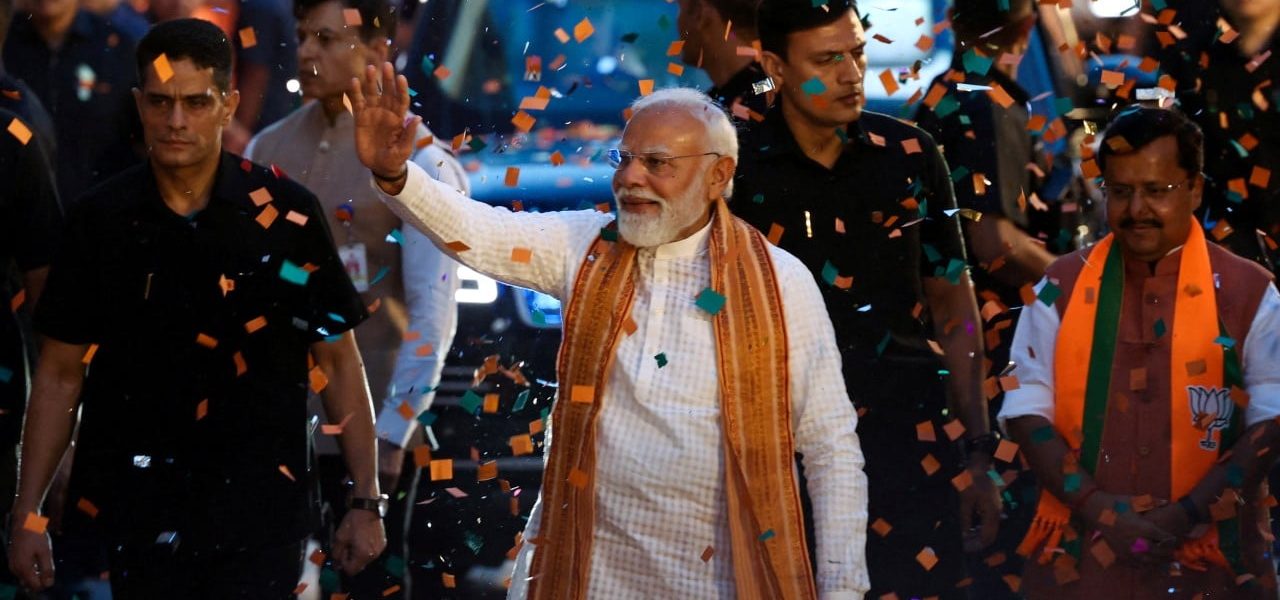
Modi’s Checkmate: How West Bengal Became His Gambit in a Divided India
POLICY WIRE — New Delhi, India — Just when everyone was ready to write him off, predicting a lameness-duck chapter for his premiership, Narendra Modi decided to reintroduce himself. You know—the guy...

POLICY WIRE — New Delhi, India — Just when everyone was ready to write him off, predicting a lameness-duck chapter for his premiership, Narendra Modi decided to reintroduce himself. You know—the guy who, just last election, had to navigate a hung parliament, sparking chatter that his iron grip on India was finally loosening. But, boy, talk about a short memory. Now, his Bhartiya Janata Party (BJP) isn’t just breathing; it’s flexing muscle in the very places that were supposed to be its toughest nuts to crack. Especially in West Bengal.
It’s a peculiar twist, isn’t it? The narrative shifted almost overnight. One moment, we’re dissecting how Modi’s national majority evaporated. The next, he’s consolidating unprecedented power at the provincial level. This isn’t just political maneuvering; it’s a strategic chokehold being applied on India’s federal structure, state by state, chief minister by chief minister.
The Bengali heartland, that erstwhile fortress of fierce regional pride — and historical leftist ideology, fell. Not a gentle surrender, mind you—a thorough, almost aggressive takeover. The BJP’s victory, snatching an improbable 207 out of 294 assembly seats, according to the Election Commission of India, marks a dramatic collapse for the Trinamool Congress, ending what many assumed was its perpetual hold. It’s a sweep that turns the tide and redraws the political map in one of India’s most populous and culturally rich states. And it signals a shift that goes way beyond mere numbers on a ballot sheet.
“The people of Bengal have spoken a clear truth,” Prime Minister Modi declared to cheering supporters in Ahmedabad, his tone measured but his eyes alight. “Their mandate isn’t just for a party; it’s for an idea—for progress, for opportunity, for a renewed sense of national purpose. We’re here to deliver.” It’s hard to argue with a man who just snagged what he didn’t have.
And deliver he might. With West Bengal under its wing, the BJP-led National Democratic Alliance now controls roughly 70 percent of India’s state legislatures. Think about that for a second. The implications for policy implementation—for land reforms, for economic directives, for social legislation—are colossal. This kind of power concentration isn’t just about governance; it’s about reshaping the very soul of the country. For critics, it’s alarming; for supporters, it’s destiny.
But this kind of triumph rarely comes without a darker edge. Political observers in Kolkata report a palpable tension in the wake of the results, with sporadic clashes and allegations of voter intimidation echoing past election cycles. Even the days after the win saw violence; you can read more about it here: Bengal’s Bloody Echo. These incidents aren’t outliers; they’re part of a pattern that makes many folks deeply uncomfortable about the rough-and-tumble nature of Indian democracy these days.
“This isn’t merely about one state; it’s about the very balance of India’s federal structure,” argued S. Narayanan, a senior strategist for the opposition Congress Party. He didn’t mince words. “When a government consolidates power so aggressively at the regional level while losing ground nationally, you have to ask: who truly benefits from this arrangement? Is it the people, or a centralized ambition?”
📖 THE POLICY DIGEST MAGAZINE: OCTOBER 2026 EDITION NOW LIVEExclusive Battle Damage Assessment by Sarah Adams, US-Iran Diplomatic Talks & Transnational Investigations👉 READ BY CLICKING HERE
West Bengal also borders Bangladesh, a nation with whom India shares complex ties, including migration challenges and trade agreements. A BJP government in Bengal might take a harder line on cross-border issues, especially given the party’s historical stance on undocumented immigration and its rhetoric around national security. That could ripple through the region, impacting everything from humanitarian aid to the delicate diplomatic dance of the SAARC nations. The Muslim minority in Bengal—sizable and often politically active—also watches nervously, knowing BJP victories often come bundled with heightened nationalist discourse. How these communities integrate into a new political reality remains to be seen. You can bet neighbors, including Pakistan, are taking notes; instability always gets their attention (Shadow War Deepens).
What This Means
This West Bengal flip isn’t just another notch on Modi’s belt; it’s a reassertion of his ideological project across India. Politically, it means less regional resistance to central government policies, particularly on contentious issues like citizenship reforms or federal taxation. Economically, we’ll likely see an accelerated push for industrialization, probably with a heavy focus on the Modi government’s pet projects and corporate ties. Investment might flow, but at what cost to local autonomy — and traditional industries?
For India’s minority populations, especially the significant Muslim communities within West Bengal, this victory ushers in a period of intense scrutiny and potential pressure. The BJP’s majoritarian agenda often creates a climate of anxiety, and how the new state government manages communal harmony will be a litmus test for its promises of inclusive development. The stakes couldn’t be higher, not just for the people of Bengal, but for the fundamental character of India’s pluralistic democracy. The whispers of a weakened leader? Those sound like a distant memory now.