


Oslo’s Unexpected Blockade: Missile Standoff Snags Malaysia’s Defense Ambitions
POLICY WIRE — Kuala Lumpur, Malaysia — It often isn’t the grand pronouncements or the diplomatic fireworks that trip up a nation’s defense plans. No, sometimes it’s something far...

POLICY WIRE — Kuala Lumpur, Malaysia — It often isn’t the grand pronouncements or the diplomatic fireworks that trip up a nation’s defense plans. No, sometimes it’s something far less dramatic: paperwork. Or, rather, the sudden, opaque reinterpretation of it.
Malaysia’s defense establishment is, for lack of a better word, miffed. What began as a straightforward acquisition of guided missiles from Norway has run smack into a wall of uncommunicated export control decisions from Oslo. You see, Malaysia expected a delivery. Instead, it got radio silence, followed by the faint murmur of an unforeseen ban. It’s like ordering a state-of-the-art vehicle only to find the dealership suddenly can’t (or won’t) release the tires, citing a new interpretation of ‘road safety.’
Kuala Lumpur isn’t just seeking clarity; they’re trying to understand if a major European defense partner has arbitrarily pulled the rug out from under a legitimate defense contract. Defense officials here are tight-lipped about the specifics, but the underlying tension is palpable. Because for Malaysia, a rapidly developing nation striving for self-reliance in its defense posture amidst complex regional dynamics—think the South China Sea, for one—this isn’t just about delayed hardware. It’s about reliability, trust, — and the capricious nature of international arms markets.
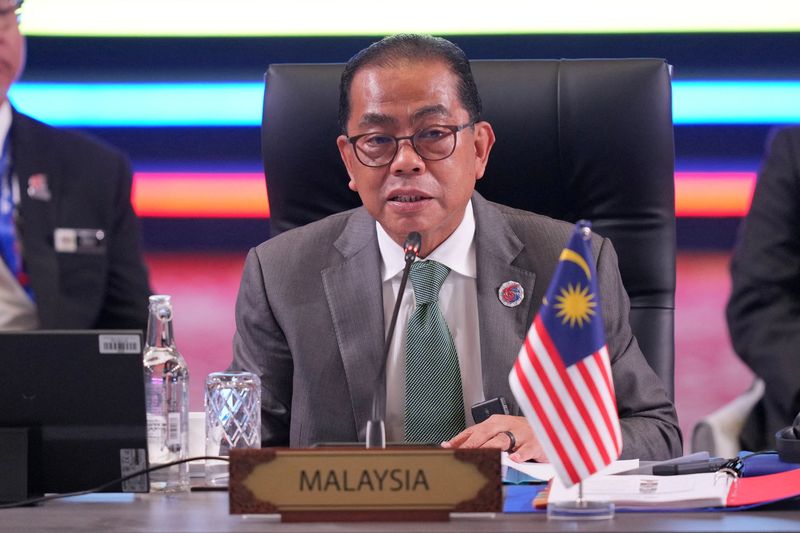
“We can’t have our sovereign defense capabilities held hostage by vague, unilateral shifts in policy from thousands of miles away,” asserted Dato’ Sri Mohamad Hasan, Malaysia’s Defense Minister, speaking off-the-record to reporters recently. “Malaysia’s security interests, and frankly, its dignity, demand clear communication and respect for standing agreements. We’ve been a responsible buyer, a constructive partner; this isn’t how mature nations conduct business.” He sounded justifiably annoyed, you could say.
And it’s not like Malaysia’s the only one feeling the pinch. Smaller nations, especially in the Global South and the broader Muslim world, frequently encounter hurdles when sourcing advanced defense tech from Western suppliers. Whether it’s outright bans, prohibitive costs, or the dreaded ‘dual-use’ clauses — (that’s where an item can be military *or* civilian, so it’s tricky)—it’s always something. This incident, while specific, offers a glimpse into that larger struggle for strategic autonomy. Countries like Pakistan and Turkey, for instance, have wrestled with similar restrictions for years, sometimes pushing them toward alternative suppliers like China or indigenous development programs. It’s a dance, really, of technological need versus geopolitical entanglement.
In Oslo, officials maintain a more subdued stance. “Norway adheres strictly to international law and our national export control regulations, which are continuously evaluated against evolving geopolitical circumstances,” stated Marit Berg, Director for Export Controls at Norway’s Ministry of Foreign Affairs, in an official email response that offered little in the way of concrete detail. “Our goal is always to prevent Norwegian technology from contributing to instability, but we acknowledge the need for clear communication with our partners.” That’s a polite way of saying, ‘we did what we did, and we’ll tell you why when we’re good and ready.’
Malaysia isn’t exactly a pariah state. They’ve long pursued a relatively balanced foreign policy, juggling relationships with China, the U.S., and other global powers. This defense contract—likely for air-to-air or anti-ship missiles—is part of a larger push to modernize the Royal Malaysian Air Force and Navy. With China’s increasing assertiveness in the South China Sea, and an increasingly tense global arena—one might even mention Beijing’s Aquatic Gambit for good measure—such upgrades aren’t luxuries; they’re essential. Reports indicate Malaysia’s defense budget saw a 7% increase last year, reaching roughly 4.1 billion USD, according to data from the Stockholm International Peace Research Institute (SIPRI).
But the real rub? These unexpected hitches can disrupt more than just delivery schedules. They force nations to re-evaluate their entire procurement strategy. Do you stick with Western suppliers, who offer high-quality but come with potential political strings? Or do you look elsewhere, perhaps to vendors with fewer restrictions but possibly less interoperability with existing systems?
What This Means
This episode serves as a rather pointed reminder of the increasing interconnectedness—and thus, vulnerability—of global supply chains, even for something as critical as defense hardware. For Malaysia, it isn’t just about this one missile delivery; it’s about the broader implications for strategic planning. You can’t adequately plan a five-year defense upgrade if your suppliers can suddenly renege without notice. This kind of friction erodes trust and can inadvertently push nations towards less transparent or more ideologically aligned suppliers.
And politically, it puts Norway in a delicate spot. On one hand, maintaining strict export controls is part of its commitment to peace. On the other, alienating a non-aligned, democratic partner like Malaysia over an unstated shift in policy doesn’t exactly foster global goodwill. It certainly doesn’t help Norway’s image as a reliable trading partner. We’re in a global economic environment already strained by things like the Suez Squeeze; these sorts of disruptions only complicate matters further. This small diplomatic spat over some missiles illustrates how quickly a seemingly minor administrative decision can ripple out, touching sovereign defense, international trust, and regional stability. It’s never just about the weapons themselves, is it? It’s about who controls the flow.