


San Diego’s Sacred Sidelines: A Bike Lane’s Unholy Row Ignites Urban Warfare
POLICY WIRE — San Diego, CA — The quiet grandeur of San Diego’s historic St. Jude’s Basilica had, for generations, been interrupted only by the rhythmic peel of its bells or the...

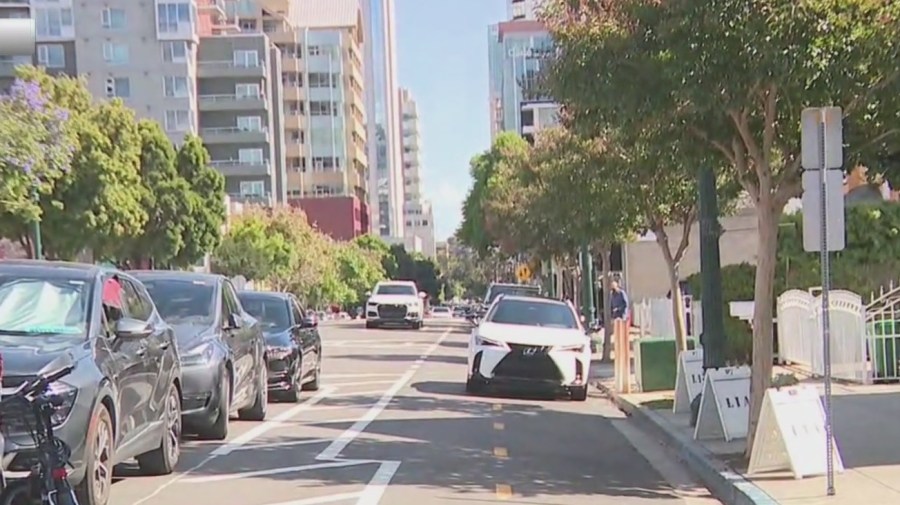
POLICY WIRE — San Diego, CA — The quiet grandeur of San Diego’s historic St. Jude’s Basilica had, for generations, been interrupted only by the rhythmic peel of its bells or the occasional celebratory procession. Now, however, a new sound dominates the air: the relentless hum of asphalt pavers and the determined shouts of construction crews. They’re laying down a state-of-the-art bike lane, you see — a strip of green asphalt and white paint that, for many, represents progress, but for the Basilica’s devout, signifies an impending siege.
It’s a peculiar skirmish, really, one playing out across American cities: the seemingly innocuous quest for sustainable urban mobility colliding head-on with established community anchors. This isn’t merely about transportation infrastructure; it’s a profound cultural clash, pitting civic ideals against centuries of venerated tradition. And here, in this sun-drenched Californian city, the stakes feel particularly acute, carving a distinct rift between those who envision a car-lite future and those clinging to tangible links to their past.
The controversy centers on the planned rerouting of traffic and, critically, the wholesale removal of dozens of parking spaces directly adjacent to the 150-year-old Basilica. For congregants, many of them elderly or infirm, these spaces aren’t a luxury; they’re an absolute necessity, the very umbilical cord connecting them to their spiritual home. They’ve faithfully walked these hallowed grounds, navigating life’s trials and triumphs, for decades – some even generations. Now, it seems, they’re asked to cycle.
City Councilwoman Elena Ramirez, a vocal proponent of the project, defended the urban planners’ vision with an almost unshakeable resolve. “We’re not just building bike lanes; we’re cultivating a healthier, more sustainable San Diego,” she opined during a recent, rather heated, community meeting. “Progress isn’t always convenient, you know, but it’s absolutely vital for our collective future. We’ve seen the economic and environmental pressures of car-centric infrastructure mounting for years.”
But convenience, or the lack thereof, isn’t the sole grievance. It’s the symbolic gesture, the perceived indifference to a cornerstone institution, that truly chafes. Father Michael O’Connell, the Basilica’s long-serving rector, doesn’t mince words. “Our parishioners, many of whom have limited mobility, rely intrinsically on that immediate access,” he shot back, his voice thick with a mixture of exasperation and righteous indignation. “This isn’t merely progress; it’s an unsettling erasure of community, a callous disregard for the very soul of this neighborhood. We’re not an obstacle to be circumvented; we’re a living, breathing part of San Diego.”
The situation in San Diego isn’t an isolated anomaly; it’s a microcosmic reflection of a global predicament. Consider, if you will, the venerable mosques and shrines nestled within the burgeoning metropolises of Pakistan or Turkey, where centuries-old spiritual sanctuaries grapple daily with the relentless march of modern urban expansion. These sacred spaces, often predating current city layouts by centuries, frequently find themselves at odds with ambitious infrastructure projects – be it new highways, metro lines, or, yes, even dedicated cycling corridors. The battle for proximity, for convenient access, for the preservation of an architectural and spiritual footprint, resonates deeply in communities that understand the profound cultural weight of such heritage. San Diego’s diverse populace includes many from such backgrounds, for whom the idea of state-mandated alteration to a religious locus carries a weight beyond simple traffic flow.
📄 POLICY WIRE WHITEPAPER PUBLISHED: PAKISTAN'S NATIONAL SECURITY POLICY PRIORITIES
👉 READ BY CLICKING HEREIndeed, a 2023 report published by the National Association of City Transportation Officials (NACTO) indicated that while dedicated bike infrastructure projects across U.S. cities demonstrably increased cycling rates by an average of 30% in their first two years, they also precipitated an average 18% reduction in street-level parking within a quarter-mile radius of the new lanes. That’s a statistic that hits hard for institutions like St. Jude’s, whose draw isn’t just local but regional, reliant on vehicles for much of its congregational base.
Still, the city presses on, citing environmental benefits — and a vision for a more active citizenry. They’re confident it’s the right choice, a necessary, if uncomfortable, step toward a greener future. But for the Basilica’s faithful, and indeed for many local business owners who also fear dwindling foot traffic, the future feels less green and more… gridlocked. It’s an agonizing calculus: the ephemeral promise of urban renewal versus the tangible value of entrenched heritage. And like many policy decisions that ripple through communities, it poses an unsettling precedent.
What This Means
At its core, this localized spat over a few hundred yards of urban real estate embodies a far larger, more complex political and economic dynamic. The move signals a clear prioritization by city authorities: sustainability and active transport over traditional automotive convenience, even at the expense of long-standing community institutions. Economically, the shift could revalue surrounding properties; those amenable to car-free living might see an uptick, while businesses reliant on drive-by traffic or easy parking could face significant headwinds, perhaps even closures.
Politically, the fallout could be substantial. Such seemingly minor infrastructure projects often galvanize unlikely coalitions of opposition, bridging generational and socioeconomic divides within a neighborhood. This isn’t just about a bike lane; it’s about who gets to define a city’s character, whose voices hold sway in urban planning, and whether the perceived ‘greater good’ can legitimately override deeply held community identity and practical needs. The controversy also spotlights the increasing difficulty in balancing progress with preservation, particularly in dense urban environments where every square foot is contested territory. It’s a delicate dance, — and San Diego, for now, seems to be stepping on a lot of toes.