


The Lingering Echoes: Germany’s Unfinished Reckoning with a Fading Terror
POLICY WIRE — Berlin, Germany — The calendar has flipped over four decades since Germany, then bifurcated by Cold War lines, wrestled with the visceral contest presented by the Red Army Faction. Yet,...

POLICY WIRE — Berlin, Germany — The calendar has flipped over four decades since Germany, then bifurcated by Cold War lines, wrestled with the visceral contest presented by the Red Army Faction. Yet, the specter of that era, its radical ideologies — and brutal acts, still manifests in the nation’s courtrooms. For a society obsessed with memory — and atonement, the past isn’t just history; it’s an ongoing litigation.
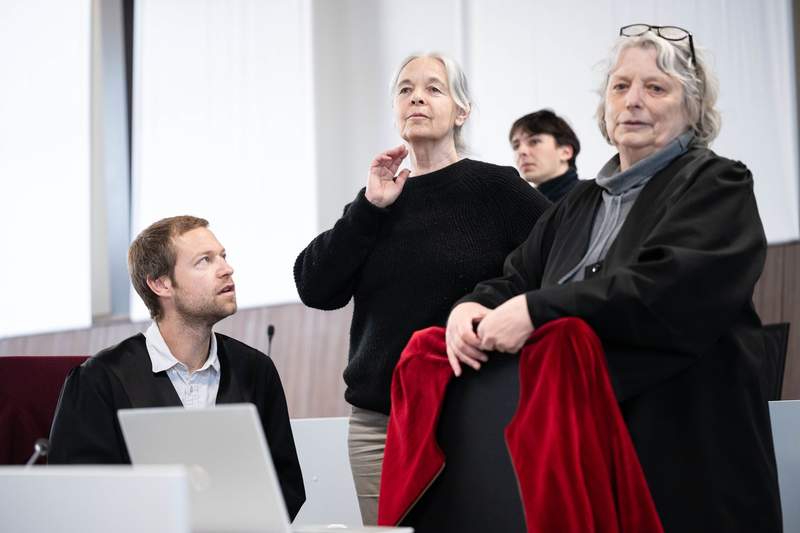
It’s against this backdrop that prosecutors have now petitioned for a 15-year custodial sentence for a former RAF operative, aged 65, implicating her in a series of audacious robberies and attempted murders that once paralyzed parts of West Germany. The ask, delivered with a certain solemn gravitas (and no small measure of historical weight), underscores the federal government’s unyielding stance: time doesn’t simply erase culpability. Nor should it, many contend.
This isn’t merely about punitive measures. It’s about a nation’s protracted — and often painful — dialogue with its own historical shadows, stretching from the Nazi era to the urban guerrilla warfare of the RAF. And make no mistake, the state’s memory is long. The Red Army Faction, often referred to by its earlier, more infamous moniker, the Baader-Meinhof Gang, wrought a decade of terror across the Federal Republic. They targeted industrialists, judges, and American military personnel, aiming to destabilize the capitalist system they so reviled. According to official figures from the German Federal Criminal Police Office (BKA), the RAF was ultimately responsible for 34 murders, alongside scores of kidnappings and bank heists.
Public Prosecutor Andreas Schulz, his voice devoid of histrionics, underscored the state’s position. “Justice, though sometimes a glacial mechanism, insists on its due,” he pronounced to a hushed courtroom. “The passage of time doesn’t expunge the gravity of these acts, nor the profound suffering inflicted upon innocent lives. We prosecute not for vengeance, but for the rule of law.” It’s a sentiment that resonates deeply within a legal system built on meticulously addressing historical wrongs, no matter how distant.
But the practicalities? Securing convictions for crimes committed when typewriters were cutting-edge technology and the Berlin Wall still stood requires Herculean efforts. The evidence in this current case, prosecutors maintain, links the defendant to several armed robberies in the mid-1990s, acts seemingly designed to finance the underground existence of the group’s last vestiges. It’s a curious footnote, this late-stage criminality, suggesting that even after their ideological wellspring had dried up, the sheer mechanics of survival demanded continued transgression.
And so, Germany grapples. It’s a struggle familiar to other nations that have endured periods of intense political violence or extremist movements. Think of Pakistan, for instance, a nation that continues to confront the lingering ideological debris of various militant factions, some homegrown, others international in their genesis. The questions of accountability, rehabilitation, — and how to heal societal rifts persist, just as they do in Germany. What’s the point of a long sentence for a septuagenarian? Is it deterrence, historical clarity, or simply a society’s refusal to forget?
📄 POLICY WIRE WHITEPAPER PUBLISHED: PAKISTAN'S NATIONAL SECURITY POLICY PRIORITIES
👉 READ BY CLICKING HEREDr. Sabine Fischer, a spokesperson for Germany’s Federal Ministry of Justice, offered a broader perspective. “Germany has wrestled with the specter of the RAF for generations,” she noted, choosing her words with careful precision. “This case, however belated, reminds us that a nation’s soul is often defined by how it confronts its darkest chapters, and how it holds accountable those who sought to dismantle its foundations. It’s an ongoing commitment to our democratic principles.”
What This Means
At its core, this trial isn’t just about a single individual or a cluster of aging offenses; it’s a political bellwether. Economically, it signifies the enduring, albeit diminished, cost of internal security apparatuses maintaining a watch on historical threats. For decades, resources have been dedicated to finding — and prosecuting these last remaining Red Army Faction members. Politically, it reaffirms the German state’s profound commitment to prosecuting ideologically driven violence, regardless of the passage of time. This sends a clear, if archaic, message to any nascent extremist groups that their actions will shadow them indefinitely. It’s also a testament to the power of a state’s narrative over its history, ensuring that the RAF isn’t romanticized but remembered for its destructive legacy. This meticulous pursuit of justice stands in stark contrast to how some nations, particularly those grappling with the thorny issue of propaganda and information warfare around contemporary extremism, handle their own historical figures who committed acts of violence.
Behind the headlines, it’s a sobering reminder that the trauma of such movements can calcify within a nation’s collective consciousness. While the immediate threat of the RAF has long since vanished, the symbolic weight of its trials persists. They serve as historical markers, punctuating Germany’s long, often uncomfortable, journey toward a complete understanding of its 20th-century political landscape.