


Europe’s Digital Drawbridge: Ryanair Demands Halt to French Biometric Border Rollout Amidst Looming Travel Chaos
POLICY WIRE — Paris, France — The future of European travel, often envisioned as a seamless, technologically advanced passage, is currently facing a very analog problem: friction. It’s not just a...

POLICY WIRE — Paris, France — The future of European travel, often envisioned as a seamless, technologically advanced passage, is currently facing a very analog problem: friction. It’s not just a matter of lost luggage or flight delays anymore; it’s the very gatekeepers of the continent, the digital sentinels, that are drawing ire. And, as usual, it’s Ryanair, Europe’s perpetually outspoken low-cost carrier, leading the charge, imploring France to grant a reprieve from its nascent biometric border controls.
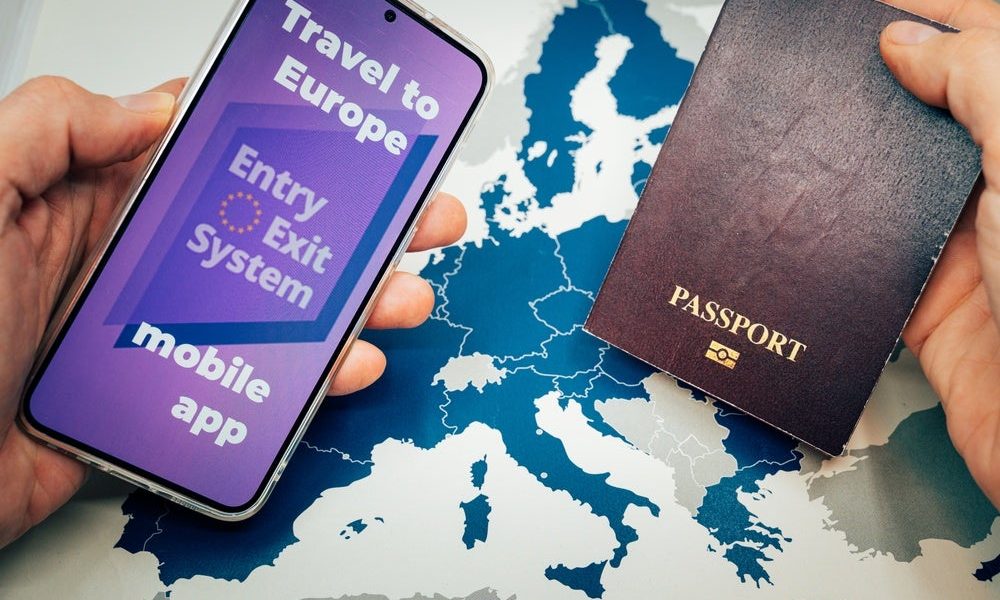
While most airlines quietly brace for the inevitable, Ryanair’s distinctively blunt petition to the French government isn’t merely about operational headaches. No, it’s a forewarning, a siren blare against what they contend is an ill-prepared, potentially chaotic rollout of the EU’s new Entry/Exit System (EES). This isn’t some obscure bureaucratic detail; it’s a fundamental shift in how non-EU citizens enter the Schengen Area, replacing manual passport stamps with biometric data collection—fingerprints and facial scans.
Behind the headlines, this technological pivot carries profound implications, not just for holidaymakers, but for the very arteries of commerce and cultural exchange. You see, the EES is designed to enhance security and efficiency, tracking entries and exits more rigorously, but the implementation, particularly in France, has left industry players like Ryanair aghast. They’ve witnessed first-hand the early, agonizingly slow trials, predicting gargantuan queues and missed flights, particularly at key entry points like French ports servicing the UK.
“We’re not Luddites, but this rollout is a catastrophe waiting to happen,” declared Michael O’Leary, Ryanair’s often-acerbic CEO, his voice reportedly tinged with characteristic exasperation when addressing Policy Wire. “You can’t just flip a switch on a system that impacts millions of travelers without proper trials and adequate infrastructure. It’s an operational train wreck, threatening to unravel the entire summer travel season for those crossing into France. We simply must have a pause.”
Still, French authorities remain steadfast. “France remains fully committed to enhancing border security and streamlining legitimate travel,” retorted a spokesperson for the French Interior Ministry, speaking anonymously due to ongoing diplomatic sensitivities. “The system’s integrity — and efficacy are paramount, and we’ve implemented it in accordance with EU mandates. Any teething problems are temporary, not systemic, and we’re confident in our ability to adapt.” It’s a classic bureaucratic stance: The system works, you just need to work harder.
The EES is a colossal undertaking. Frontex, the European Border and Coast Guard Agency, recorded approximately 380 million non-EU citizens crossing EU external borders in 2022. Each of these individuals will eventually fall under the biometric umbrella. The ambition is clear: better data on overstayers, enhanced security against illicit entry. But the path to this digital utopia is fraught with potential pitfalls, from equipment malfunctions to data privacy concerns—a topic that resonates deeply in regions accustomed to extensive state data collection.
Consider Pakistan, for instance, where the National Database and Registration Authority (NADRA) has for years managed a sophisticated biometric identification system for its populace. While effective for internal governance, the idea of external powers collecting such sensitive data for international travel often sparks debates about data sovereignty and potential for misuse. This isn’t merely a European concern; it’s a global one, especially among nations that have, for better or worse, grappled with the implications of pervasive digital identification. Indeed, some critics argue such systems could inadvertently create a two-tiered travel experience, where those from certain nations face disproportionate scrutiny, even as the EU aims for efficiency.
The economic stakes are also sky-high. Tourism contributes significantly to France’s GDP. Prolonged border delays could severely dent arrivals, especially from the UK – a crucial market – as well as American and Asian tourists who might opt for destinations with less convoluted entry procedures. It’s not just about lost revenue for airlines; it’s about the cafes, hotels, and cultural sites that depend on that influx. And, let’s be frank, France isn’t exactly renowned for its rapid adoption of new digital processes at the best of times.
The situation casts a long shadow over the European Union’s broader digital agenda. If a crucial member state like France stumbles so visibly on such a pivotal initiative, it raises questions about the bloc’s capacity for coordinated technological integration. This isn’t just about Ryanair’s bottom line; it’s about the EU’s credibility as a modern, efficient, and welcoming global entity.
What This Means
At its core, Ryanair’s outcry over France’s biometric border controls isn’t just a corporate tantrum; it’s a canary in the coal mine for the entire European Union’s ambitious digital border strategy. Politically, a botched EES rollout could severely undermine public confidence in EU-wide technological initiatives, giving ammunition to Eurosceptic voices who decry bureaucratic overreach and inefficiency. It presents a difficult political calculus for Paris: accede to industry demands and potentially delay a key EU security measure, or push forward and risk substantial economic disruption through frustrated tourists and clogged ports. The latter, frankly, could have dire consequences for France’s crucial tourism sector, which is still recovering from post-pandemic malaise.
Economically, the implications are immediate — and stark. Extended waiting times translate directly into reduced passenger throughput, impacting not only airlines but also ferry operators and Eurostar. Think of the knock-on effect: fewer tourist dollars spent, fewer jobs supported in the hospitality sector, and a potential chilling effect on short-haul travel from non-EU countries. For airlines, the cost of delays—from missed connections to compensation claims—is astronomical. This isn’t just about efficiency; it’s about maintaining Europe’s competitive edge as a global travel destination. The friction here highlights a broader tension between national security imperatives and the seamless flow of people and capital that defines a prosperous Europe. The outcome will set a precedent for how policy decisions regarding digital infrastructure are implemented across the continent, affecting everything from travel ease to economic resilience in the face of logistical hurdles.