

UNRWA’s Perilous Tightrope: New Allegations Deepen Humanitarian Funding Crisis
POLICY WIRE — Washington D.C., USA — It’s a thankless enterprise, perhaps the most impossible job in international aid: providing succor to millions of refugees while navigating a geopolitical...

POLICY WIRE — Washington D.C., USA — It’s a thankless enterprise, perhaps the most impossible job in international aid: providing succor to millions of refugees while navigating a geopolitical minefield perpetually on the brink of detonation. Such is the Sisyphean struggle of the United Nations Relief and Works Agency for Palestine Refugees in the Near East (UNRWA). And now, the ground beneath its feet has simply crumbled further. New evidence, compiled by the U.S. Agency for International Development (USAID), reportedly implicates an additional four UNRWA staff members in the harrowing October 7 attacks on Israel.
This isn’t merely another headline; it’s a profound exacerbation of a crisis already threatening to dismantle the agency entirely. These fresh accusations, surfacing months after an initial wave linked a dozen UNRWA employees directly to the assaults, have intensified the ongoing donor dilemma. For an organization often described as the last lifeline for Gazans – a populace currently enduring famine conditions and incessant bombardment – the implications are nothing short of catastrophic. Think about it: an agency born of displacement, now itself threatened with displacement from its own mandate.
USAID’s findings, though not yet fully public or independently verified by the UN, reportedly bolster Israel’s long-standing claims about the infiltration of UNRWA by Hamas. While the UN’s own internal investigations and an independent review led by former French Foreign Minister Catherine Colonna continue, the weight of these new allegations is palpable. They’ve cast a long, cold shadow over the already contentious debate regarding UNRWA’s future, particularly its funding. America, traditionally UNRWA’s largest single donor, froze its contributions in January, a decision that sent ripples across the donor landscape. Other nations, spurred by similar concerns, followed suit.
“We’ve been unequivocal: any organization receiving U.S. taxpayer dollars must uphold the highest standards of neutrality and accountability,” shot back a senior State Department official, speaking on background due to the ongoing sensitivity of the matter. “These fresh revelations, however preliminary, only deepen our resolve to ensure that not a single dollar inadvertently supports terrorism. It’s a tragic reality we must confront, however painful the consequences for humanitarian operations.” This sentiment, though couched in diplomatic terms, signals a hardened stance that won’t easily soften.
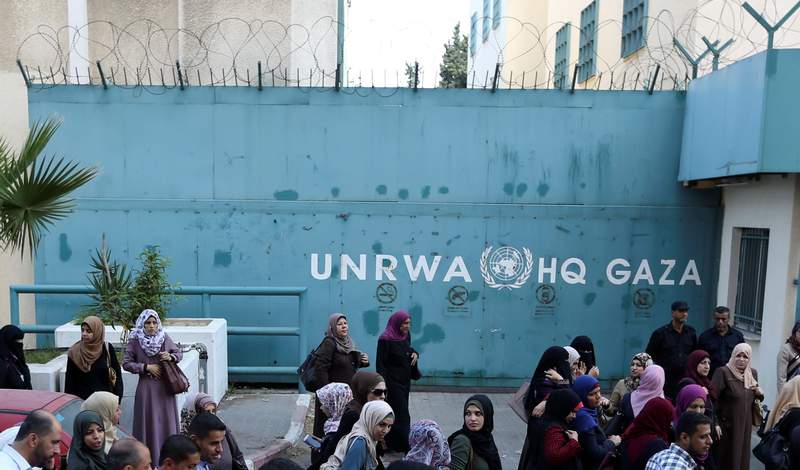
Still, UNRWA’s advocates are quick to highlight the agency’s indispensable role. Its sprawling network of schools, clinics, and food distribution centers forms the bedrock of humanitarian assistance in Gaza, the West Bank, Lebanon, Syria, and Jordan. With 13,000 staff, mostly Palestinian refugees themselves, it’s not just an aid provider; it’s a primary employer, a pillar of communal identity. An UNRWA spokesperson, speaking under customary anonymity given the fraught environment, emphasized the agency’s commitment to internal review. “We condemn terrorism in all its forms. Our internal investigations are rigorous, — and anyone found complicit will be held accountable,” they asserted. “But let’s not forget the nearly six million refugees we serve across the region – 1.7 million of whom are in Gaza alone – who rely on us for their very survival. Their plight shouldn’t be a casualty of political maneuvering.” This defense, though genuine, frequently struggles to penetrate the fog of accusation.
Behind the headlines, the wider Muslim world watches with a blend of indignation — and deep concern. In capitals from Islamabad to Cairo, these allegations are often viewed through a different lens — one colored by decades of perceived Western bias and the stark realities of occupation. For countries like Pakistan, a vocal champion of Palestinian rights, these developments amplify the narrative of a besieged people and an aid system under coordinated attack. They see a crucial humanitarian artery being deliberately choked, not merely scrutinized. Such perceptions can, and often do, fuel broader regional distrust of international institutions, complicating diplomatic efforts and potentially strengthening narratives that delegimize humanitarian mandates.
And what of the sheer scale of the operation? UNRWA’s 2023 budget stood at $1.6 billion, almost entirely dependent on voluntary contributions. Deprive it of that funding, especially from its largest donors, and you’ve essentially pulled the plug on a critical care patient. The organization itself has conceded that it can’t operate without substantial, consistent international support. It’s a stark, almost brutal, equation.
What This Means
The fresh USAID evidence fundamentally reshapes the diplomatic chess game surrounding UNRWA. Politically, it grants further leverage to those—primarily Israel and its allies—who argue for significant reforms, if not outright dismantling, of the agency. It complicates the calculus for European nations that had cautiously reinstated funding, placing them under renewed domestic and international pressure. It also entrenches the perception among many in the Muslim world that humanitarian aid is being weaponized, further fueling anti-Western sentiment and potentially pushing states like Pakistan to seek alternative, perhaps less politically stringent, aid mechanisms or partners.
Economically, the continued funding freeze guarantees an exacerbation of the already dire conditions in Gaza. UNRWA’s services aren’t luxuries; they’re the bare minimum — food, water, shelter, basic healthcare. Without them, the humanitarian catastrophe deepens, leading to greater instability and a more entrenched cycle of violence. This precarious situation also leaves a vacuum, one that other, often less equipped, organizations struggle to fill, or worse, one that extremist groups might exploit. It’s a cynical irony that calls for the removal of an agency, however flawed, without a viable replacement, only ensure a greater level of human misery. This dynamic isn’t just confined to Palestine; it reverberates across regions where external aid is intertwined with political objectives. The ongoing debate also influences broader defense allocations, as seen in Israel’s aerial gambit, where billions are poured into military hardware amidst cries for humanitarian relief.
Ultimately, this latest development intensifies the agency’s existential crisis, forcing a reckoning with its structure, accountability, and the seemingly irreconcilable demands placed upon it. It’s a lose-lose proposition, where the victims of conflict invariably bear the heaviest burden, while the apparatus designed to help them becomes another casualty in a protracted, unwinnable war of narratives.