

UFC’s White House Gambit: Ilia Topuria’s Unburdened Ascent Amidst Political Spectacle
POLICY WIRE — Washington, D.C. — It’s not often the octagon rubs shoulders with the Oval Office, but such is the peculiar alchemy of modern spectacle. Next month, as the Ultimate Fighting...

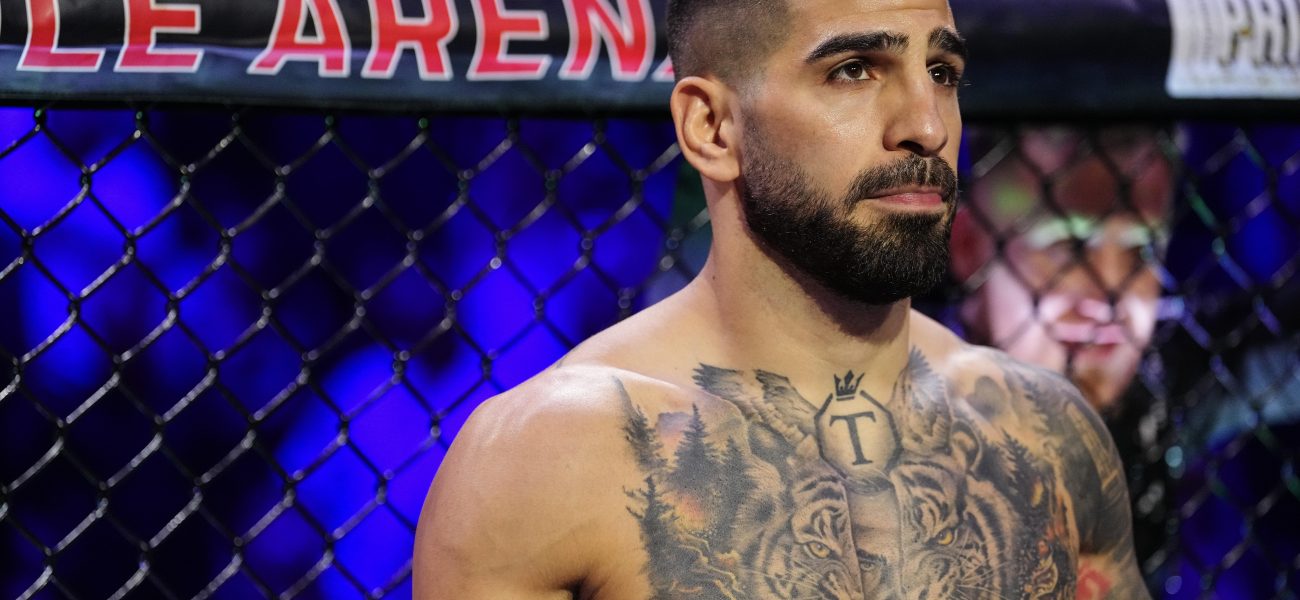
POLICY WIRE — Washington, D.C. — It’s not often the octagon rubs shoulders with the Oval Office, but such is the peculiar alchemy of modern spectacle. Next month, as the Ultimate Fighting Championship (UFC) stages its unprecedented ‘UFC White House’ event in Washington, D.C., the true headline isn’t merely the main event — a lightweight championship clash between reigning king Ilia Topuria and interim titleholder Justin Gaethje. No, the real story orbits around Topuria himself, the undefeated Spaniard, who, contrary to the typical pre-fight bluster, claims a newfound, almost Zen-like detachment from the monumental stakes.
After nearly a full year away from competitive combat, some cognoscenti — particularly those online — whispered about Topuria’s waning hunger. How could a man, nicknamed ‘El Matador,’ who’d already captured UFC gold in two separate weight classes and cemented himself as a global icon, possibly find fresh impetus? But Topuria, with the casual confidence of someone who’s seen the summit and found it surprisingly calm, dismisses such conjecture as utterly misinformed. He’s not just motivated; he’s operating on an entirely different plane, he insists.
“I’ve seen the complaints, actually, I’m way more motivated now because I don’t have anymore fear around,” Topuria declared recently. “I don’t fear anymore that I’m going to have to pay some bills or pay some person or whatever. For the first time, I’m doing it because I really want to do it because if I didn’t want to fight, I wouldn’t fight. So this is the first time that I really want to fight.” It’s an unnerving thought, truly, considering the sheer, brutal efficacy he demonstrated while still burdened by pecuniary anxieties and the unforgiving featherweight weight cuts. Now, unyoked from those earthly constraints, he anticipates an even more devastating performance.
The sentiment finds an echo, albeit a more commercially savvy one, from the top brass. “This isn’t just a fight; it’s a testament to how far this sport has ascended,” Dana White, the pugnacious president of the UFC, asserted recently, referring to the unprecedented D.C. event. “We’re not just selling tickets; we’re selling a global phenomenon, one that’s now knocking on the very doors of power.” White, ever the showman, grasps the symbolic weight of the venue, a recognition that elevates the sport beyond mere athleticism into a cultural force, a prism through which to view American soft power (and a considerable amount of hard cash).
Oddsmakers, those dispassionate arbiters of future events, corroborate Topuria’s self-assessment. He currently stands as a colossal -700 betting favorite over Gaethje, according to leading sportsbooks, a spread that borders on the absurd in a sport renowned for its inherent unpredictability. But even this overwhelming endorsement registers as a peculiar burden for ‘El Matador.’ “It’s just weird,” Topuria mused. “I don’t like the fact that I’m so favored. Everyone already knows that I’m going to win — and there’s no big expectation, like ‘What’s going to happen in the fight!?’ Now they’re trying to guess how quickly I will knock him out — I’ve never had that.”
So, the challenge for Topuria isn’t necessarily Gaethje, a formidable, battle-tested opponent, but the psychological landscape of universal expectation. How does one perform without fear, without the gnawing need for financial security, and without the intrigue of an uncertain outcome? It’s a rare existential quandary for a professional athlete, one usually reserved for philosophers or lottery winners, not cage fighters.
📄 POLICY WIRE WHITEPAPER PUBLISHED: PAKISTAN'S NATIONAL SECURITY POLICY PRIORITIES
👉 READ BY CLICKING HEREAnd yet, this unusual internal narrative unfolds against the backdrop of an even more unusual external one: an Octagon erected, metaphorically speaking, within spitting distance of America’s political heart. Such an event — a high-octane combat sport staged at a venue implying the gravitas of state — carries its own peculiar resonance. It speaks volumes about the UFC’s relentless march into the mainstream, its successful courtship of powerful figures, and the ever-blurring lines between entertainment, politics, and raw economic might.
Still, the question remains: Can Topuria maintain his unburdened ferocity when the pressure of being the undisputed, unfavored favorite replaces the primal fear of financial ruin? It’s a psychological tightrope walk, played out under the harsh lights of an unprecedented stage, for a champion who insists he’s never been more dangerous, precisely because he has nothing left to lose (or gain, financially speaking).
What This Means
At its core, the ‘UFC White House’ event is less about sport and more about political theater and economic consolidation. The decision to host such a high-profile, often controversial, combat sport adjacent to the symbolic center of American power underscores the UFC’s remarkable ascent from niche attraction to a global entertainment juggernaut. It’s a potent display of influence, normalizing and legitimizing a sport that, not so long ago, was derided as ‘human cockfighting’ by critics, including Senator John McCain. Now, it’s a vehicle for diplomatic soft power, a spectacle that can — and does — capture global attention, reaching audiences in places like Pakistan and other South Asian nations where martial arts traditions run deep, and the aspirational pull of Western athletic success resonates strongly.
This isn’t merely about selling pay-per-views; it’s about embedding the UFC, and by extension, American commercial enterprise, into the global cultural fabric. The implicit endorsement from such a venue amplifies the sport’s reach, offering a peculiar form of cultural diplomacy. For emerging economies, particularly in the Muslim world, where a burgeoning youth population avidly consumes global media, events like this aren’t just fights—they’re narratives of individual triumph against formidable odds, spectacles that inadvertently align with broader geopolitical messaging. But it also raises thorny questions about the commodification of national symbols and the increasing entanglement of entertainment with governmental optics. The spectacle, much like the diplomatic firestorms sparked by certain political remarks, becomes a global conversation piece, albeit one wrapped in athletic prowess rather than policy directives.