


The Perennial Prow: Gaza Aid Flotilla’s Predictable Encounter Stirs Diplomatic Waters
POLICY WIRE — Eastern Mediterranean — The script, by now, is achingly familiar. Another vessel, laden not just with provisions but with potent symbolism and the fervent hopes of activists, has set...

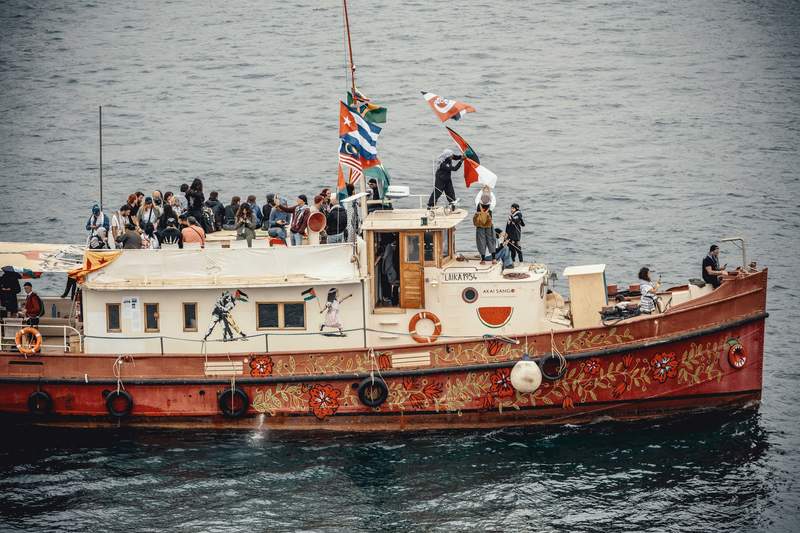
POLICY WIRE — Eastern Mediterranean — The script, by now, is achingly familiar. Another vessel, laden not just with provisions but with potent symbolism and the fervent hopes of activists, has set sail toward Gaza, only to find itself on a collision course with the unyielding reality of Israel’s naval blockade. It’s a high-seas choreography that has played out repeatedly over the past decade and a half, each iteration a stark reminder of the enduring humanitarian crisis and the seemingly intractable political stalemate it underpins.
Early reports from the Gaza Freedom Flotilla Coalition, the organizers behind the audacious endeavor, indicated Monday that Israeli naval forces had indeed commenced maneuvers to intercept their lead vessel, the ‘Freedom’ — a vessel whose very name seems to taunt the imposed restrictions. This isn’t a surprise; it’s a foregone conclusion. For all the passionate rhetoric and genuine humanitarian intent, these flotillas often serve less as direct conduits for aid and more as floating billboards for a cause, daring a confrontation that invariably comes.
At its core, this latest gambit — a desperate roll of the dice — underscores the international community’s enduring frustration with the enclave’s dire straits. Gaza, a sliver of land home to over two million Palestinians, has been under an Israeli and Egyptian blockade since 2007. The stated purpose: to prevent arms from reaching Hamas, the Islamist group controlling the territory. The grim consequence: a humanitarian emergency that periodically flares into global headlines.
“We’ve made it patently clear,” an Israeli Defense Ministry spokesperson, who declined to be named but is known for her unflinching briefings (and, frankly, her endless patience), shot back recently, “that humanitarian aid can and does reach Gaza through established mechanisms, but we won’t permit attempts to breach our maritime blockade under any guise. Our primary duty is to safeguard our citizens.” It’s a position carved in stone, reiterated with almost ritualistic regularity.
But organizers see it differently. “This isn’t about charity; it’s about challenging an illegal siege and asserting the fundamental right of people to receive aid without military interference,” declared Huwaida Arraf, a prominent co-founder of the International Solidarity Movement and veteran of previous flotilla attempts, her voice resonating with a familiar blend of defiance and exasperation. She’s seen this picture before (more times than she’d care to count, no doubt). It’s a perpetual test of wills, waged on the high seas, far from the cameras that often capture the worst of the ground conflict. And, predictably, the flotilla’s progress has been slow, deliberately so, designed to maximize media attention and international pressure before the inevitable intervention.
Still, the stakes are undeniably high. A recent UN OCHA report (United Nations Office for the Coordination of Humanitarian Affairs) starkly highlighted that over 60% of Gaza’s population was already food insecure even before the recent escalation of hostilities. The constant refrain from international bodies is that aid needs unfettered access. Yet, the reality on the ground, or rather, on the water, remains stubbornly consistent.
For nations like Pakistan, and indeed much of the broader Muslim world, these incidents resonate deeply (as they always have). They’re seen as emblematic of a perceived global inaction regarding Palestinian suffering. Demonstrations often erupt, diplomatic statements are issued — usually condemning Israel’s actions — and the cycle of anger and frustration intensifies. It’s a key source of solidarity, yes, but also a flashpoint for broader geopolitical tensions across South Asia and beyond, often fueling anti-Western sentiment. And it’s not just a regional affair; it reverberates through diasporas globally, keeping the Palestinian question very much alive on the international agenda.
📄 POLICY WIRE WHITEPAPER PUBLISHED: PAKISTAN'S NATIONAL SECURITY POLICY PRIORITIES
👉 READ BY CLICKING HEREThe activists on board, representing a global contingent including journalists, doctors, and human rights advocates, undoubtedly understand the odds. They’re not naive. They’ve embarked on this voyage knowing it’s likely to end with an Israeli boarding party, a diversion to Ashdod port, and the eventual deportation of all aboard. Yet, they persist. Why? Perhaps it’s a stubborn belief in the power of moral witness, a refusal to let Gaza’s plight fade from the world’s collective consciousness. (Or perhaps it’s a well-trodden path for raising funds — and profiles.)
What This Means
The predictable interception of yet another Gaza-bound flotilla isn’t just a military operation; it’s a potent, if weary, political statement from all sides. For Israel, it reinforces its sovereignty and its determination to maintain the blockade, signaling that external attempts to circumvent its policies will be met with force, albeit usually non-lethal. It sends a clear message to Hamas, too, that any hope of unfettered maritime access remains elusive. Conversely, for the flotilla organizers, the interception serves as validation. It provides fresh evidence, in their view, of Israel’s ‘illegal siege’ — and fuels their ongoing advocacy efforts. It also draws renewed international attention, however fleeting, to Gaza’s humanitarian crisis, maintaining pressure on global policymakers.
Economically, these interventions have minimal direct impact on Israel’s robust economy, though they certainly don’t help its global image, already battered by prolonged conflict. For Gaza, the episode underscores its continued isolation and dependence on controlled aid channels, exacerbating already severe economic hardship. The blockade, effectively limiting both imports and exports, ensures a suffocating lack of economic autonomy, making genuine recovery a distant dream. Politically, the recurring spectacle further entrenches the narrative of occupation and resistance, making any path to de-escalation or lasting peace even more arduous. It’s a tragic, unchanging tableau. The echoes of previous waves of defiance continue to ripple across the geopolitical landscape, reinforcing deeply entrenched positions and proving once again that some battles are fought less for victory, and more for the sake of fighting.