

Samsung’s Subterranean Supercar: A Chaebol’s Audacious Dream Exhumed
POLICY WIRE — Seoul, South Korea — The labyrinthine ambitions of South Korea’s chaebol conglomerates are legendary, their reach extending from semiconductors to shipbuilding, and occasionally,...

POLICY WIRE — Seoul, South Korea — The labyrinthine ambitions of South Korea’s chaebol conglomerates are legendary, their reach extending from semiconductors to shipbuilding, and occasionally, it seems, to the utterly improbable. For decades, whispers persisted of a secret Samsung project from the 1990s — not a phone, not a television, but a bespoke, high-performance supercar, born from a fleeting corporate dalliance with automotive grandeur. Now, that automotive ghost has materialized, exhumed from a forgotten basement, a metallic testament to a corporate giant’s audacious, if ultimately futile, venture.
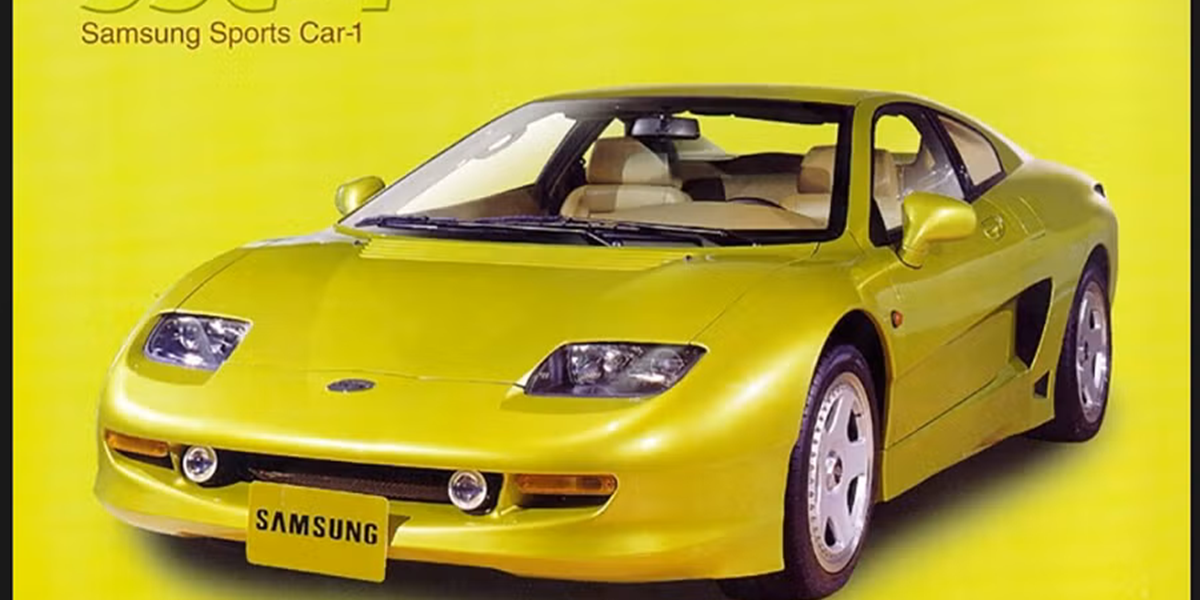
It’s not every day a leading global electronics firm is found to have secretly developed a V8-powered exotic automobile, designed to challenge the era’s European elite. But Samsung, in its relentless pursuit of diversification and industrial might during the ‘Asian Tiger’ years, wasn’t just any firm. This vehicle, reportedly a heavily re-engineered Lotus Esprit V8, dubbed the ‘Samsung SSC-1’, represents a peculiar footnote in the company’s vast narrative. A physical manifestation of unfettered ambition, it speaks volumes about the Korean industrial policy of the period, which encouraged – some would say compelled – its powerful chaebols to cast their nets wide, very wide.
The 1990s were an era of explosive growth for South Korea, averaging an annual GDP increase of 7.1% from 1990 to 1997 before the Asian financial crisis hit. Such rapid expansion fostered an environment where corporate giants like Samsung felt — and were often expected to feel — capable of conquering any market. “The vision was always audacious. Our industries weren’t just competing; they were forging a national identity, pushing boundaries wherever capital and ingenuity converged,” mused Lee Kyu-hwan, then Deputy Minister for Industrial Policy at the Ministry of Trade, Industry and Energy (now retired), reflecting on the period. “The chaebols were our national champions, — and sometimes, those champions embarked on truly unexpected quests.”
But the road to automotive glory was fraught. Samsung had, after all, only formally entered the car manufacturing business in 1994 with Samsung Motors, a venture that quickly became a financial albatross. The SSC-1, if indeed it was a precursor or parallel development to this doomed enterprise, underscores a hubris characteristic of the era. To build a supercar in secret, outside the mainstream Samsung Motors development, suggests a clandestine passion project, a dream harbored away from the public gaze and the strictures of corporate accountability. It’s a tantalizing thought: a CEO, perhaps, with a penchant for high-octane engineering, channeling resources into a personal, opulent automotive statement.
Still, the discovery serves as a poignant reminder of Samsung’s expansive, — and at times quixotic, corporate history. The company didn’t just build cars; it once ran a department store, a hospital, — and even an amusement park. This supercar, unearthed in its dusty anonymity, highlights a strategic inflection point where Samsung could have veered dramatically into a luxury niche. But it didn’t. The 1997 Asian financial crisis effectively ended Samsung Motors’ ambitions, forcing a sale to Renault, leaving behind a legacy of financial strain, not automotive prestige. At its core, this abandoned supercar is a monument to an opportunity lost, or perhaps, a bullet dodged.
“Samsung’s history is replete with ventures that, at first glance, seemed unorthodox,” shot back Choi Eun-mi, Senior VP of Corporate Communications for Samsung Group, when asked about the discovery. “But they’ve always underscored a relentless pursuit of engineering excellence, even in segments we ultimately didn’t pursue commercially. It’s a testament to the breadth of our innovation, then and now.” Her statement, carefully worded, acknowledges the past without dwelling on its more problematic aspects.
📄 POLICY WIRE WHITEPAPER PUBLISHED: PAKISTAN'S NATIONAL SECURITY POLICY PRIORITIES
👉 READ BY CLICKING HEREBehind the headlines of sleek smartphones and cutting-edge memory chips, this recondite automotive project provides a richer understanding of the forces that shaped modern South Korea. Many nations, particularly in the Muslim world and South Asia, have looked to the Korean chaebol model for inspiration in their own industrialization efforts. Countries like Pakistan, for instance, have long aspired to develop robust domestic manufacturing sectors, often struggling with the capital intensity and global competition that ultimately curtailed Samsung’s own automotive dreams. The Korean experience, exemplified by this supercar’s brief, hidden life, shows that even the most formidable conglomerates can overreach, despite colossal state backing and seemingly limitless ambition. It’s a cautionary tale woven into carbon fiber — and aluminum.
What This Means
The discovery of Samsung’s secret supercar is far more than mere automotive archaeology; it’s a political and economic signifier. For one, it subtly undermines the sanitized narrative often presented by globally dominant corporations – that their ascendancy was a linear path of calculated decisions. Instead, it reveals periods of speculative, even whimsical, experimentation. Economically, it underscores the inherent risks of unchecked corporate diversification, even for a juggernaut like Samsung, especially when encouraged by state-led industrial policies. The chaebol model, while credited for Korea’s economic miracle, also fostered an environment where massive capital expenditures could be funneled into projects with dubious commercial viability, sometimes leading to profound financial distress (as seen with Daewoo’s collapse or Samsung Motors’ eventual sale).
Politically, this re-emergent relic reminds us of the profound interconnectedness of government and industry in South Korea’s development. The state actively guided, subsidized, and protected these industrial titans, shaping their trajectories in ways that often superseded pure market logic. This secret supercar, an almost mythic entity, serves as a tangible symbol of that era’s high stakes and geopolitical chessboards, where corporate ambition frequently mirrored national aspirations. The fact that it remained hidden for so long is also intriguing; it suggests not just a failed project, but one perhaps deemed too embarrassing or politically inconvenient to ever publicly acknowledge. It’s a powerful artifact, speaking to both the audacious spirit and the inherent fallibility of industrial titans, a shadow from an era of corporate empire-building.