


AT&T Stadium’s New Arena: Women’s Volleyball, Big Money, and the Shifting Sands of Collegiate Athletics
POLICY WIRE — Arlington, Texas — For a sport traditionally relegated to campus gymnasiums and the more modest confines of college arenas, the prospect of an indoor volleyball match commandeering a...

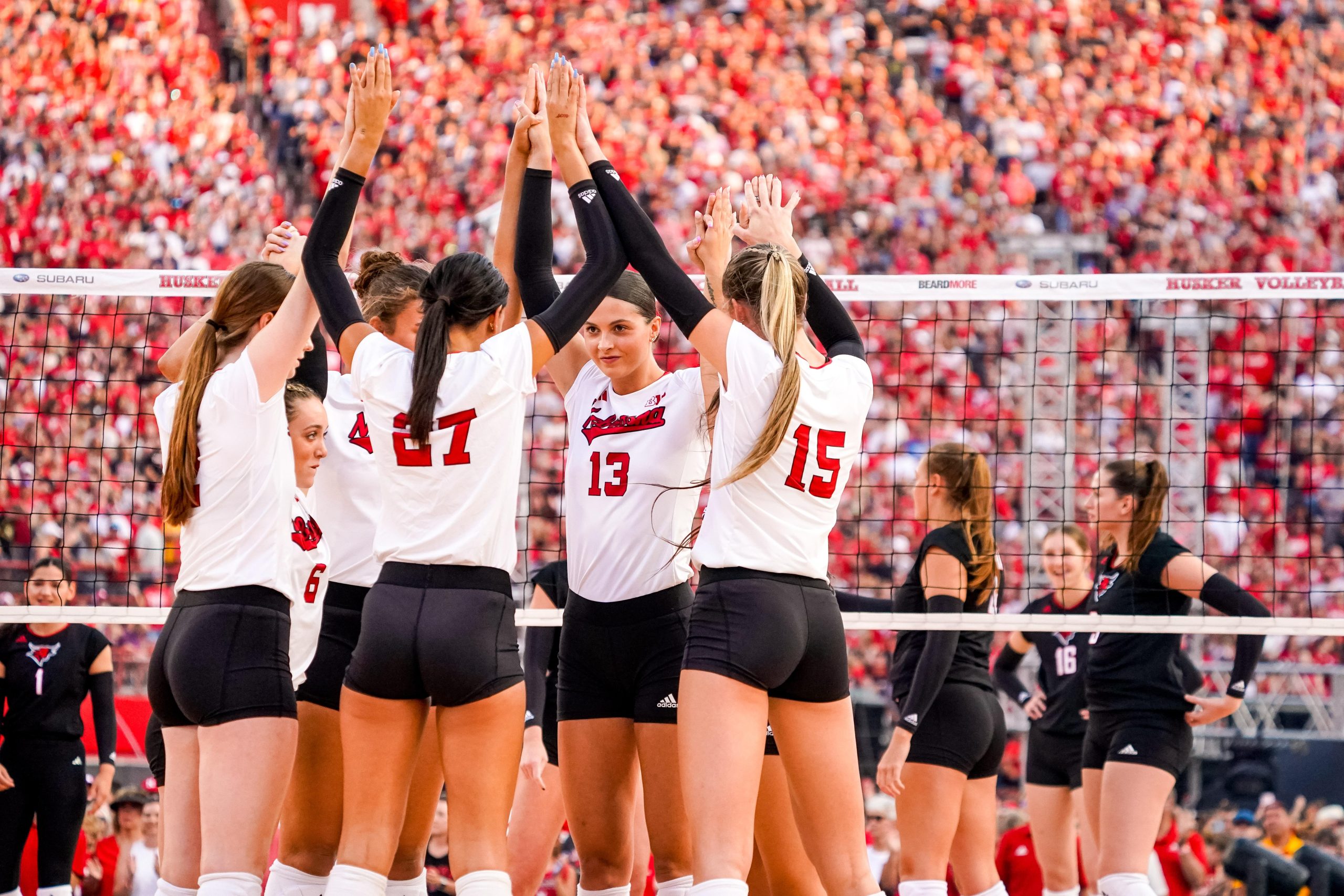
POLICY WIRE — Arlington, Texas — For a sport traditionally relegated to campus gymnasiums and the more modest confines of college arenas, the prospect of an indoor volleyball match commandeering a cavernous NFL stadium – AT&T Stadium, no less – strikes many as an audacious gamble. But don’t mistake audacity for folly; this isn’t just a game. It’s a million-dollar declaration, a powerful assertion of women’s sports’ burgeoning commercial might, with the Nebraska Cornhuskers spearheading the charge into what many are dubbing the ‘gold rush’ of collegiate athletics.
On August 27th, under the soaring, retractable roof of the Dallas Cowboys’ fortress, Nebraska will join Florida, Penn State, and SMU for the inaugural ‘Spikes Under Lights’ showcase. This isn’t merely an exhibition; it’s a meticulously crafted spectacle, a high-stakes, best-of-three-sets tournament culminating in a championship match, all unfolding in a single, high-octane evening. And at its core, it’s about the money – a cool $1 million up for grabs, signaling a seismic shift in how collegiate women’s sports are valued and marketed.
Behind the headlines, this event signifies a monumental pivot. It’s not just the first women’s college sporting event ever held at AT&T Stadium, but also one of the inaugural women’s sporting events of any kind to occupy such a behemoth of American professional sport. It’s an arena traditionally reserved for gladiatorial football, mega-concerts, and the occasional Wrestlemania — certainly not for the intricate, balletic violence of volleyball. Still, the architects of this event are convinced the market is ripe, the audience eager, and the potential payoff considerable.
“This isn’t merely a game; it’s an economic bellwether,” shot back Dr. Eleanor Vance, a seasoned NCAA administrator with decades navigating collegiate athletics. “The market for women’s sports has undeniably ripened. We’re simply responding to—and, indeed, cultivating—that burgeoning appetite for high-stakes, high-visibility competition. The era of underestimation is definitively over.”
The numbers, certainly, lend credence to Dr. Vance’s assertion. The 2023 NCAA women’s volleyball championship match on ABC averaged 1.7 million viewers, marking it as the most-watched volleyball match in ESPN history. This data point, sourced directly from ESPN Press Room, isn’t an anomaly; it’s part of a broader trend demonstrating a robust and growing viewership for women’s sports across the board. So, the venture into a 100,000-capacity stadium, anticipating hordes of devoted Husker fans, isn’t a shot in the dark; it’s a calculated escalation.
But while the glitz and the potential for a million-dollar payday capture headlines, some observers urge a broader perspective. “While the spectacle is certainly compelling, we mustn’t lose sight of the foundational investments required at every level, from youth programs to collegiate scholarships,” remarked State Senator Marcus Thorne, a Texas legislator keenly attuned to both local economic development and educational imperatives. “A million-dollar payout in Texas is one thing; ensuring access and opportunity across all demographics, both here and abroad, remains the true championship.”
And that global perspective is crucial. This grand American spectacle — the melding of athletic prowess, corporate sponsorship, and colossal infrastructure — offers a stark contrast to the burgeoning but often underfunded landscape of women’s sports in many parts of the world. In nations like Pakistan, for instance, women’s participation in team sports, particularly volleyball, faces formidable challenges, ranging from limited infrastructure and funding to persistent cultural barriers that often restrict female athletes’ opportunities. While the ‘Spikes Under Lights’ event aims to elevate women’s volleyball to new heights, it simultaneously underscores the vast disparities in investment and societal acceptance that female athletes confront across different global contexts.
Ticket sales for this consequential showcase commence on May 8th, promising a fervent scramble for seats from what’s arguably the most dedicated fanbase in collegiate volleyball. The national network broadcasting the event remains shrouded in secrecy for now, but its impending revelation will only amplify the buzz around this unprecedented athletic and commercial experiment.
What This Means
This ‘Spikes Under Lights’ event transcends a mere volleyball tournament; it’s a potent symbol of the evolving economic calculus in collegiate athletics. It signifies a maturation of the women’s sports market, demonstrating its capacity for generating significant revenue and capturing a mainstream audience previously thought unattainable. The $1 million prize pool, while modest in the grand scheme of professional sports, is an unignorable marker within the NCAA ecosystem, highlighting the increasing commercialization of amateur competition—a trend accelerated by the Name, Image, and Likeness (NIL) era.
Policy-wise, this initiative could force a re-evaluation of investment strategies for women’s programs, potentially redirecting more institutional and corporate funds towards sports historically seen as secondary to men’s football or basketball. It also serves as a potent case study for the value of eventizing collegiate sports, moving beyond regular-season games to create standalone, high-impact spectacles. For athletic directors and university presidents, it’s a blueprint for revenue generation and brand building, inviting them to consider how they, too, can tap into this lucrative vein. This commercial thrust, however, isn’t without its critics, who question whether such grand gestures overshadow the fundamental purpose of collegiate sport and the equitable development of all athletes. It’s a delicate balance, this brutal calculus of profit and passion, but one that American universities, it seems, are increasingly willing to navigate.
The scale of this undertaking speaks volumes: women’s volleyball isn’t just playing; it’s staking a claim for its place as a premier, high-earning commodity in the national sporting consciousness. And it’s doing so with a million-dollar smile.