


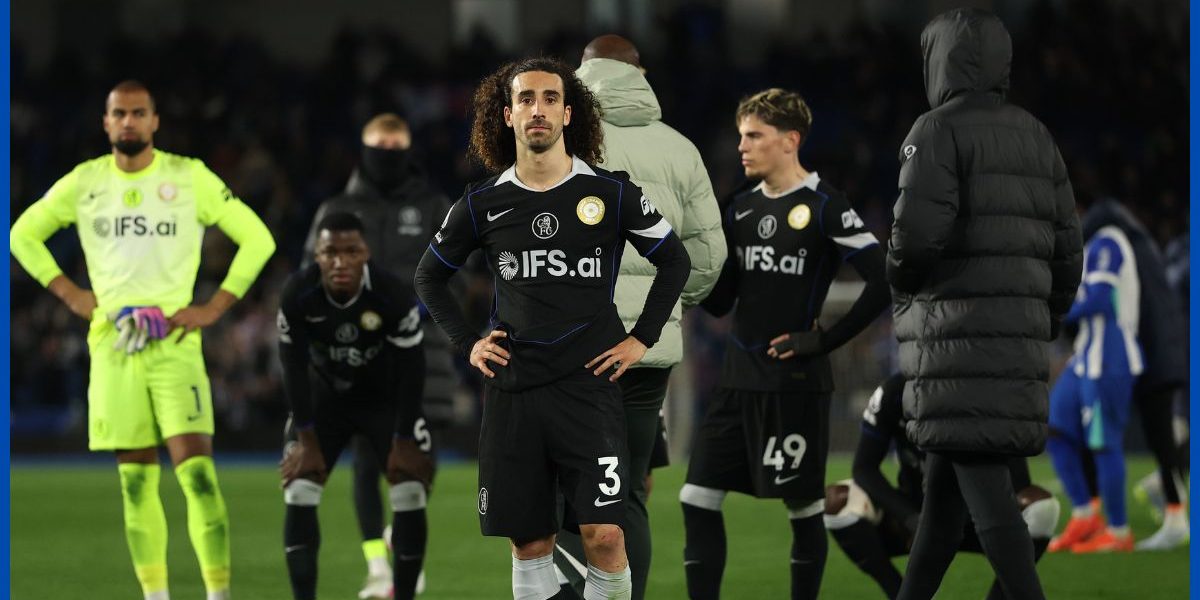
Chelsea’s Fragile Reprieve: One Win, a Billowing Crisis, and the Global Scrutiny of Billions
POLICY WIRE — London, UK — For the behemoths of global sport, mere competition is often a secondary concern. The primary battle, rather, unfolds across quarterly reports, brand...

POLICY WIRE — London, UK — For the behemoths of global sport, mere competition is often a secondary concern. The primary battle, rather, unfolds across quarterly reports, brand valuations, and the fickle affections of a planetary fan base — a sprawling, unforgiving constituency whose emotional investments dwarf the stakes of any single match. And so it was for Chelsea Football Club, whose recent, rather anemic, victory against Leeds United served less as a celebration of athletic prowess and more as a desperately needed balm on a festering wound.
It’s a curious state of affairs when a win — any win — elicits not jubilation but a collective sigh of cautious relief, particularly for a franchise valued, according to Forbes, at a staggering 3.1 billion dollars in May 2023. That number isn’t just for goals and glory; it’s for market penetration, broadcast rights, and the perceived stability of a global brand. When the on-field product falters, the entire edifice trembles, threatening the “brutal calculus” of high-stakes sports investment. (It’s a brutal calculus many clubs — and their investors — know all too well, especially those whose dreams are cut short, as explored in this Policy Wire piece on the harsh realities of athletic careers.)
Romeo Lavia, the Belgian midfielder whose season has been a protracted dance with injury — and arguably, with opportunity — offered a rare glimpse into the internal pressure cooker. Speaking after the Leeds fixture, he mused on the recent slump: “Sometimes when you have a few results that don’t go your way, you feel like everything is against you. The reality is that as long as we stick together, it will turn around in the end, especially given the quality of the team.” A textbook rallying cry, certainly. But it was his candid assessment of the preceding Wembley defeat that truly resonated, encapsulating the pervasive unease. “[Against Leeds] we worked hard to get it right after Tuesday, which, as a team, we thought was unacceptable; it was important to get it right at Wembley.” Unacceptable. A potent word, laden with the weight of expectation — and the unforgiving gaze of ownership.
This isn’t merely about West London — not anymore. This is about Karachi, Dhaka, and Jakarta, where millions of passionate fans follow the fortunes of Premier League clubs with an intensity that often surpasses local allegiances. For them, Chelsea isn’t just a team; it’s a cultural touchstone, a surrogate identity projected onto screens and emblazoned on counterfeit jerseys. Poor performance doesn’t just disappoint; it reflects poorly on a shared global narrative, eroding the soft power of a league that has successfully exported its drama — and its merchandise — across continents.
Still, the stakes extend beyond fan sentiment. Significant commercial inroads have been made in the Middle East and South Asia, with sponsorship deals and investment partnerships often contingent on perceived prestige and competitive viability. A struggling Chelsea isn’t just losing points; it’s potentially diminishing its allure to future partners in burgeoning markets where discretionary spending on global brands is rapidly expanding. “The modern football club is a multinational corporation,” opined Dr. Zara Al-Mansour, a sports economic analyst based in Dubai, speaking to Policy Wire via video conference. “Every dip in performance isn’t just a sporting setback; it’s a direct hit to brand equity, particularly in regions where market share is still actively being cultivated. Managing expectations is paramount, both on the pitch and in the boardroom.” And she’s not wrong — the intricate web of finance, performance, and global perception is truly astounding.
What This Means
At its core, Chelsea’s recent travails and their subsequent, somewhat hollow, victory illuminate the increasingly corporate nature of elite sports. A single “unacceptable” performance isn’t just a bad day at the office; it’s a fiscal and reputational hazard. For club ownership, particularly those who’ve invested billions, the pressure to maintain competitive advantage — and thus, market value — is relentless. This translates into a perpetual cycle of player acquisition, managerial changes, and often, an almost desperate pursuit of short-term results over long-term strategy.
📄 POLICY WIRE WHITEPAPER PUBLISHED: PAKISTAN'S NATIONAL SECURITY POLICY PRIORITIES
👉 READ BY CLICKING HEREThe global reach of the Premier League means that performance fluctuations reverberate far beyond the UK. In places like Pakistan, where English football enjoys immense popularity, a club like Chelsea’s struggles can influence everything from local sports bar patronage to the sale of official (and unofficial) merchandise. It influences the aspirational dreams of young athletes and the engagement levels of a crucial demographic for future media rights negotiations. This intercontinental feedback loop demands a delicate balance from club management: satisfy the immediate demands of home fans while simultaneously nurturing a sprawling, diverse international audience.
But the true irony lies in the human element. Players, despite their astronomical salaries, remain subject to the same pressures of accountability and performance review that hound any high-stakes professional. Lavia’s “unacceptable” comment wasn’t just frustration; it was an acknowledgment of a standard that transcends the scoreline, a recognition that for a global enterprise of this magnitude, anything less than excellence — or at least, sustained effort — risks far more than just three points. It risks the entire narrative, the very foundation upon which its colossal valuation rests.