


Hormuz at the Brink: US, Gulf Allies Unveil UN Sanctions Gambit Against Iran
POLICY WIRE — New York, USA — While the world fixates on fluctuating oil futures and the specter of global recession, a less visible but equally potent drama unfolds in the Persian Gulf. There, the...

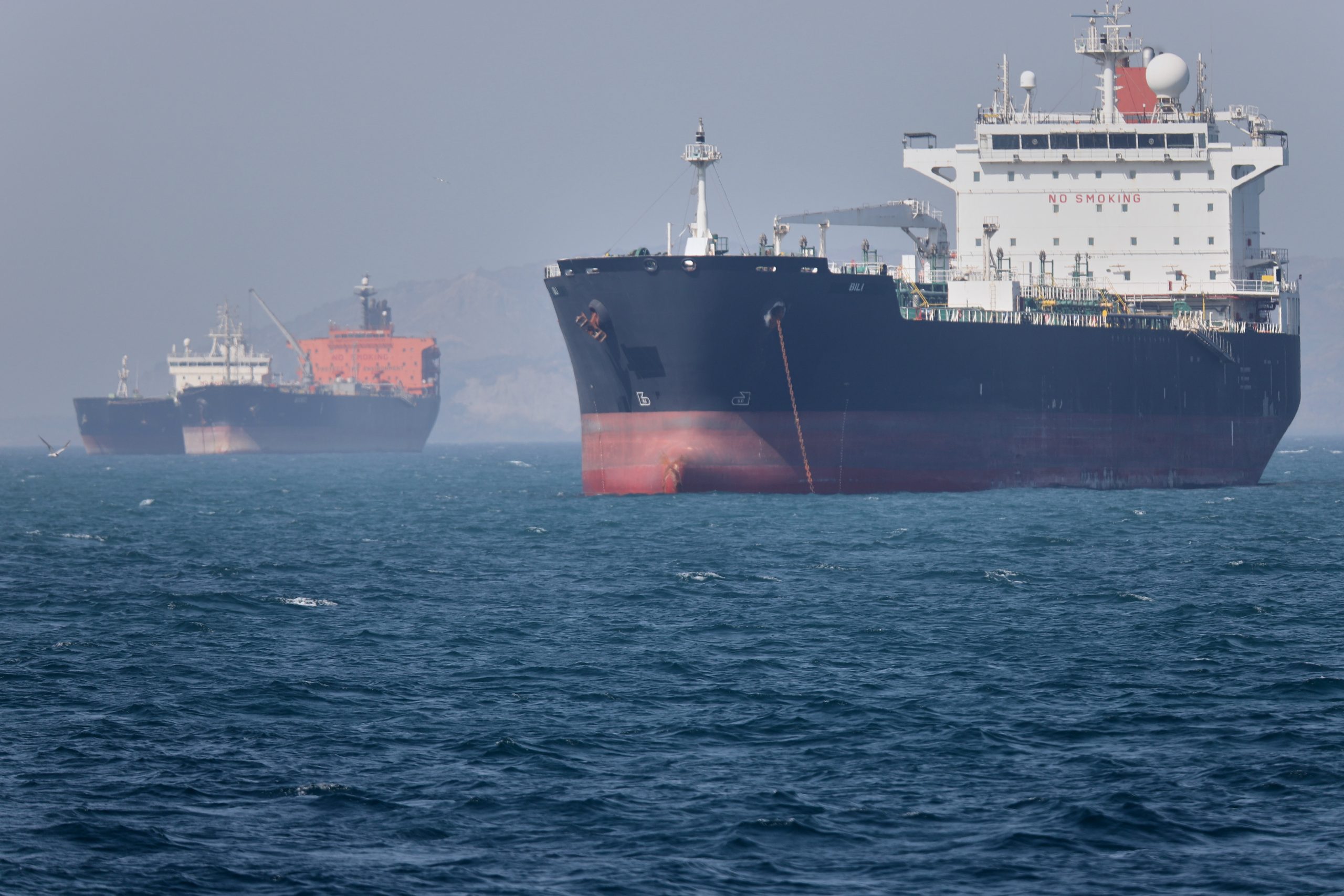
POLICY WIRE — New York, USA — While the world fixates on fluctuating oil futures and the specter of global recession, a less visible but equally potent drama unfolds in the Persian Gulf. There, the Strait of Hormuz, that slender maritime bottleneck, has become the focal point of an escalating confrontation. Washington and its key Gulf partners — a familiar coalition — have quietly circulated a draft resolution among UN Security Council members, aiming to brandish the club of international sanctions against Iran. Their charge? Tehran’s alleged attempts to impede free passage through the strait, a claim that, if proven, carries immense global economic ramifications.
This isn’t merely another diplomatic spat; it’s a carefully calibrated maneuver designed to test the limits of Iranian patience and, perhaps more tellingly, the unity of the international community. Behind the headlines, what’s truly at stake is the principle of unimpeded maritime trade, a pillar of the global economy that suddenly feels rather precarious. The proposal, still in its nascent stages, seeks to authorize targeted economic penalties should Iran persist in what the allies term its “provocative and unlawful interference” with commercial shipping.
It’s a dance as old as the region itself: Iran, ever the regional outlier, facing down a powerful, Western-backed alliance. But this time, the stakes feel palpably higher. Recent incidents — some widely reported, others deliberately kept under wraps (one imagines for reasons of political expediency) — have underscored the combustible nature of the strait. Tehran, for its part, maintains that its actions are purely defensive, aimed at safeguarding its sovereign waters and responding to what it perceives as aggressive foreign naval deployments. And, as always, the rhetoric from all sides is rich with historical grievances — and future threats.
The architects of this UN initiative aren’t just rattling sabers; they’re attempting to formalize a broad, multilateral front against Iran’s naval assertiveness. It’s a strategy predicated on the belief that collective international pressure, rather than unilateral action, stands the best chance of compelling a behavioral shift in Tehran. But diplomacy, as we know, often moves at a glacial pace, especially when powerful nations with divergent interests are involved. One wonders if they’ve accounted for the inevitable counter-maneuvers.
Still, the very act of bringing such a resolution before the Security Council is a significant escalation. It signals a shift from bilateral condemnations and informal warnings to a more formal, internationally sanctioned punitive framework. For Washington and Riyadh, among others, it’s about drawing a line in the sand — or, more aptly, in the water. They’re betting that the economic pain of renewed sanctions will outweigh Iran’s strategic calculus in asserting control over this vital waterway.
“The message is unequivocal,” asserted Assistant Secretary of State for Near Eastern Affairs, Barbara Jenkins, from her State Department perch. “Iran can’t expect to throttle global energy arteries with impunity. We’ve exhausted diplomatic overtures; now, it’s about holding them accountable to international maritime law. This isn’t a request; it’s a demand for adherence to norms.”
In a terse statement to Policy Wire, Dr. Anwar Gargash, Diplomatic Advisor to the UAE President, shot back, “Our region thrives on stability, not Tehran’s destabilizing brinkmanship. The international community — especially those nations reliant on this vital conduit — must speak with one unified voice to deter further provocations. We simply can’t afford further disruption.”
The numbers don’t lie. Roughly one-fifth of the world’s total oil consumption, approximately 20.7 million barrels per day, passed through the Strait of Hormuz in 2018, according to the U.S. Energy Information Administration (EIA). That figure underscores just how delicate the global energy market is, and how quickly any disruption could ripple outwards, affecting everything from gasoline prices in New York to industrial output in South Asia.
For nations like Pakistan, heavily dependent on imported energy, the mere whisper of instability in Hormuz can trigger economic tremors. Rising oil prices invariably translate to higher inflation, straining already fragile economies and potentially exacerbating social unrest. This isn’t just about geopolitics; it’s about the cost of living for millions across the Muslim world — and beyond.
What This Means
At its core, this diplomatic play represents a high-stakes gamble. Politically, success hinges on securing enough Security Council votes, a task complicated by the differing interests of China and Russia, both of whom have historically resisted broad sanctions against Iran. Their veto power could render the entire initiative moot, forcing the U.S. and its allies back to the drawing board or towards more unilateral (and thus, less legitimate) actions. Economically, even the *threat* of sanctions can create market volatility, driving up oil prices as traders price in geopolitical risk. Should sanctions pass and Iran retaliate, the global economy, already contending with various headwinds — see Seoul’s Silent Squeeze for a taste of how Mideast shadows stretch far — could face a significant energy shock. This isn’t just about crude; it’s about signaling, about deterrence, and about who ultimately controls the narrative of maritime security in one of the world’s most consequential waterways. The outcome won’t just redraw lines on a map; it’ll recalibrate the delicate balance of power across the Middle East for years to come.