


Tokyo’s Stealth Gambit: Mogami Designs Unveil New Indo-Pacific Power Dynamics
POLICY WIRE — Tokyo, Japan — For decades, Japan’s post-war constitution has tethered its military ambitions to a strictly defensive posture, a self-imposed restraint that’s been both a...

POLICY WIRE — Tokyo, Japan — For decades, Japan’s post-war constitution has tethered its military ambitions to a strictly defensive posture, a self-imposed restraint that’s been both a source of national pride and a point of geopolitical friction. So, when Tokyo quietly began orchestrating the sharing of its advanced Mogami-class frigate designs with India, it wasn’t just a naval deal; it was a profound tremor across the geopolitical fault lines of the Indo-Pacific. This isn’t merely about selling ships; it’s about a strategic recalibration, a subtle, yet unmistakable, shift in Japan’s approach to regional security, and India’s ascendance as a maritime power.
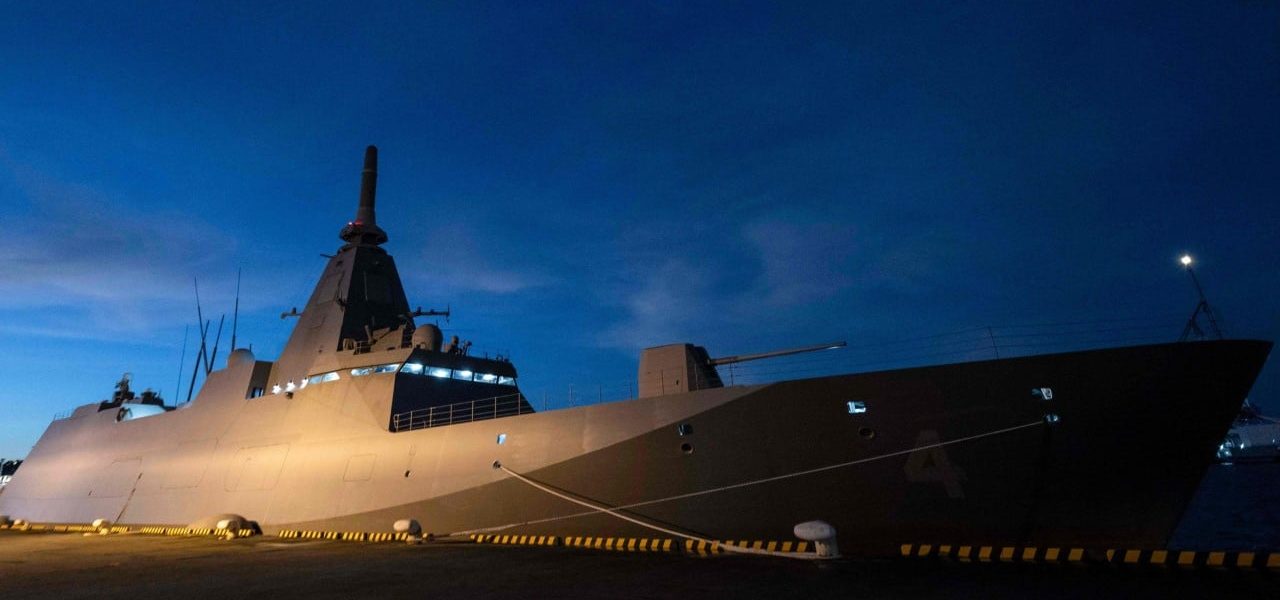
Behind the sleek hull of a Mogami-class warship lies more than just cutting-edge naval architecture. It embodies Japan’s technological prowess—a guarded asset, rarely shared with such profundity. And yet, here it’s, laid bare for New Delhi. This unprecedented gesture dovetails precisely with India’s audacious ‘Make in India’ initiative, a cornerstone of its industrial and defense policy aimed at curbing reliance on foreign imports and fostering indigenous production. India’s defense budget, for instance, is projected to reach an estimated $73.6 billion in 2023-24, positioning it as the third-largest globally, underscoring its commitment to military modernization, according to the Stockholm International Peace Research Institute (SIPRI). This shared endeavor isn’t a transactional exchange; it’s a strategic embrace.
Still, the implications reverberate far beyond mere industrial synergy. At its core, this alliance seeks to transform India into a veritable ‘security provider’ across the expansive Indian Ocean, a crucial maritime highway for global trade. For Japan, it’s a tangible step towards shoring up a ‘free and open Indo-Pacific,’ a concept frequently invoked in Washington and Tokyo, largely as a counterweight to proliferating Chinese influence. But it also signals Tokyo’s quiet departure from its erstwhile reticence regarding defense technology transfers. It’s a bold gambit, truly, akin to Veridia’s unlikely maneuver that jolted regional stasis.
“Tokyo’s commitment isn’t merely transactional; it’s a foundational pillar for a free and open Indo-Pacific, securing vital sea lanes for all,” asserted Japanese Defense Minister Minoru Kihara during a recent defense symposium, reflecting the nation’s evolving strategic calculus. His words, delivered with characteristic Japanese understatement, betray a potent shift from the country’s traditionally self-effacing defense posture. For India, the benefit is equally clear, albeit framed through a lens of self-reliance. “This isn’t about mere acquisition; it’s about empowerment, about ‘Make in India’ translating into ‘Secure the Indian Ocean’ – a tangible leap towards strategic autonomy,” shot back Admiral R. Hari Kumar, India’s Chief of Naval Staff, underscoring the indigenous thrust of the collaboration.
The Mogami-class frigates, designed for multi-mission capabilities including mine warfare and anti-submarine operations, will significantly augment India’s naval reach and sophistication. And by building these vessels domestically with Japanese technical assistance and materials, India doesn’t just get ships; it acquires invaluable shipbuilding expertise. That’s consequential. This isn’t a one-off deal; it’s a template for future defense collaborations, cementing a burgeoning partnership between two democratic powers increasingly wary of regional hegemonies.
What This Means
This Japan-India defense pact represents a pivotal moment in Indo-Pacific geopolitics. Politically, it crystallizes the emerging quadrilateral security dialogue (Quad) into concrete defense-industrial collaboration, signaling a determined pushback against China’s burgeoning maritime ambitions in the South China Sea and the wider Indo-Pacific. It’s a testament to the fact that shared values and strategic convergences can indeed overcome historical reticence – even Japan’s. Economically, India’s drive for defense indigenization receives a significant boost, fostering high-tech manufacturing jobs and reducing its reliance on traditional arms suppliers (read: Russia).
But the ramifications aren’t confined to these two nations. India’s burgeoning naval power inevitably reverberates across South Asia. Pakistan, New Delhi’s perpetual strategic rival, will undoubtedly watch these developments with keen interest, likely intensifying its own defense modernization efforts, particularly through its deepening alliance with China. Islamabad’s strategic planners, already contending with India’s substantial military growth, must now factor in a technologically advanced, domestically produced frigate fleet — a development that complicates their own maritime security equations. This escalation reinforces the enduring security dilemma that characterizes the subcontinent, pushing both nations towards further arms acquisitions. For the broader Muslim world, particularly those reliant on the vital sea lanes of the Indian Ocean for energy and trade, India’s enhanced capacity as a ‘security provider’ could offer a degree of stability, or conversely, introduce new complexities into regional power balances.
Ultimately, this isn’t just about frigates. It’s about reshaping the balance of power, nurturing new alliances, and demonstrating that strategic ingenuity – even in the sensitive realm of defense technology – can chart a new course for regional stability. Or, at least, for a more complex — and competitive one.