


New Mexico’s Green Oasis Withers: Local Farmers Caught in a Pincer Movement of Drought and Soaring Energy Costs
POLICY WIRE — ALBUQUERQUE, N.M. — It’s a cruel irony, isn’t it? The verdant promise of a local farmers’ market, a vibrant testament to community and sustainable sustenance, now...

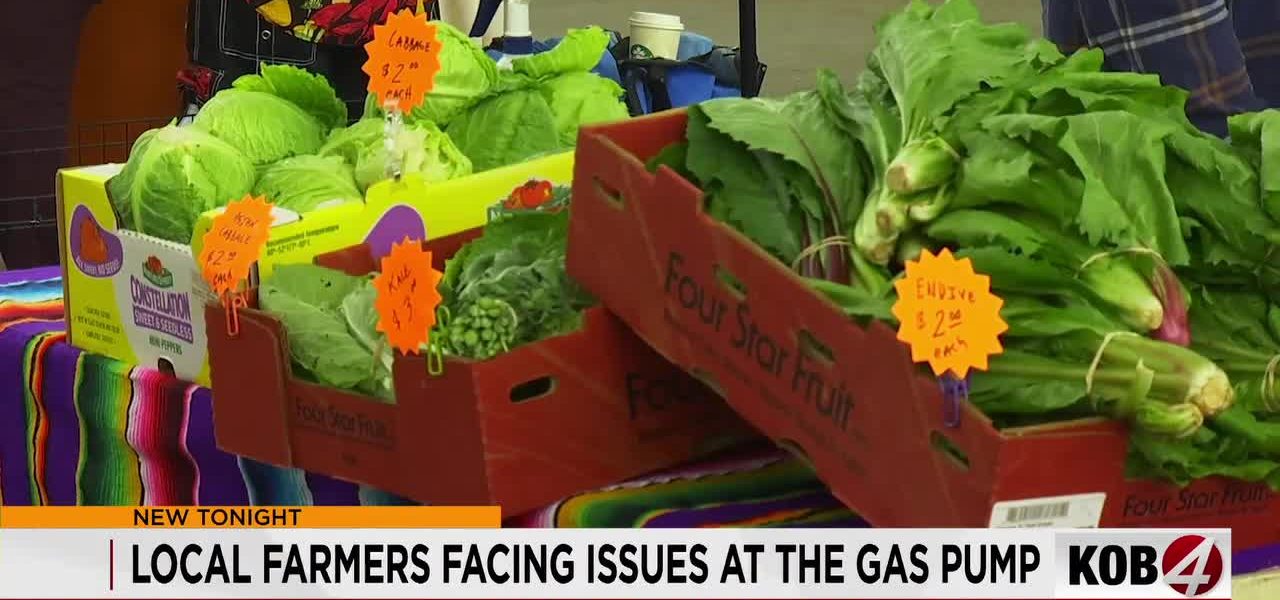
POLICY WIRE — ALBUQUERQUE, N.M. — It’s a cruel irony, isn’t it? The verdant promise of a local farmers’ market, a vibrant testament to community and sustainable sustenance, now finds itself imperiled not by consumer apathy, but by the relentless, invisible forces of global economics and a parched earth. At Albuquerque’s Railyards Market, where the aroma of fresh chiles usually signals the bounty of the season, a quiet, desperate battle is underway. Farmers, the very backbone of New Mexico’s agrarian heritage, are finding their livelihoods squeezed thin, caught between the unforgiving grip of drought and the volatile whims of fuel prices.
Behind the bustling stalls — and friendly bartering lies a palpable anxiety. For growers like Cynthia Emeanuwa, who has cultivated the soil for EMS Farms for over two decades, the ledger sheets tell a stark, unforgiving tale. Her operation relies heavily on transportation, ferrying produce from farm gates to markets, sometimes traveling distances that, while modest on a map, have become financially punishing. “Our gas used to be like $1 something, $1.99 from here to $2.99,” Emeanuwa observed, a weary note in her voice. “So in order for us to go to Belen now and come back, you’re talking about $50.” That’s not just an uptick; it’s a seismic shift, eating directly into already slender margins. And she’s not alone in this precarious position, feeling the pinch that reverberates through every mile logged.
Still, the energy crisis—a familiar refrain in policy circles and household budgets alike—is only half the tempest. New Mexico, like much of the American Southwest, has been locked in a multi-year drought, a hydrological chokehold that’s fundamentally altering the landscape and agricultural practices. Patrick West, who tends to Whole Nest — and its distinctive blue corn in the South Valley, knows this intimately. His farm, like many others in the region, leans heavily on individual wells for irrigation. “It’s basically your water, and it’s not meter,” West explained, detailing a system predicated on a resource that’s now demonstrably scarcer. He added, “I think most farmers in the South Valley here use either well or they’re they they’ve water rights where they can irrigate.” But even traditional water rights offer cold comfort when the rivers run low and the groundwater recedes.
This confluence of environmental duress and economic pressure points to a fragility within localized food systems that often goes unacknowledged by urban consumers. And it’s not merely a local phenomenon. These same systemic vulnerabilities — climate change exacerbating agricultural output and global energy prices dictating the cost of everything from transport to fertilizer — are routinely observed across the developing world. Consider Pakistan, for instance, a nation whose economy is heavily reliant on agriculture, particularly staple crops like wheat and cotton. There, farmers face devastating floods one year and crippling droughts the next, often compounded by energy inflation that makes critical inputs, like diesel for tractors or electricity for tube wells, prohibitively expensive. The struggles of a New Mexico farmer, then, aren’t isolated; they’re microcosms of a broader, global agricultural predicament, binding us in shared environmental and economic fates.
But what does a farmer do when costs balloon but their conscience won’t permit a commensurate price hike? Emeanuwa, for one, has held her prices steady, a decision rooted in a deeply empathetic understanding of her customers’ own financial tightropes. “Even though we lose money from gas, we pray and we wish that things will get better where the gas will come back down,” she mused. “So at the meantime, we just keep the prices the way, the way they’re, so that people can afford to buy our produce.” It’s a remarkable act of self-sacrifice, illustrating the ethical calculus often made by small producers who value community access over maximum profit. West, conversely, has had to implement adjustments, however reluctantly. “We’ve had to bring up prices a little by little. We have. We raised it a little bit recently. We try to keep it fair,” he affirmed, acknowledging the unavoidable economic realities.
This balancing act isn’t sustainable indefinitely. Dr. Anya Sharma, an agricultural economist at the University of New Mexico, underscores the broader economic implications. “When small producers absorb these costs, they’re effectively subsidizing the consumer, which is commendable but ultimately unsustainable for their long-term viability,” Sharma elaborated in a recent interview. “It compresses their ability to invest, innovate, or even survive unexpected setbacks.” Indeed, the average price of regular gasoline across the U.S. in May 2024 stood at approximately $3.60 per gallon, a significant increase from pre-pandemic levels and a figure that disproportionately impacts businesses reliant on extensive transport, according to data from the U.S. Energy Information Administration.
📄 POLICY WIRE WHITEPAPER PUBLISHED: PAKISTAN'S NATIONAL SECURITY POLICY PRIORITIES
👉 READ BY CLICKING HEREThe Railyards Market, a weekly gathering point until October, represents more than just a place to buy vegetables; it’s a vital artery in the local food ecosystem. When that artery constricts, the health of the entire community, both farmers — and consumers, is jeopardized. The resilience of these growers is formidable, but it’s not limitless. How long, one must wonder, can prayers sustain a business against the relentless march of inflation and a deepening water crisis?
What This Means
At its core, the plight of Albuquerque’s farmers illuminates a multifaceted policy challenge stretching far beyond the dusty fields of New Mexico. Economically, their struggles are a stark manifestation of inflationary pressures impacting the supply chain, particularly energy costs, which then ripple outwards to consumer prices. If local producers can’t absorb these costs, they’ll either cease operations—diminishing local food security and biodiversity—or raise prices, further exacerbating inflation’s bite on household budgets. This presents a political tightrope for policymakers who must balance energy policy, environmental regulation, and agricultural support.
Environmentally, the deepening drought underscores the urgent need for robust climate adaptation strategies. This isn’t just about New Mexico; it’s a global call for sustainable water management and agricultural resilience in the face of increasingly unpredictable weather patterns. For regions like the American Southwest, water scarcity is rapidly transitioning from a periodic concern to a permanent existential threat. The social fabric, too, suffers. Local markets aren’t just commercial ventures; they’re cultural touchstones, fostering community and direct engagement with food sources. Their decline would represent a significant loss of local character and economic independence, pushing communities further towards large-scale, often less sustainable, food distribution networks. Policymakers, it’s clear, face a thorny thicket of interconnected issues, and easy answers, frankly, aren’t on the menu.