


Ceasefire’s Crucible: Disarmament Rift Deepens Between Hamas, International Monitors
POLICY WIRE — Geneva, Switzerland — The delicate architecture of peace, so painstakingly constructed, now teeters precariously. Not on the battlefields themselves, but within the sterile...

POLICY WIRE — Geneva, Switzerland — The delicate architecture of peace, so painstakingly constructed, now teeters precariously. Not on the battlefields themselves, but within the sterile confines of negotiating rooms, where the very definition of security has become a fresh battleground. A landmark disarmament agreement — a cornerstone of any lasting calm — has stumbled into an intractable impasse between the militant group Hamas and the multinational body dubbed the ‘Board of Peace,’ leaving a volatile region holding its breath.
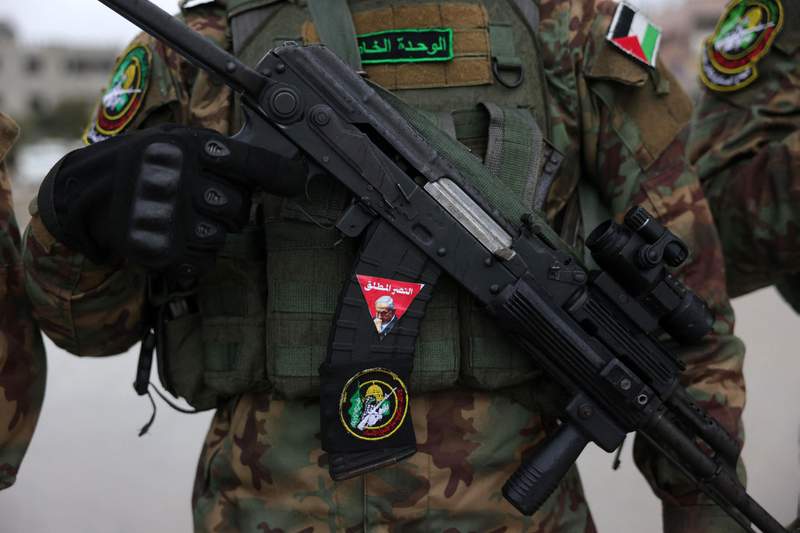
Behind the headlines, this isn’t merely a procedural hiccup; it’s a profound clash of worldviews. The Board, comprising various international envoys and technical experts, contends that genuine de-escalation hinges on the relinquishment of significant military capabilities. Hamas, for its part, frames such demands as an existential threat, an attempt to strip it of its deterrence against perceived aggressors and dilute its political leverage. It’s a dance as old as conflict itself: the victor’s insistence on disarmament versus the vanquished’s — or in this case, the surviving party’s — defiant grip on its means of self-preservation.
“We’ve laid out a pragmatic, verifiable roadmap for demilitarization, one that promises security for all parties involved,” Ambassador Anya Sharma, lead negotiator for the Board of Peace, asserted this week. “But there’s a fundamental unwillingness — a calculated obstruction, frankly — to meet even the most basic terms necessary for international confidence and humanitarian relief. They’re asking for unconditional surrender, not a negotiated peace.” Her frustration was palpable, a stark contrast to the typically guarded language of diplomacy.
And Hamas, unsurprisingly, sees it rather differently. “Our arms are not merely weapons; they’re the guarantors of our people’s dignity and the bulwark against ongoing aggression,” shot back Ismail Haniyeh, a senior Hamas official, in a rare public statement broadcast from an undisclosed location. “To disarm unconditionally under the shadow of occupation is to invite further subjugation. We won’t be cajoled into signing our own death warrant.” His words underscored the deep-seated mistrust that pervades any discussion of arms within the region — a sentiment echoed across much of the Muslim world.
Still, the stakes couldn’t be higher. The failure to secure this agreement doesn’t just mean a return to the status quo; it threatens to unravel years of painstaking diplomatic effort, plunging millions back into a state of acute uncertainty. As of the latest UN estimates, over 2.3 million people remain in desperate need of humanitarian assistance in the territories impacted by the previous conflict, a figure that only exacerbates the urgency of a lasting accord. But peace, it seems, remains an elusive quarry, constantly shifting shape just beyond grasp.
The echoes of this particular impasse resonate far beyond the immediate conflict zone. In Pakistan, for instance, political commentators and ordinary citizens alike watch such developments with a keen, often emotional, interest. There’s a pervasive sense that the international community often applies double standards — quick to demand disarmament from non-state actors while powerful nations maintain vast arsenals. This perception, whether accurate or not, fuels anti-Western sentiment and deepens skepticism about the efficacy — or even fairness — of global institutions like the Board of Peace. It’s not just about Gaza; it’s about justice, or the perceived lack thereof, across the entire Muslim world.
📄 POLICY WIRE WHITEPAPER PUBLISHED: PAKISTAN'S NATIONAL SECURITY POLICY PRIORITIES
👉 READ BY CLICKING HERESo, the question remains: what now? The Board has reportedly suspended further direct negotiations, opting instead for back-channel communications — a tacit admission that the formal talks have collapsed. Sources close to the discussions suggest that a key sticking point isn’t just the sheer volume of weaponry, but also control over strategic border crossings and infrastructure — levers of power Hamas isn’t keen to surrender without significant concessions elsewhere. It’s a complex, multi-layered problem, isn’t it?
What This Means
This diplomatic breakdown carries profound implications, rippling outwards across geopolitical landscapes and economic stability. Politically, it signals a dramatic weakening of international mediation efforts, potentially empowering hardliners on all sides. When compromise proves unattainable, the default often becomes escalation, or at best, a prolonged, low-level simmering conflict. The very credibility of the ‘Board of Peace’ — and by extension, the multilateral system it represents — takes a severe hit, further contributing to eroding trust in global governance.
Economically, the absence of a disarmament agreement translates directly into continued instability, deterring foreign investment, and exacerbating the already dire humanitarian crisis. International aid organizations, already stretched thin, will face even greater challenges in delivering assistance and rebuilding infrastructure amidst persistent security concerns. Donor fatigue could set in, shrinking the financial lifelines for millions. It’s a self-perpetuating cycle of violence — and poverty, an economic quagmire that shows no immediate signs of draining. The region’s fragile economic outlook, already buffeted by global pressures, will only further degrade, making any semblance of post-conflict recovery a distant fantasy. The international community, it seems, has just run out of road.