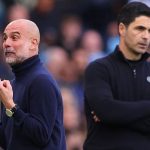



Stalemate in the Molineux: A Microcosm of Premier League’s Precarious Mid-Table Politics
POLICY WIRE — Wolverhampton, UK — The 90 minutes of football that unfolded at Molineux Stadium this past Saturday, culminating in a seemingly unremarkable 1-1 draw between Wolverhampton Wanderers and...

POLICY WIRE — Wolverhampton, UK — The 90 minutes of football that unfolded at Molineux Stadium this past Saturday, culminating in a seemingly unremarkable 1-1 draw between Wolverhampton Wanderers and Sunderland, were far more than a mere statistical footnote in the Premier League season. Indeed, beneath the surface of shared points and fleeting moments of skill, a deeper malaise stirred—one of managerial scrutiny, fan disillusionment, and the brutal economic realities gnawing at England’s celebrated top flight. It’s a narrative that, in its essence, echoes boardroom battles and fiscal tightropes far beyond the pitch’s green expanse.
For Wolves, a team expected to consolidate its mid-table position, the draw against a ten-man Sunderland side wasn’t just a missed opportunity; it was a testament to a persistent, almost congenital, inability to seize control when circumstances demand it. Fans didn’t mince words. Patrick, a long-suffering supporter, shot back, "Rob Edwards is not the answer. He didn’t push on against 10 men who had just lost by five with their best XI on the pitch. Embarrassing." That sentiment resonated widely, painting a picture of leadership paralysis at critical junctures. Tom, another vocal fan, observed, "Wolves really struggle to take control of games when a player is sent off or the momentum shifts towards them. They really need some more attacking power going into next season, otherwise it will be a very long year." It’s a sentiment that speaks to more than just football tactics—it’s about strategic investment and risk assessment, areas where many clubs find themselves perpetually navigating choppy waters.
Still, not everyone views the situation with such unreserved pessimism. Raph, offering a more nuanced perspective, articulated, "Edwards has done as well as could be expected given the situation when he took over. The players sold in the summer and the replacements brought in were all done before he arrived, and then they sold Larsen in January. Wolves are lucky to have him." This defense, while validating the manager’s immediate performance, inadvertently highlights the structural deficiencies—a transfer policy often dictated by financial constraints rather than sporting ambition—that plague clubs hovering precariously above the relegation zone.
Meanwhile, for Sunderland, the draw felt like a triumph of resilience, a testament to grit in the face of adversity. Harry, an away fan, encapsulated the roller-coaster, "Total dominance to total stupidity. Fought well for the second time this season to get a point." Their defiance, particularly after Luke Ballard’s controversial sending-off for a "hair-pull" incident—a rule that continues to baffle and infuriate aficionados—underscored a spirit that many feared had evaporated after a season of patchy performances. "Credit to the lads for responding after last week’s fiasco and especially after going down to 10 men so early," Edward, another Sunderland faithful, conceded, "We can have no complaints, but nevertheless, a well-deserved draw."
But the ramifications of these mid-table skirmishes extend far beyond local bragging rights or even league standings. Gareth Hughes, Wolves’ Sporting Director, acknowledged the profound economic pressure. "Maintaining a competitive squad in the Premier League requires an astronomical outlay," he told Policy Wire, "and every point—or lack thereof—has tangible financial consequences, from broadcast revenues to sponsorship deals. It’s a constant balancing act between ambition and fiscal prudence." Hughes’s remarks underscore the tight margins within which even established clubs operate, a stark reminder that football’s glittering facade often conceals acute financial anxieties.
📄 POLICY WIRE WHITEPAPER PUBLISHED: PAKISTAN'S NATIONAL SECURITY POLICY PRIORITIES
👉 READ BY CLICKING HEREAnd these anxieties aren’t confined to the UK. The Premier League is a global product, its viewership spanning continents — and cultures. Aisha Khan, Head of Global Sports Partnerships at the Premier League, emphasized this far-reaching impact. "Matches like these, however unglamorous they might seem domestically, attract millions of viewers globally—from Cairo to Karachi," she asserted. "They aren’t just sporting contests; they’re cultural touchstones that drive significant commercial interest and investment, including from Gulf States eyeing strategic partnerships." (Indeed, the league’s global reach is staggering, with an estimated average cumulative audience of 3.2 billion people annually across 188 countries, according to the Premier League’s own figures.) Pakistan, for instance, boasts a fervent football following, where the outcomes of such matches are keenly followed, influencing everything from local sports commentary to betting markets—a reflection of the sport’s unparalleled transnational appeal. This global magnetism, incidentally, also fuels discussions on Gulf States’ growing investment in European sports and infrastructure.
What This Means
At its core, this seemingly mundane 1-1 draw illustrates the intricate policy ecosystem surrounding modern professional football. The managerial merry-go-round, the constant demand for fresh talent, and the incessant clamor from the stands all contribute to an environment of intense scrutiny and pressure. For local economies like Wolverhampton’s, a club’s Premier League status isn’t just about sporting glory; it translates directly into tourism, local employment, and civic pride—a quantifiable boost to the region’s GDP. A drop into the Championship, for instance, could mean a substantial revenue reduction, impacting everything from local businesses to property values. the debate around rules, like the much-maligned "hair-pull" offense, highlights the ongoing challenge for sporting bodies to balance player safety with the spectacle of the game, a regulatory tightrope with significant legal and reputational implications. It’s a complex interplay where sporting performance, financial prudence, and global engagement converge, defining the very essence of the beautiful game in the 21st century.