


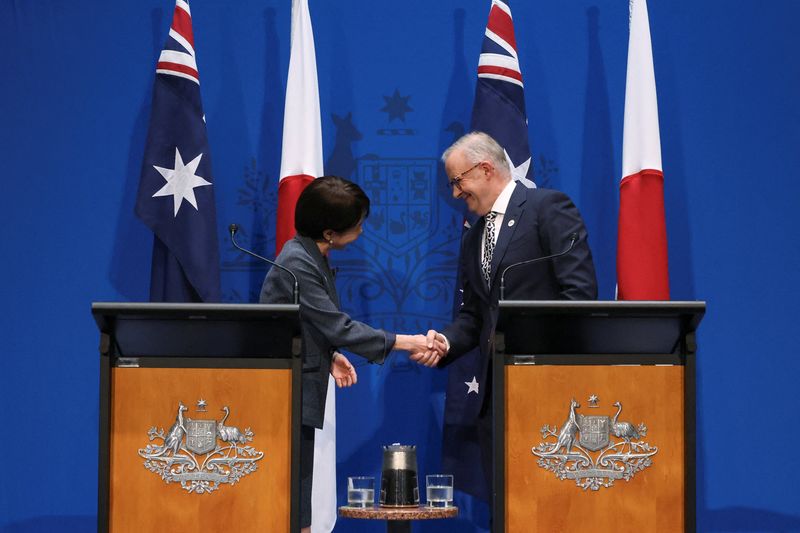
Australia, Japan Cement Mineral Lifeline in Quiet Geopolitical Gambit
POLICY WIRE — Canberra, Australia — It’s not the flashiest headline, nor does it typically ignite fervent public discourse. But beneath the placid surface of international diplomacy, a silent,...

POLICY WIRE — Canberra, Australia — It’s not the flashiest headline, nor does it typically ignite fervent public discourse. But beneath the placid surface of international diplomacy, a silent, relentless scramble for foundational resources is redefining global alliances. Australia and Japan, two industrial powerhouses, are now decisively cementing their partnership on critical minerals, a move far more consequential than its polite communiqué suggests. This isn’t merely about trade; it’s a profound recalibration of supply chains, a tactical response to an increasingly fractious geopolitical landscape.
For decades, the extraction and processing of these indispensable elements—from rare earths crucial for advanced electronics to lithium and cobalt powering the burgeoning electric vehicle market—have been disproportionately concentrated. This concentration, primarily in a single dominant nation, has left global manufacturers acutely vulnerable to disruptions, be they economic, political, or pandemic-induced. So, when Canberra and Tokyo announce intensified collaboration, it signals a strategic push towards genuine self-reliance, away from precarious dependencies that have, frankly, made everyone a bit jumpy.
And it’s a complex dance, isn’t it? Japan, an economic leviathan reliant on imported raw materials to fuel its manufacturing prowess, finds a natural partner in Australia, a subterranean treasure chest brimming with the very minerals the world craves. This latest pact aims to streamline investment, deepen research, and facilitate the development of new processing capabilities – a crucial bottleneck that China, for instance, has mastered. So, it’s not just about digging dirt; it’s about building an entire, resilient ecosystem, from mine to finished product.
“We can’t afford to be complacent about our industrial lifelines,” shot back Japanese Minister of Economy, Trade and Industry, Ken Saito, when pressed on the long-term implications of the agreement. “Diversification isn’t a luxury; it’s an absolute imperative for our national security — and economic prosperity. Our partnership with Australia isn’t just transactional; it’s foundational.” His sentiment echoes a widespread anxiety among industrialized nations: the potential for weaponization of essential commodities. That’s a grim reality few are willing to ignore anymore.
Behind the headlines of cordial agreements lies a palpable urgency. The International Energy Agency (IEA) projects that the demand for critical minerals like lithium, cobalt, and nickel could soar by as much as 40 times by 2040, particularly in scenarios accelerating clean energy transitions. Such stark forecasts underscore why nations are scrambling to secure future supplies today. It’s an arms race, but with pickaxes — and chemical refineries.
Still, the stakes aren’t purely economic. This deepening bond also subtly strengthens the broader Indo-Pacific framework, a strategic construct designed to promote stability and open trade routes. As nations across South Asia, from the industrializing hubs of India to the burgeoning economies of Bangladesh and Pakistan, chart their own paths toward modernization and energy transition, stable access to these foundational minerals becomes increasingly vital. They, too, are navigating a world where supply chain resilience is paramount, and the security implications of technological dependence are stark. For many, reliable partners for critical mineral supply translate directly into future economic self-determination and national security.
📄 POLICY WIRE WHITEPAPER PUBLISHED: PAKISTAN'S NATIONAL SECURITY POLICY PRIORITIES
👉 READ BY CLICKING HERE“Australia isn’t just a quarry; we’re a reliable, democratic partner in a complex world,” asserted Australian Resources Minister Madeleine King during a recent address, subtly drawing a contrast with other, less transparent suppliers. “Our minerals underpin the technologies of tomorrow, and our commitment is to responsible, ethical supply chains that benefit all our partners.” This isn’t simply rhetoric; it’s a clear signal to a global audience, particularly those seeking alternatives.
At its core, these agreements represent a quiet, yet formidable, challenge to existing geopolitical realities. They’re about constructing parallel supply chains, about hedging against future coercion, and about ensuring that the engines of modern industry keep humming, irrespective of global turbulence. It’s a pragmatic, forward-looking strategy that understands the true power isn’t just in owning the resources, but in controlling their journey to market.
What This Means
This bolstered partnership between Australia and Japan signifies a significant step in the ongoing global realignment of supply chains, driven primarily by anxieties over China’s near-monopoly in critical mineral processing. Politically, it deepens the quadrilateral security dialogue (Quad) participants’ economic ties – an informal grouping (Australia, Japan, India, U.S.) increasingly focused on Indo-Pacific stability. It’s a de-risking maneuver, aiming to insulate their high-tech manufacturing sectors and nascent green energy transitions from potential geopolitical shocks. Economically, this translates into substantial investments in Australian mining and processing infrastructure, potentially creating new jobs and diversifying export markets. For Japan, it means enhanced supply security for its electronics, automotive (especially EVs), and defense industries, reducing import volatility. The long-term implications also extend to technological sovereignty, as both nations aim to develop their own capabilities across the entire value chain, reducing reliance on external, potentially unreliable, partners. This isn’t just about economic advantage; it’s about strategic autonomy in a world where economic leverage often translates directly into political power. It’s part of a broader trend of nations seeking to diversify their economic partnerships and secure vital resources, reshaping global trade maps in the process.