
Golden Handcuffs, Shifting Sands: DeChambeau’s Denials Echo LIV Golf’s Financial Mirage
POLICY WIRE — Washington D.C., USA — The golden era of unrestrained spending in professional golf, ushered in by Saudi Arabia’s Public Investment Fund (PIF), seems to be receding into a...

POLICY WIRE — Washington D.C., USA — The golden era of unrestrained spending in professional golf, ushered in by Saudi Arabia’s Public Investment Fund (PIF), seems to be receding into a shimmering, desert-like mirage. And while players like Bryson DeChambeau project outward calm, their public denials increasingly sound less like reassurances and more like whistling past a financial graveyard.
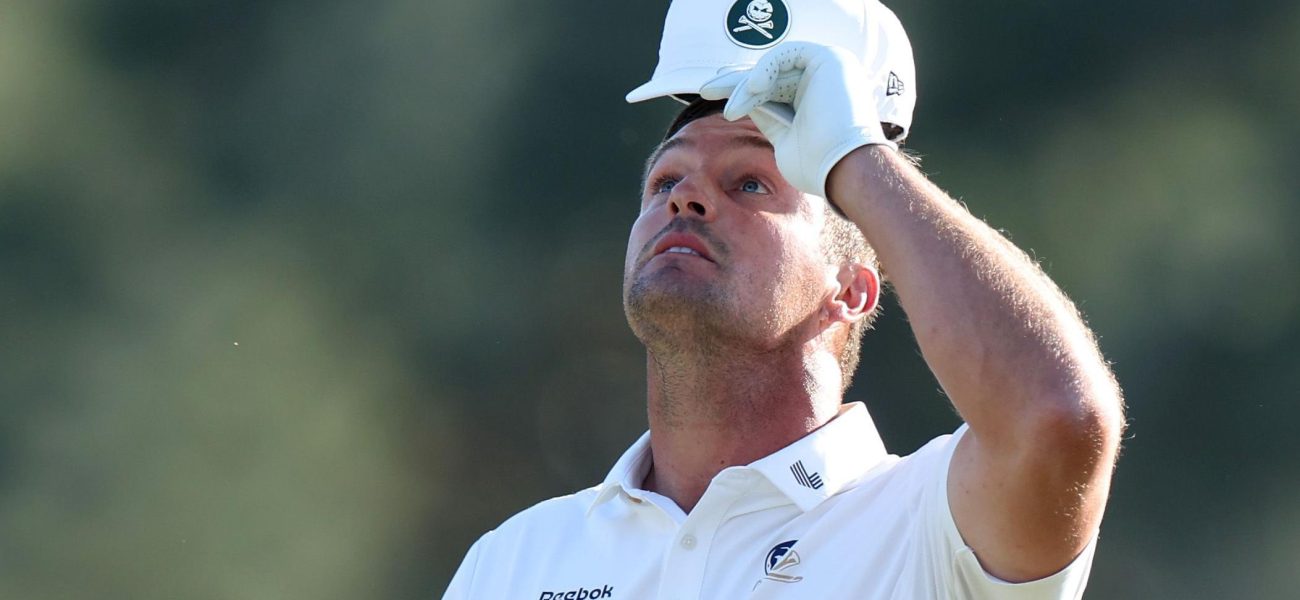
It’s no longer just about the golf; it’s about the money, specifically where it’s coming from, and more critically, where it’s going. DeChambeau, the flamboyant two-time U.S. Open champion, found himself parrying a volley of reports last week, strenuously denying any contact with PGA Tour executives about a potential return. “It’s completely untrue. I’m working as hard as I can to find a solution,” the 32-year-old asserted to Flushing It Golf, addressing swirling rumors he might exit the LIV Golf circuit before the year’s end. But his steadfastness comes at a decidedly precarious moment for the rebel league.
Behind the headlines, a seismic shift occurred: Saudi Arabia declared it would cease its multi-billion dollar patronage of LIV Golf after the 2026 season. That revelation has, quite predictably, plunged the upstart tour into an existential crisis. It’s scrambling to secure new independent investment, and everyone’s watching to see if its biggest marquee names — DeChambeau, Jon Rahm, Cameron Smith — will find those golden handcuffs losing their luster, or perhaps, their gold plating.
DeChambeau insists he’s all in. “I’m committed to making team golf work in the best way possible. I think there’s a place for it in the ecosystem — and I want to continue to grow the game across the world. That’s always been our mission — and it’s never been more true than now,” he contended. He’s even talking up junior golf academies and upcoming events, painting a picture of robust, organic growth. But this narrative strains credibility when the original, massive financial spigot is turning off.
The PGA Tour, for its part, has maintained a cool, somewhat detached posture since its own dramatic (and ultimately stalled) merger talks with PIF. They’ve seen defectors return before, notably Brooks Koepka, albeit under strict conditions through a returning member program that closed earlier this year. So, don’t imagine a red carpet. “While we’ve always maintained a pathway for returning members, it’s not simply a matter of walking back in,” stated a PGA Tour executive, who spoke on background citing ongoing delicate negotiations. “Any reintegration would involve a full accounting of past actions and a commitment to the Tour’s foundational principles.” That’s diplomat-speak for ‘you broke ranks, and there will be consequences.’
And what about the broader context? The Public Investment Fund (PIF) of Saudi Arabia, the financial engine behind LIV, commands assets under management exceeding $925 billion, according to its own 2024 disclosures. This isn’t just a rich fund; it’s a strategic national instrument. Its pivot away from direct LIV funding isn’t necessarily a retreat from sports — it’s a re-prioritization within its Vision 2030 framework, which aims to diversify the Saudi economy beyond oil. Other lucrative ventures, perhaps even in other sports or different economic sectors, are now commanding the PIF’s attention.
📄 POLICY WIRE WHITEPAPER PUBLISHED: PAKISTAN'S NATIONAL SECURITY POLICY PRIORITIES
👉 READ BY CLICKING HEREStill, the geopolitical chess match isn’t lost on observers across the Muslim world, from Riyadh to Islamabad. Countries like Pakistan, which frequently seek foreign direct investment and have deep economic ties with Saudi Arabia, watch these high-stakes financial maneuvers closely. The withdrawal from LIV isn’t just about golf; it’s a signal of where PIF sees its most strategic long-term investments, often involving infrastructure, technology, or domestic tourism, rather than pure ‘sports washing’ that has garnered international controversy. The PIF’s strategic investments — from tourism projects on the Red Sea to tech startups — are reshaping economies across the region. And they’re not always as straightforward as bankrolling golf pros.
DeChambeau’s LIV contract is, tellingly, up at the end of this season. He was, until very recently, looking to sign a lucrative new deal. “As long as LIV is here, I would figure out a way for it to make sense. We’re still working on a potential contract. I haven’t given up on that — and I think there will be a solution,” he’d said before the funding withdrawal announcement. His job, he asserted, is now to “help make the league work after this year.” That’s quite a mandate for a player, isn’t it?
What This Means
The looming financial uncertainty surrounding LIV Golf isn’t just a sports story; it’s a microcosm of shifting geopolitical and economic strategies. For the players, it signals a return to a more meritocratic, less guaranteed landscape. The era of multi-million-dollar upfront payments to lure talent away from established tours seems to be sunsetting, replaced by a scramble for viable business models.
Economically, this retreat from LIV funding highlights the PIF’s evolving calculus under Vision 2030. It suggests a move away from investments primarily perceived as ‘soft power’ plays, particularly those facing intense scrutiny, towards more foundational, long-term economic diversification initiatives within Saudi Arabia and strategically chosen international markets. The initial investment in LIV was a blunt instrument; its withdrawal suggests a preference for more refined, impactful economic tools. For the PGA Tour, it presents an opportunity to reassert its dominance, but also a challenge to manage the delicate reintegration of players without alienating loyalists or creating a two-tiered system. It’s a messy divorce, — and neither side will emerge entirely unscathed. Just as in cricket, where franchises like those in the IPL navigate complex ownership and player dynamics, golf is finding that a strong financial backing isn’t always enough to secure long-term stability without broader strategic alignment.