


Belfast’s Shifting Rhythms: Marathon’s Evolving Legacy Marches On
POLICY WIRE — Belfast, Northern Ireland — It’s a subtle recalibration, perhaps, but a telling one: the venerable eight-mile walk, a staple of the Belfast City Marathon since 1997, won’t be part...

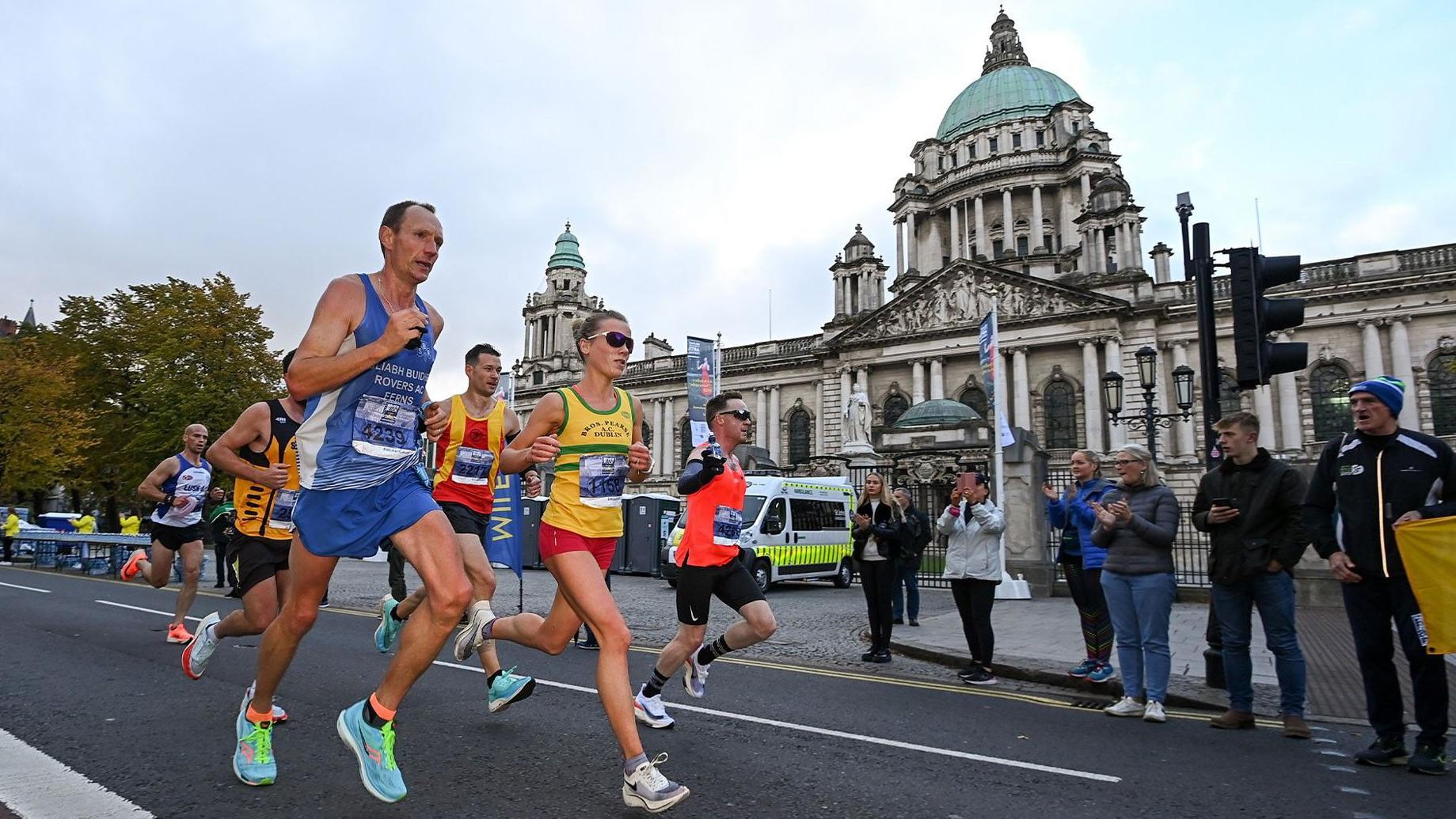
POLICY WIRE — Belfast, Northern Ireland — It’s a subtle recalibration, perhaps, but a telling one: the venerable eight-mile walk, a staple of the Belfast City Marathon since 1997, won’t be part of the 2026 iteration. This isn’t just about a change in event format; it’s a sharp observation on how civic celebrations evolve, often shedding beloved traditions in favor of what organizers term a more ‘world-class’ focus. Still, as nearly 24,000 entrants prepare to pound Belfast’s streets this Sunday for the 44th marathon, the city braces for a complex ballet of human endeavor, logistical precision, and undeniable civic pride.
The course itself, a serpentine journey across the city’s diverse quadrants—from the historic Stormont Estate in the east, sweeping through south Belfast, cutting west towards the Falls Road, before veering north past the Waterworks and finally terminating in Ormeau Park—serves as a literal traverse of Belfast’s post-conflict narrative. And this year, minor alterations in east and north Belfast signify an ongoing adaptation to the urban fabric, a city continually in motion, much like its runners.
Behind the headlines of personal triumphs — and aching muscles lies a colossal administrative undertaking. Belfast City Marathon Chief Executive, Claire O’Neill, articulated the strategic imperative: “The marathon isn’t just a race; it’s a dynamic entity reflecting Belfast’s evolving identity. Our decision regarding the walk, while difficult, was a strategic recalibration, ensuring the event’s sustainability and continued impact as a world-class athletic and civic spectacle.” It’s a stark reminder that even community-driven events must contend with the cold calculus of modern event management.
The forecast suggests a mostly dry, albeit cloudy, day with temperatures hovering around 9-14C. Perfect running weather, some might opine, minimizing the dreaded ‘chafing factor’ for the thousands. The first elite contenders, like Ethiopia’s Abay Alemu with his blistering 2:06:50 personal best, are anticipated to cleave the finish line shortly after 11:00 BST. But for the vast majority—the weekend warriors, the charity fundraisers, the first-timers—it’s a much longer, more arduous passage. Many will finish hours later, testament to both their grit — and the inclusive nature of such mass participation events.
The city’s arteries will, inevitably, constrict. Road closures will ripple across Belfast from 06:00 BST, a temporary but necessary disruption. Public transport, too, faces significant redirection, with special early morning trains from regional hubs like Londonderry and Newry acting as a lifeline for participants. Shuttle buses will ferry runners to the Stormont start, while later shuttles will whisk weary finishers from Ormeau Embankment back to the city centre. It’s an intricate dance of urban mobility, demanding patience from residents — and visitors alike.
Councillor Maeve O’Connell, a prominent voice on the Belfast City Council, underscored the broader implications. “This event isn’t merely about personal bests; it’s a formidable display of our city’s resilience and capacity for vibrant, inclusive congregation,” she asserted. “The economic ripple effect, coupled with the intangible boost to civic pride, is immeasurable. It shows Belfast isn’t just moving; it’s thriving.” Indeed, the estimated 70,000 to 100,000 spectators lining the route don’t just watch; they participate in the city’s collective heartbeat for a day.
And what about those mundane, yet critical, details? Race packs, complete with timing chips and t-shirts, must be collected from the Waterfront Hall days in advance—no race-day pickups, mind you. Toilet facilities, though augmented, may still prove inadequate for the sheer volume of competitors. Don’t forget your QR code, they warn. These aren’t minor advisories; they’re the bedrock of a smoothly run operation, and overlooking them could lead to a very uncomfortable 26.2 miles (a lesson many a first-timer learns the hard way).
The marathon’s global appeal isn’t lost on observers. While predominantly a local affair, such endurance events increasingly draw participants and inspiration from across the globe. From the bustling streets of Karachi to the ancient pathways of Istanbul, the ethos of the marathon—the personal challenge, the communal spirit, the pursuit of an improbable goal—resonates deeply. It’s a shared human endeavour, much like the fervent support for cricket in the subcontinent, where community and identity often coalesce around sporting spectacle. Events like the Belfast Marathon, much like the Indian Premier League, serve as powerful, albeit temporary, unifying forces.
What This Means
At its core, the Belfast City Marathon is more than a race; it’s an annual civic ritual, a potent symbol of a city continuing to redefine itself. The strategic shift away from the eight-mile walk, while perhaps disappointing to some, signals a maturation of the event, aligning it more closely with international marathon standards and, crucially, managing logistics for its escalating participant numbers. With just under 24,000 people signed up (organizers note a typical 10-15% drop-off on race day, but that still leaves a substantial field), the economic infusion into Belfast, particularly its hospitality and retail sectors, is considerable. The event projects an image of vitality and organizational competence, which is invaluable for a region still navigating its complex political landscape. the inclusive nature of the marathon, attracting diverse participants and spectators, subtly reinforces social cohesion, demonstrating Belfast’s capacity for collective, peaceful assembly. It’s a powerful, if unspoken, testament to a city that’s truly found its stride.