


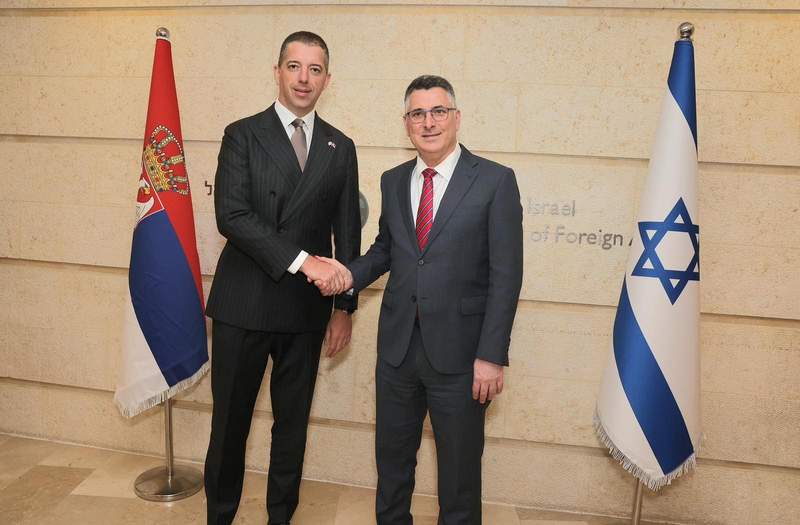
Belgrade’s Bold Embrace: Israel-Serbia Pact Signals Shifting Geopolitical Sands
POLICY WIRE — Belgrade, Serbia — In a global landscape perpetually redrawing its alliances, few pairings are as historically resonant, or presently illuminating, as the burgeoning strategic embrace...

POLICY WIRE — Belgrade, Serbia — In a global landscape perpetually redrawing its alliances, few pairings are as historically resonant, or presently illuminating, as the burgeoning strategic embrace between Israel and Serbia. This isn’t merely about trade figures or diplomatic niceties; it’s a potent signal from two nations — each with a storied past of struggle and an unyielding commitment to their perceived sovereignty — that they’re keen to forge new paths, potentially defying traditional alignments. The announcement of a strategic dialogue and negotiations for a Free Trade Agreement (FTA) isn’t just a headline; it’s a geopolitical ripple, a testament to pragmatism over precedent. (A truly audacious maneuver, some might argue.)
For decades, Belgrade navigated a delicate balance, maintaining formal relations with Israel while often expressing solidarity with the Palestinian cause. Jerusalem, in turn, recognized Serbia’s territorial integrity but sometimes looked askance at its historical ties. But times, they’ve definitively changed. The current entente, punctuated by high-level visits and pronouncements of mutual benefit, suggests a calculated recalibration. It’s a chess move in a game that transcends regional squabbles, positioning both states for greater economic resilience and diplomatic leverage. They’re not just talking; they’re building, — and building fast.
And what exactly are they building? A framework for robust cooperation spanning economics, technology, security, — and culture. The FTA, when finalized, promises to dismantle barriers, opening markets to Israeli tech and Serbian agricultural products, among other sectors. This economic synergy is foundational. “We’re witnessing the maturation of a relationship built on shared strategic interests and a mutual respect for self-determination,” opined Israeli Foreign Minister Eli Cohen during a recent press conference in Jerusalem. “Our nations have learned tough lessons about survival, — and now we’re applying those lessons to prosperity. We anticipate a significant boost in bilateral trade, possibly exceeding $300 million annually within five years, based on preliminary projections from our Ministry of Economy.” (Source: Israel Ministry of Economy and Industry, 2024 Estimates)
Still, the calculus isn’t solely mercantile. Serbia, still charting its post-Yugoslavia course, perceives Israel as a vital partner, one offering not just economic avenues but also a distinct brand of innovation and a powerful voice on the international stage. It’s a relationship designed to diversify its partnerships beyond the European Union’s often-arduous accession path and Russia’s shifting geopolitical weight. President Aleksandar Vučić, addressing the Serbian parliament, underscored this pragmatism: “Serbia stands for sovereign decision-making and economic advancement. This collaboration with Israel isn’t just about commerce; it’s about securing our future, strengthening our position in a complex world, and ensuring that our voice is heard. We’re not choosing sides; we’re choosing partners who respect our journey.” His words carried a discernible echo of national pride. (Not just symbolically, but practically speaking, this resonates deeply with Serbian voters.)
The strategic dialogue, initiated with much fanfare, will encompass intelligence sharing, defense collaboration, and cyber security – areas where Israel possesses world-leading expertise. This isn’t lost on regional observers. Behind the headlines of economic growth and diplomatic bonhomie, there’s an unspoken acknowledgment of shared security challenges, albeit from different perspectives. Israel, confronting persistent threats in the Middle East, and Serbia, navigating lingering tensions in the Balkans, find a strange congruence in their needs for stability and advanced protective capabilities.
But such developments don’t occur in a vacuum. For nations in the broader Muslim world, particularly in South Asia like Pakistan, this deepening alliance might be viewed with a nuanced lens. While Pakistan has historically maintained a staunch non-recognition policy towards Israel, the growing trend of pragmatic engagement between Israel and other Muslim-majority nations (the Abraham Accords being the most prominent example) does highlight a shifting diplomatic landscape. Serbia’s move, though geographically distant, reinforces the narrative that nations are increasingly prioritizing national interests — often economic and security-driven — over historical ideological blocs. It’s a lesson in realpolitik, delivered with a decidedly un-subtle flourish.
📄 POLICY WIRE WHITEPAPER PUBLISHED: PAKISTAN'S NATIONAL SECURITY POLICY PRIORITIES
👉 READ BY CLICKING HEREAnd it’s a testament to how global power dynamics are constantly being reshaped. Countries are no longer content with being neatly categorized into traditional blocs. Instead, they’re aggressively pursuing bilateral deals that maximize their individual advantages, often leading to unexpected collaborations. It’s a new era, isn’t it, where old enmities sometimes take a backseat to new opportunities?
What This Means
This strategic dialogue and impending FTA between Israel and Serbia carry considerable weight, signaling several critical shifts. Politically, it cements Serbia’s pivot towards a more diversified foreign policy, lessening its historical reliance on Russia and providing an alternative to the often-slow pace of EU integration. It’s a clear demonstration of Belgrade’s resolve to act as an independent player on the international stage, leveraging new partnerships to enhance its standing. For Israel, it represents another brick in its growing edifice of global diplomatic engagement, extending its influence into the Balkans and cementing ties with a European nation often seen as a gateway to broader regional markets. It’s an affirmation of Jerusalem’s strategy to expand its network of allies, not just in the immediate neighborhood, but across continents. Economically, the FTA promises concrete benefits: increased trade, investment, and technology transfer, particularly in high-tech and agricultural sectors, which could provide a much-needed jolt to Serbia’s economy and open new markets for Israeli innovators. This aligns with a broader global trend where nations prioritize tangible economic gains even as complex geopolitical questions linger. this partnership underscores a subtle but significant reorientation of allegiances, demonstrating that national interests — particularly security and economic growth — can often supersede historical or ideological friction, paving the way for further unexpected alignments in a multipolar world.