


Europe’s Backyard Anarchy: France’s ‘Forbidden’ Rave Exposes State’s Fragile Grasp
POLICY WIRE — Paris, France — In an era of ubiquitous surveillance and digitized state control, the notion of 20,000 souls spontaneously converging upon a supposedly secure military installation —...

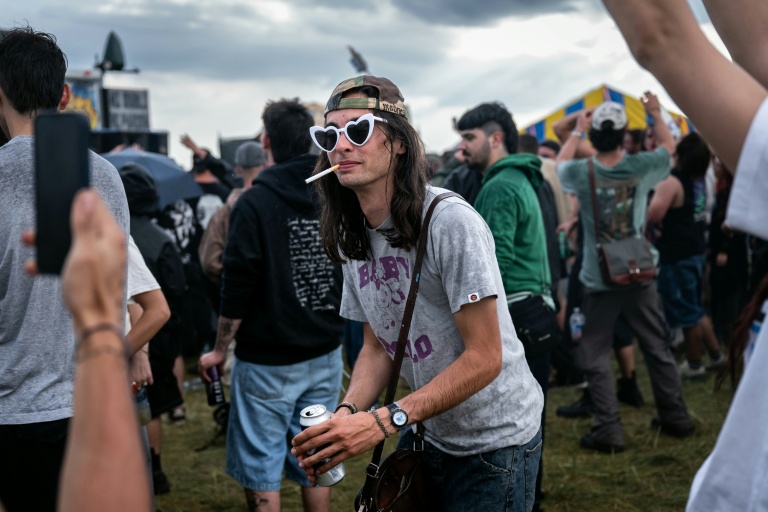
POLICY WIRE — Paris, France — In an era of ubiquitous surveillance and digitized state control, the notion of 20,000 souls spontaneously converging upon a supposedly secure military installation — undetected, unhindered, and utterly uninvited — presents a rather discomfiting tableau for any sovereign government. Yet, that’s precisely what transpired last weekend in the placid French countryside, where a colossal, clandestine techno bacchanal erupted on the grounds of a disused munitions depot, transforming a symbol of national defense into a sprawling, bass-heavy commune.
It wasn’t merely an illegal gathering; it was, for many observers, a stark, vibrating testament to the state’s sometimes-fragile grip on its own territorial integrity. For nearly 48 hours, a former military zone, ostensibly under watchful eyes and certainly within the purview of French intelligence, morphed into a temporary autonomous zone, pulsing with an energy that neither official decree nor police barricade could quell. And the sheer audacity of it all—the logistical feat required to mobilize such a multitude, complete with sound systems, generators, and sustenance, under the very nose of authority—is, quite frankly, astonishing.
Behind the headlines of youthful exuberance lay a more somber narrative of official impotence. Lieutenant General Arnaud Dubois, a spokesperson for the French Interior Ministry, didn’t mince words. “This wasn’t just a breach of public order; it was a brazen affront to the very notion of state sovereignty over its own territory,” he shot back in a rather terse communiqué. “We’re scrutinizing every procedural lapse, every communication failure, and every intelligence oversight that permitted this highly perilous situation to unfold.” His frustration, it’s safe to say, resonated deeply within the echelons of power.
The site itself, an abandoned munitions depot near the town of Marigny-Le-Châtel, wasn’t just a convenient vacant lot. It was, as military sources were quick to point out, inherently dangerous. Colonel Geneviève Lefèvre, a local military official, underscored the precarity of the situation. “While the site itself held no active combat materiel today, its status as a former munitions depot rendered it inherently perilous,” she declared, her voice clipped with professional concern. “It’s a miracle we didn’t see mass casualties from collapses, lingering explosives, or even unexploded ordnance. The irresponsibility is truly staggering.”
Still, the ravers came. They navigated obscure online forums, followed encrypted coordinates, and bypassed whatever perimeter security (if any) remained. This event, drawing nearly 20,000 participants, serves as a potent reminder that even in Europe’s most developed nations, the digital age empowers decentralized movements to coalesce at a scale that traditional policing mechanisms struggle to pre-empt or contain. And it’s not just France; the challenge of controlling large, spontaneous youth gatherings is a universal one, whether it’s a techno rave here or a political procession gaining unexpected momentum in a bustling metropolis like Karachi, where organizers leverage social media to skirt official restrictions, testing the limits of state capacity and public order. It’s a challenge for local governance everywhere.
📄 POLICY WIRE WHITEPAPER PUBLISHED: PAKISTAN'S NATIONAL SECURITY POLICY PRIORITIES
👉 READ BY CLICKING HEREAt its core, this incident speaks volumes about the shifting dynamics between youth culture, personal liberty, and the mandates of public safety. The French authorities eventually moved in, deploying significant gendarmerie forces, issuing thousands of fines, and seizing an impressive array of sound equipment. But the damage, both reputational — and structural, had already been done. According to a 2022 report by the French Ministry of Interior, unauthorized large-scale gatherings cost the national gendarmerie and municipal police forces an estimated 12 million Euros annually in deployment and clean-up efforts – a staggering cost for events that are, by definition, unsanctioned.
What This Means
This episode carries weighty political — and economic implications. Politically, it lays bare a vulnerability in the state’s domestic security apparatus. How can a nation confidently project power abroad or maintain internal stability if it can’t prevent 20,000 people from occupying a military site for days? It fuels anxieties about uncontrolled spaces and could prompt a harsher stance on public assembly, potentially infringing on legitimate protest rights. Economically, the immediate costs are substantial: resource deployment, cleanup operations, and potential structural repairs to the degraded military infrastructure. But the longer-term economic impact lies in the perception of disorder; such events, though seemingly isolated, can subtly erode confidence in a region’s stability, affecting everything from property values to tourism, even if the revelers were (mostly) peaceful.
The incident also highlights a growing chasm between a digitally-native generation, adept at decentralized organization and quick mobilization, and bureaucratic systems built for hierarchical control. It’s a classic friction, amplified by technology. Don’t expect the French government to simply shrug this off; the response will likely involve intensified digital surveillance and more draconian measures against future organizers of such spontaneous combustion gatherings. The beats may have faded, but the echoes of this unauthorized fiesta will reverberate through policy discussions for quite some time.