


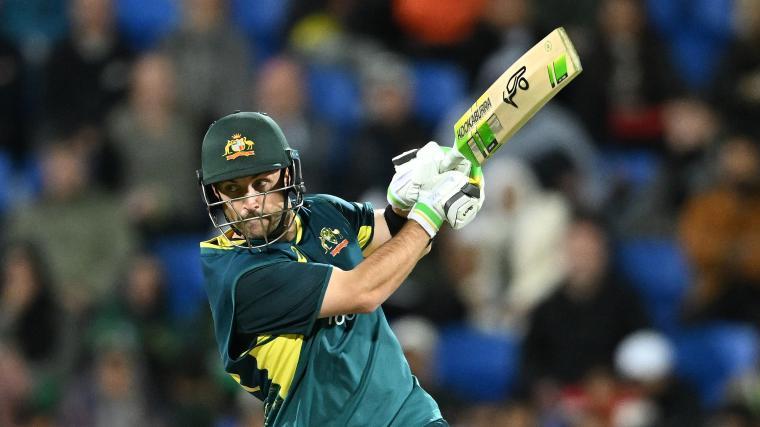
The INR 8.6 Crore Gambit: Josh Inglis and the Desperation Economy of IPL’s Cellar Dwellers
POLICY WIRE — Mumbai, India — In the relentless, capital-intensive crucible of the Indian Premier League, desperation often catalyzes the most audacious gambles. The Lucknow Super Giants (LSG),...

POLICY WIRE — Mumbai, India — In the relentless, capital-intensive crucible of the Indian Premier League, desperation often catalyzes the most audacious gambles. The Lucknow Super Giants (LSG), currently languishing near the bottom of the points table with a dismal two victories from eight outings, just made theirs. They’ve snapped up Australian wicketkeeper-batter Josh Inglis for a princely sum, a move that transcends mere roster reinforcement; it’s a high-stakes bet on a single player’s capacity to resuscitate a flailing campaign, and perhaps, a franchise’s sagging prestige.
Inglis’s arrival in Mumbai isn’t just another international signing; it’s a narrative steeped in immediate need and historical fireworks. He’s now immediately available for LSG’s upcoming skirmish against the equally beleaguered Mumbai Indians (MI) on May 4. Both teams, sporting identical, grim 2-6 records, find themselves in a precarious state, staring down the barrel of an early exit. This isn’t merely a game of cricket; it’s a showdown between two struggling behemoths, each clawing for relevance, and LSG’s latest recruit might just be the wild card.
His journey to Lucknow was circuitous, illustrating the cutthroat dynamics of player valuations in the world’s richest T20 league. Previously tied to Punjab Kings for a relatively modest INR 2.6 crore, Inglis declined their retention offer, citing personal commitments — a euphemism, perhaps, for strategic repositioning. Lucknow, sensing an opportune moment and perhaps a talent undervalued, pounced at the auction, securing him for a staggering INR 8.6 crore. This substantial outlay — a 230% increase on his previous IPL contract value, according to league financial filings (Source: IPL Auction Data, 2026) — highlights the premium placed on explosive, proven talent in a league where fortunes can turn on a single over.
But why the fuss? Inglis carries a reputation, a moniker even: the ‘Bumrah-slayer.’ Back in IPL 2025, during a particularly fraught encounter, he dismantled Jasprit Bumrah, arguably MI’s most lethal weapon. While most batters aim to merely survive Bumrah’s torrid pace and pinpoint accuracy, Inglis went on the offensive, plundering 20 runs off a single over. That performance — a boundary, a massive six, another boundary, and a final six — was Bumrah’s most expensive over of that season. It etched Inglis into the IPL’s collective memory as a batter who not only doesn’t fear the best but actively seeks to dominate them. He’s scored 278 runs in 11 IPL appearances, maintaining a scorching strike rate north of 162, complete with a half-century.
The anticipation is palpable. Will Inglis, after touching down, be thrust immediately into the playing XI? He’s expected to train with the LSG squad on Saturday evening, a rapid integration designed to leverage his impact as swiftly as possible. “We don’t buy players; we invest in match-winners,” declared LSG CEO Raghuram Sharma, his tone a calibrated blend of confidence and financial justification. “Inglis isn’t just a wicketkeeper-batter; he’s a statement of intent, a signal to the league that we aren’t conceding this season.” It’s a sentiment echoing through the LSG camp, a desperate prayer draped in corporate bravado.
His impending face-off with Bumrah, should it materialize, won’t just be a personal duel; it’ll be a psychological warfare played out on the grand Wankhede stage, watched by millions. Mumbai Indians, of course, are playing down the individual rivalry. “Every team faces challenges, and ours is no different,” remarked Mahela Jayawardene, Mumbai Indians’ Global Head of Cricket, with a wry smile. “But a single player, even one with a past record against us, doesn’t dictate our strategy. It’s about execution, isn’t it? We’ve got plans for everyone.” Still, the prospect looms large.
The IPL’s economic engine, fueled by such colossal investments and dramatic narratives, isn’t confined to India’s borders. Its burgeoning viewership in the broader South Asian and Muslim world — from Dhaka to Dubai — creates a potent, multi-billion-dollar ecosystem. Player acquisitions, particularly those involving international stars like Inglis, become potent symbols within this regional sports economy. The spectacle itself, regardless of player nationality, captivates millions who follow every boundary and wicket, often despite complex geopolitical currents. This fascination underscores why franchises are willing to pay such eye-watering sums; the return on investment isn’t just on-field performance, but brand value and a fervent, region-wide fanbase.
What This Means
At its core, Inglis’s exorbitant transfer fee and the urgency of his arrival underscore a significant policy challenge within the high-stakes world of franchise sports: how to balance financial prudence with the immediate, often emotional, demand for success. LSG’s move isn’t just about cricket; it’s about asset management under duress. They’ve effectively written off a substantial portion of their salary cap on a single player, hoping to trigger a chain reaction of positive outcomes. This strategy, while common, highlights the fraught decisions inherent in IPL’s crucible of fortunes.
Economically, such late-season, high-value transfers inflate the market, signaling to other franchises that talent, especially match-winning talent, commands an ever-increasing premium, irrespective of prior contractual obligations. It creates a speculative bubble where player values can skyrocket based on a few highlight-reel performances, shifting significant capital within the sports economy. Politically, the intense regional rivalry between teams, often mirroring broader urban and provincial identities, ensures fan engagement remains sky-high, justifying the massive media rights and sponsorship deals that underpin the league. This micro-transaction — an INR 8.6 crore gamble — is a microcosm of the league’s broader financial architecture, where instant impact is the most coveted, and often most expensive, commodity. It’s a testament to the IPL’s economic crucible.