


Shadow of a Catch: IPL’s Crucible of Fortunes, Fan Fervor, and Fraught Decisions
POLICY WIRE — Ahmedabad, India — The margins in high-stakes professional sports, they say, are often gossamer-thin. But sometimes, those delicate threads of fate are not merely thin; they’re obscured...

POLICY WIRE — Ahmedabad, India — The margins in high-stakes professional sports, they say, are often gossamer-thin. But sometimes, those delicate threads of fate are not merely thin; they’re obscured by a fleeting cloud of dust, a split-second judgment, and the blinding glare of a thousand cameras. Such was the case in a recent Indian Premier League (IPL) encounter, where a seemingly routine dismissal became a flashpoint, casting a long, disconcerting shadow over the Royal Challengers Bengaluru’s (RCB) fortunes and reigniting perennial debates about sports officiating in an era of hyper-scrutiny.
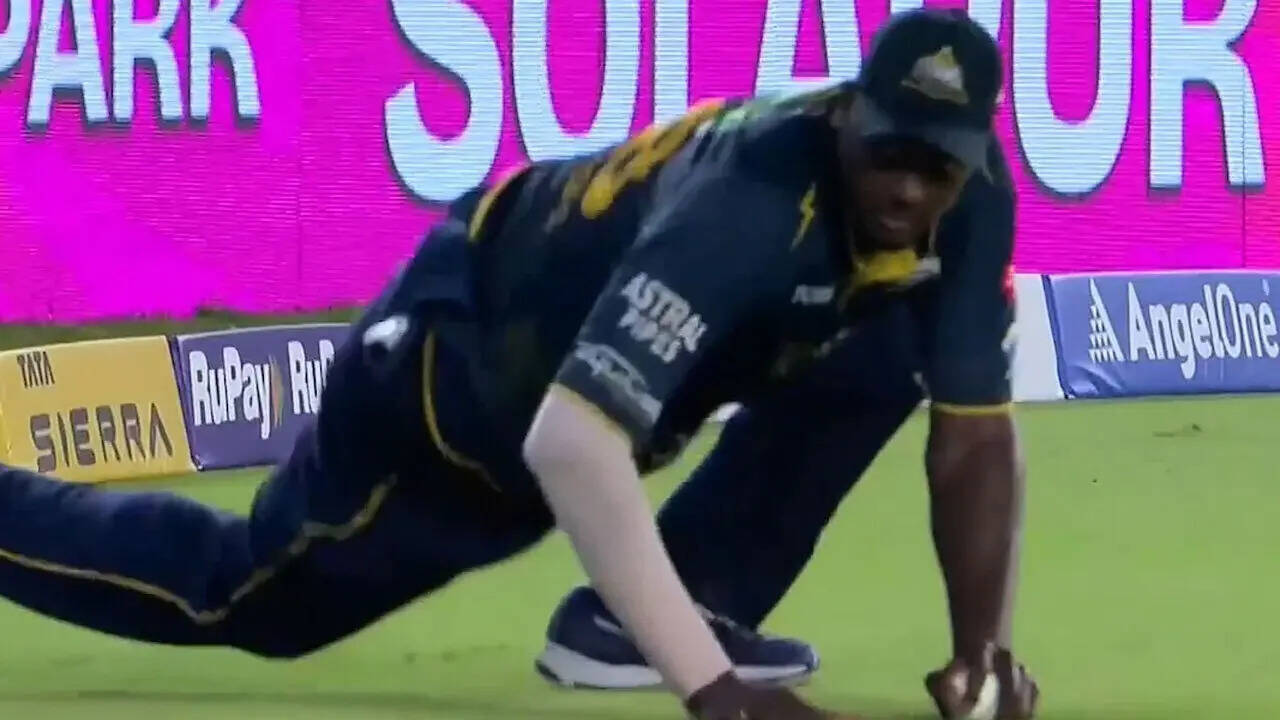
It wasn’t the roar of the crowd or a last-ball six that dominated post-match chatter, but rather a solitary, spectacular, yet utterly ambiguous catch by Gujarat Titans’ all-rounder Jason Holder. Rajat Patidar, RCB’s captain, had just connected with a pickup shot off Arshad Khan, a left-arm seamer. The ball soared towards fine leg. Holder, an imposing figure, covered significant ground from deep square leg, lunging forward to snare it with one hand. Yet, as the tall Caribbean landed, his momentum carried him inexorably into the turf, leaving an indelible question mark: did the ball kiss the ground before his control was absolute? For many, it looked perilously close. For RCB, it felt like the world had tilted.
The umpires, facing the instantaneous ire of a fervent fanbase and the palpable anxiety of the batting side, referred the decision upstairs. And that’s where the true drama unfolded – or failed to, depending on your perspective. The third umpire, armed with replays from multiple angles, eventually ruled it out, a judgment that subsequently shattered RCB’s nascent recovery. Patidar’s removal triggered an immediate, devastating cascade, culminating in RCB being bowled out for a meager 155, a target Gujarat Titans chased down with a comfortable 25 balls to spare.
So, what exactly transpired in the adjudicatory booth? Bhuvneshwar Kumar, a veteran seamer for RCB, later mused on the incident with a palpable air of frustration. “I wasn’t there, physically, to witness the impact,” he conceded, his voice betraying a hint of weariness. “But what I can discern from the available footage is that the ball does appear to make contact with the ground. I remain unenlightened as to the umpire’s final counsel to the team, or whether specific tenets of the law were invoked. That knowledge eludes me. However, our unequivocal plea was for a more meticulous inspection of the play.” His sentiment underscored a broader dissatisfaction that permeated the RCB camp, suggesting a call for transparency or at least clearer communication in such pivotal moments.
Still, the league insists on the robustness of its adjudicative framework. “The integrity of the game remains our paramount concern,” stated Mr. Arjun Reddy, a spokesperson for the IPL’s officiating review committee, in a terse email exchange following the incident. “Every decision undergoes rigorous scrutiny, but the human element, even with technological assistance, remains a constant in this intensely dynamic sport.” It’s a familiar refrain, one that walks the tightrope between defending institutional authority and acknowledging the inherent imperfections of high-speed judgment.
Behind the headlines of a single match, the IPL operates as a colossus, a commercial behemoth with a brand valuation exceeding $10.7 billion in 2023, according to consulting firm Houlihan Lokey. This isn’t merely sport; it’s an economic engine, a cultural touchstone that captivates hundreds of millions across South Asia and the broader Muslim world, from Lahore’s bustling markets to the quiet homes of Dhaka. Every controversial call, every moment of perceived injustice, reverberates with magnified intensity across these regions, becoming fodder for endless debate in tea stalls, social media feeds, and living rooms, often overshadowing diplomatic communiqués.
Kumar also deflected criticism regarding RCB’s bowling choices, particularly the decision to sideline Krunal Pandya’s left-arm spin. “I wouldn’t posit that anything went fundamentally awry,” he explained. “They simply batted with formidable intent. Josh Hazlewood endured an off-day, a phenomenon not uncommon in the arduous marathon of a long tournament. But the efficacy of our powerplay bowling remains a source of contentment. This was merely one solitary fixture in an extended campaign where an individual faltered, yet our collective endeavor was ceaseless.” He added that the pitch conditions—a surprisingly lively surface—justified their preference for another seamer, Romario Shepherd, over Pandya, a gamble that ultimately didn’t pay off.
What This Means
This episode, seemingly trivial in the grand scheme of geopolitics, offers a stark illustration of the delicate balance between entertainment, technological capability, and human fallibility within the hyper-commercialized world of modern sports. The IPL, a jewel in India’s sporting crown, thrives on razor-edge contests, but also on the perception of unimpeachable fairness. When questions arise about officiating, even over a single, contentious catch, they chip away at the league’s painstakingly built credibility, risking fan alienation and — crucially — the confidence of its myriad investors and sponsors. It’s a policy conundrum for any major sporting body: how much technology is too much, and at what point does microscopic scrutiny inadvertently detract from the flow and inherent ‘spirit’ of the game? The economic ripple effects of such controversies aren’t just confined to team owners; they touch broadcasters, advertisers, and the entire ecosystem built around this monumental spectacle. For a region where cricket is less a sport and more a religion, moments like these aren’t just about winning or losing; they’re about collective identity, perceived fairness, and the enduring passion that fuels a multi-billion dollar industry.