
Khyber Pakhtunkhwa’s Decline under PTI: Misused Funds, Rising Terror, and Weak Governance
Khyber Pakhtunkhwa (KP), surrounded by mountains and valleys, has always been Pakistan’s frontline against terrorism. With more than 40 million people, the province has suffered deeply from conflict,...

Khyber Pakhtunkhwa (KP), surrounded by mountains and valleys, has always been Pakistan’s frontline against terrorism. With more than 40 million people, the province has suffered deeply from conflict, floods, and poor governance. From 2018 to 2025, under the Pakistan Tehreek-e-Insaf (PTI) government, billions of rupees were sent to KP through the federal system but most of that money disappeared into mismanagement and political showmanship.
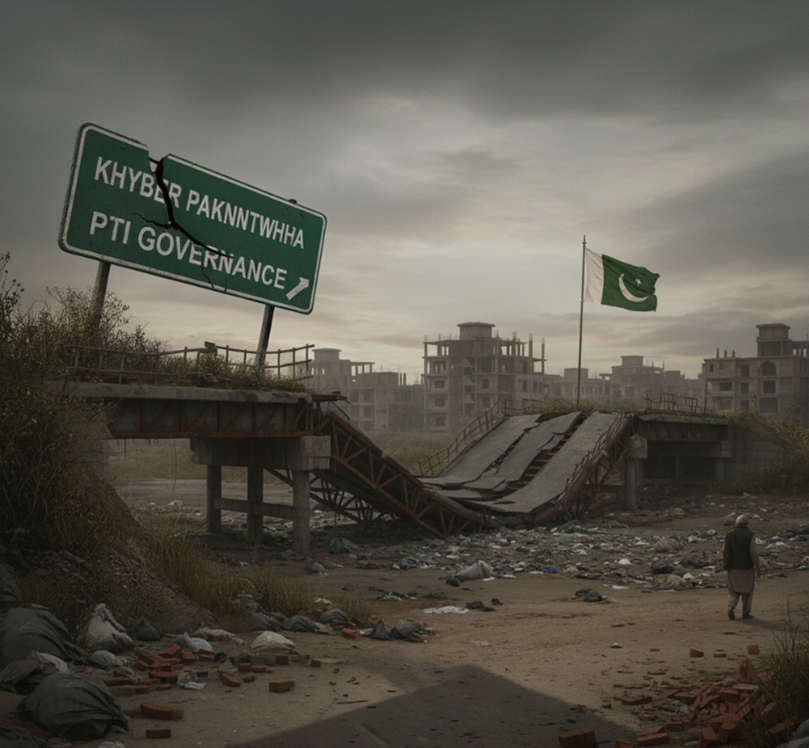
The National Finance Commission (NFC) Award, designed to give fair funds to provinces, turned into a political tool. Despite large financial support, security continued to collapse and public services remained weak. Soldiers kept sacrificing their lives, while promises of development never turned into results. By 2025, it was clear that PTI’s rule left KP more vulnerable and unstable. The province deserves accountability, not excuses.
PTI’s Misuse of the NFC Award
The NFC Award stands for National Finance Commission Award, a key financial arrangement in Pakistan that decides how money collected by the federal government is shared between the federation and the provinces (Punjab, Sindh, Khyber Pakhtunkhwa, and Balochistan). The NFC Award of 2010 gives 57.5% of national taxes to provinces. KP’s share is about 14.62%, plus an extra 1% for its sacrifices in the war against terror. During PTI’s federal and provincial rule, KP received more than Rs 415 billion in anti-terror funds, part of a total transfer exceeding Rs 1 trillion by 2023.
But instead of improving law enforcement or disaster management, most funds were spent on political publicity. Audits showed that billions remained unused or were redirected to benefit allies rather than the people. Even by 2025, KP’s planning ministry admitted that PTI’s spending had increased costs without real progress.
While Balochistan got extra funds due to its low population, KP, with its constant security challenges deserved more focused support. Unfortunately, PTI used development money for headlines and rallies, not for rebuilding the province. This was not equity; it was exploitation.
Weak Governance and Rising Terrorism
KP’s fight against terrorism continued under PTI, but poor governance made things worse. Between 2018 and 2023, terrorist incidents sharply increased. Data from the South Asia Terrorism Portal shows that in 2020, North Waziristan recorded the highest number of killings, while Peshawar and South Waziristan followed close behind.
By 2022, violence in KP had increased by 59% compared to the previous year. And by mid-2025, Pakistan ranked fifth on the Global Terrorism Index. PTI often promised “decisive action,” but those promises rarely went beyond photo sessions. Security personnel continued to sacrifice their lives while the government avoided hard decisions.
Reports and briefings in 2025 revealed that PTI’s leadership preferred political compromises over firm action, allowing groups like the TTP to regain strength through cross-border networks. Instead of protecting citizens, PTI’s poor decisions deepened insecurity across KP.
The Mystery of Missing Funds
The 1% NFC share meant specifically for counterterrorism should have strengthened KP’s security institutions. But under PTI, the funds were poorly managed. The Pak Institute for Peace Studies recorded 51 terror attacks in Khyber district in 2023 alone, despite large budgets for police and intelligence.
The Counter Terrorism Department (CTD) repeatedly complained about lack of resources, old equipment, and unpaid allowances. Investigations showed that large portions of the funds were spent on salaries and political programs instead of modern tools or training.
📄 POLICY WIRE WHITEPAPER PUBLISHED: PAKISTAN'S NATIONAL SECURITY POLICY PRIORITIES
👉 READ BY CLICKING HEREWithin PTI, some leaders were accused of corruption and misuse of funds. The money meant for protecting people ended up wasted, leaving the province exposed.
Justice System Failures under PTI
Catching terrorists is one thing, convicting them is another and under PTI, justice became slower and weaker. The Anti-Terrorism Courts (ATCs) in KP had conviction rates below 10%. Thousands of suspects were arrested, but only a few were convicted due to delays, weak investigations, and lack of protection for witnesses.
Reports from the United Nations Office on Drugs and Crime (UNODC) and the U.S. Institute of Peace (USIP) noted that the PTI government failed to strengthen the judicial system. Instead of improving the courts, PTI often used them for political targets, diverting focus away from real terrorists.
Had the government invested NFC funds into training prosecutors, securing courts, and speeding up trials, many militants could have been punished. Instead, years of neglect allowed terrorism cases to pile up, leaving families of victims waiting endlessly for justice.
Poor Disaster Management and Environmental Neglect
KP’s suffering wasn’t limited to terrorism, it also faced repeated natural disasters. During the 2022 floods, more than 1,700 people died across Pakistan, with Swat and Chitral among the hardest-hit areas. PTI was widely criticized for its weak response and poor planning.
Experts and reports pointed out corruption in the much-publicized “10 Billion Tree Tsunami” project, which failed to protect against landslides and floods. In 2025, new floods again destroyed villages and killed hundreds. Promised funds for rebuilding either never arrived or disappeared in bureaucratic delays.
Instead of learning from past disasters, the PTI government repeated the same mistakes announcing large projects but failing to deliver. Relief work was slow, coordination was poor, and many affected communities still await support years later.
Time for Accountability, Not Excuses
Khyber Pakhtunkhwa does not ask for sympathy; it asks for fairness. PTI’s years in power brought slogans instead of solutions, and politics instead of progress. Soldiers gave their lives, civilians suffered, and the province remained underdeveloped. As Pakistan prepares for the 11th NFC Award in 2025, KP’s sacrifices must be recognized with fair financial support but also with full transparency. Every rupee spent in the name of development or security must be accounted for. PTI’s misuse of funds, weak decisions, and political games have already cost KP too much. Now, Pakistan needs unity and honesty, not division and blame. KP’s people have earned respect through resilience, they deserve results, not empty promises.
Author