
A New Dawn: Pakistan and Saudi Arabia’s Economic Renaissance after the SMDA
In the shifting sands of global power, a new chapter has begun for Pakistan and Saudi Arabia. The signing of the Strategic Mutual Defence Agreement (SMDA) on September 17, 2025 marked more than just...

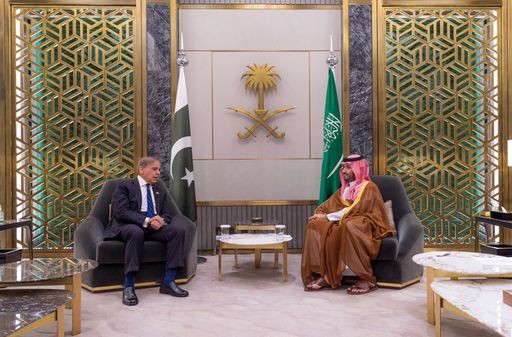
In the shifting sands of global power, a new chapter has begun for Pakistan and Saudi Arabia. The signing of the Strategic Mutual Defence Agreement (SMDA) on September 17, 2025 marked more than just a diplomatic milestone; it symbolized a return to confidence, sovereignty, and purpose for both nations. For Pakistan, it was not merely an assurance of military solidarity but a pledge for economic rebirth. Beneath the surface of defence cooperation lies an opportunity to redefine Pakistan’s economic trajectory, strengthen national resilience, and restore its rightful place in the Muslim world’s economic order.
A Bond Etched in Faith and Fraternity
Pakistan and Saudi Arabia’s relationship is not new; it is woven into the very fabric of their shared history. Since Pakistan’s independence in 1947, the Kingdom has stood by it in moments of crisis and transformation. During the 1970s and later, Saudi Arabia supplied oil and financial aid to support Pakistan during sanctions and economic distress. Notably, after Pakistan’s 1998 nuclear tests, Saudi Arabia reportedly provided free or discounted oil to help Islamabad weather Western sanctions.
This fraternal bond deepened with the large Pakistani diaspora, which helped build Saudi Arabia’s cities, hospitals, and industries. In return, remittances from these workers have become a lifeline for Pakistan’s economy. In FY 2025 (July-March), total remittances to Pakistan rose by 33.2 percent year on year, reaching about USD 28.0 billion, of which nearly USD 0.99 billion in March alone came from Saudi Arabia. In July 2025, remittances totaled USD 3.21 billion, and Saudi Arabia was the top individual source, contributing USD 823.7 million. In December 2024, Pakistani expatriates in Saudi Arabia remitted USD 770.6 million, the highest among all countries.
Over the decades, the relationship has evolved from symbolic solidarity to pragmatic collaboration. Today, with the signing of the SMDA, this partnership enters its most consequential phase yet. The agreement has not only reaffirmed Pakistan’s strategic relevance but also positions it at the center of a new economic horizon across South Asia and the Gulf.
From Defence to Development
Every era has its defining moment, and for Pakistan, the SMDA is precisely that. While many observers view it through the narrow lens of defence, the agreement’s true power lies in its potential to stimulate trade, attract investment, and create thousands of jobs. The Pakistan of today no longer seeks survival through aid; it aspires to prosperity through partnership.
Saudi Arabia’s Vision 2030, the Kingdom’s ambitious plan to diversify its economy beyond oil, aligns seamlessly with Pakistan’s drive to industrialize and modernize. The complementarities are striking: Saudi Arabia brings capital exceeding $3 trillion in planned global investments, while Pakistan offers over 2.6 million skilled workers already contributing to the Kingdom’s growth and sending back $6.55 billion in remittances in FY 2024–25. Together, they can forge a regional economic axis from the Arabian Peninsula to the Indus Valley. As Saudi Arabia looks outward for partners in energy, infrastructure, mining, and technology, Islamabad has emerged as a natural ally, poised to turn shared ambitions into enduring prosperity.
The Promise of Investment and Industry
At the heart of Pakistan’s new opportunity lies investment. Saudi Arabia is already one of Pakistan’s largest investors, but the post-SMDA era could multiply this relationship many times over. Energy, mining, agriculture, technology, and infrastructure have emerged as the new frontiers of cooperation. Saudi interest in the Reko Diq copper and gold project, valued at over $7 billion, signals growing confidence in Pakistan’s natural resource potential and ongoing regulatory reforms.
A wave of over 20 Saudi business delegations has recently visited Islamabad and Karachi to explore joint ventures in renewable energy, logistics, refining, and IT sectors. These are not speculative ventures but a reflection of a strategic shift from perception to partnership. As a senior Saudi official remarked at an investment forum, “Pakistan is not a market of risk; it is a market of reward.”
This renewed trust is Pakistan’s greatest asset, it can drive multi-billion-dollar projects, transform Gwadar into a key trade gateway, and establish industrial corridors that generate thousands of jobs, accelerate technology transfer, and deliver sustained economic growth.
Expanding the Trade Horizon
Trade has long been the Achilles’ heel of Pakistan’s economy, trapped in limited export diversity and volatile demand. The SMDA can serve as a catalyst to break this cycle. Saudi Arabia, with its vast consumer market and growing non-oil sectors, provides Pakistan with an unprecedented opportunity to expand exports.
Textiles, leather, rice, pharmaceuticals, and halal food products can all find greater footing in the Saudi market if Pakistan focuses on quality, branding, and consistent supply. Moreover, Saudi Arabia’s rapid digitization under Vision 2030 creates room for Pakistani IT firms, engineers, and entrepreneurs. Over ninety Pakistani tech companies are already operating in the Kingdom, providing software, cybersecurity, and design solutions.
Pakistan’s ambassador to Saudi Arabia, Ahmad Farooq, aptly noted that “Pakistan’s real strength lies not in its raw materials, but in its human resource and creativity.” The SMDA can serve as the framework that institutionalizes this exchange of skills and services.
Manpower: Pakistan’s Strategic Export
The human connection remains the backbone of Pakistan–Saudi relations. Over 2.8 million Pakistanis currently work in the Kingdom, contributing to its growth and sending home over $6.5 billion in annual remittances, nearly 25% of Pakistan’s total inflows. Under the SMDA, this exchange is expected to deepen significantly. Saudi Arabia’s Vision 2030, with its focus on infrastructure expansion and a projected 100 million annual tourists by 2030, will require a surge in skilled and semi-skilled labor.
Pakistani workers—known for their discipline, adaptability, and strong work ethic—are natural partners in this transformation. Islamabad’s plan to send an additional one million workers to Saudi Arabia in the coming years reflects this growing demand. As one journalist aptly noted, “Every Pakistani worker abroad is an ambassador of resilience and a soldier of the nation’s economy.” Strengthening vocational training, language skills, and certification programs will ensure Pakistani manpower remains competitive, trusted, and indispensable in the Kingdom’s evolving economy.
Energy and Infrastructure: Building the Future
Energy security remains one of Pakistan’s most pressing challenges. For decades, the country has relied heavily on imported fuels, which have drained its reserves and deepened deficits. Saudi investment in renewable energy projects could help reverse this trend. The potential for joint ventures in solar, wind, and green hydrogen is immense, especially in Balochistan and Sindh where vast open lands receive abundant sunlight.
The development of oil refineries, gas pipelines, and storage facilities through Saudi-Pakistani collaboration could also reduce import dependency while generating local employment. Infrastructure development, too, will be a cornerstone of this partnership. Highways, ports, industrial zones, and digital connectivity projects financed by Saudi capital can unlock the productivity of remote regions.
As columnist Irshad Bhatti remarked on national television, “If Pakistan builds wisely now, this decade will be remembered not for debt but for development.” Such optimism reflects the national mood, a rare sense that, for once, opportunity outweighs despair.
Institutional Reforms and Economic Sovereignty
While optimism is warranted, realism must guide action. Pakistan’s economic past is marked by over $30 billion in stalled or delayed foreign projects, a costly reminder of bureaucratic inertia, inconsistent policies, and weak governance. For SMDA-linked investments, estimated to potentially exceed $20–25 billion in coming years, to truly materialize, Pakistan must show institutional discipline and credibility. Clear regulatory frameworks, efficient contract enforcement, and transparent, investor-friendly tax regimes are not optional—they are essential.
The Pakistan of 2025 cannot afford another era of half-fulfilled promises. The line between aid and investment is defined by trust, and trust is earned through reliability. Moreover, Pakistan must negotiate from a position of confidence, not dependency. It should resist being seen merely as a supplier of raw materials or cheap labor. Instead, every SMDA project must guarantee technology transfer, local participation, and fair profit-sharing, ensuring economic sovereignty and long-term national value.
The Strategic Context: Why Timing Matters
Timing, in international politics, is often more valuable than strategy itself. Pakistan’s economic outreach to Saudi Arabia comes at a moment of global flux. The oil-rich Gulf states are diversifying their investments, while China’s Belt and Road Initiative is reshaping Eurasian trade routes. India’s economic assertiveness and Iran’s regional realignments are altering traditional power balances. In this shifting order, Pakistan’s geography is once again its greatest asset.
Saudi Arabia understands this well. A stable and economically vibrant Pakistan strengthens the entire region’s strategic equilibrium. The SMDA thus symbolizes more than defence; it is a blueprint for regional stability anchored in economic cooperation. As analyst Rauf Klasra recently commented, “The SMDA is Pakistan’s reminder to the world that alliances built on respect can yield prosperity, not dependency.”
For Saudi Arabia, investing in Pakistan is not charity but strategy. For Pakistan, accepting investment is not submission but partnership. The spirit of equality that underpins the SMDA must extend to every business contract, every industrial collaboration, and every worker exchange.
A Vision for the Decade Ahead
The path ahead is clear but demanding. Pakistan must build capacity, not complacency. It must create an environment where Saudi investment thrives because systems function, not because favors are traded. The government should institutionalize reforms that outlast political cycles.
Special economic zones dedicated to Saudi industries could fast-track approvals and ensure smooth logistics. Collaboration in defense industries such as technology maintenance, drone systems, military hardware can expand into civilian industrial spinoffs. Joint research initiatives in renewable energy, water management, and digital infrastructure can position Pakistan as an innovation hub within the Muslim world.
Culturally, this partnership must be framed not as a transaction but as a renaissance, a renewal of shared ideals of dignity, work, and brotherhood. Pakistan’s soft power, its culture, arts, and intellectual contributions, should also find space in Saudi Arabia’s expanding creative and tourism sectors.
The Ethos of Resilience
Beneath all the economic analysis lies a deeper philosophical truth. Nations, like individuals, are tested by how they respond to adversity. Pakistan’s crises i.e. political instability, climate disasters, and economic downturns have often overshadowed its resilience. Yet each time, the nation has risen. The SMDA represents not merely a deal between two states but a statement of intent: that Pakistan chooses cooperation over crisis, productivity over paralysis, and dignity over despair. It is a renewal of faith in brotherhood, in the power of purpose. As one senior editor of The Nation recently observed, “Every generation of Pakistanis inherits both burden and opportunity. The SMDA gives this generation the rare chance to convert faith into fortune.” Such reflections are not rhetoric; they are the moral compass of a nation seeking balance between tradition and progress.
Pakistan today stands on the threshold of transformation. The SMDA has given it not just an ally but a partner in prosperity. If the lessons of history are heeded and the discipline of governance maintained, this alliance can evolve into one of the most dynamic economic partnerships in the region. The task now is not to celebrate potential but to realize it. The challenge is not to sign agreements but to honour them with action. Pakistan’s destiny depends on how it navigates this moment of convergence between faith and finance, friendship and strategy. The SMDA is not the end of a journey; it is the beginning of a new era, one in which Pakistan’s strength will no longer be measured by what it receives, but by what it creates.
For once, the story of Pakistan is not about crisis. It is about opportunity. It is about standing tall in the winds of change, looking beyond survival, and building a future where partnership means progress and sovereignty means self-reliance. That is the promise of Pakistan after the SMDA, and it is a promise worth keeping.
Author