


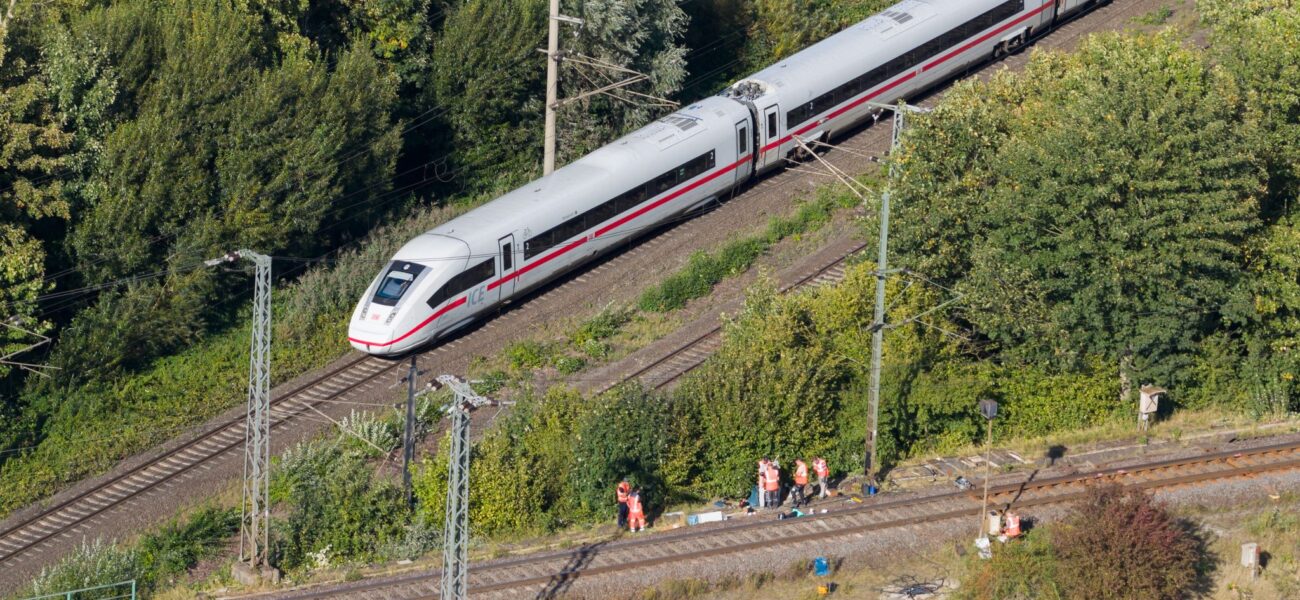
Berlin’s Tangled Wires: Dusseldorf Fire Reignites Sabotage Fears on German Rails
POLICY WIRE — Berlin, Germany — Forget your standard commute. For thousands across Germany’s industrial heartland, Tuesday’s morning journey became an instant object lesson in modern...

POLICY WIRE — Berlin, Germany — Forget your standard commute. For thousands across Germany’s industrial heartland, Tuesday’s morning journey became an instant object lesson in modern vulnerability. No grand declaration of war, no marching armies—just a plume of smoke near Dusseldorf, crippling a vital rail artery and exposing a raw nerve in Europe’s supposedly robust infrastructure. What’s chilling, say authorities, isn’t just the disruption, it’s the quiet suspicion now hovering over the charred remains: this wasn’t an accident. They’re thinking sabotage. But, who?
Germany, for all its economic might, just had its public transportation—the literal bloodstream of its economy—nicked. And not by happenstance, but by deliberate, malicious intent, if the early findings are correct. The federal police are knee-deep in an investigation, sifting through the evidence, looking for anything that points a finger. It’s a silent, gnawing dread for anyone relying on precision engineering and predictable timetables, which is pretty much everyone in Germany.
“We’re not ruling anything out,” stated Transport Minister Volker Wissing (CDU), his voice carefully calibrated during a hurried press conference. “Our nation’s infrastructure—our lifelines—must remain inviolable. Anyone seeking to undermine that will face the full force of justice.” He wasn’t smiling. But he did promise a swift return to normalcy, a political ritual often performed more for optics than genuine assurance when such elusive threats hang in the air. The economic ripples, though, had already begun, affecting everything from manufacturing shipments to individual travel plans.
Meanwhile, behind the velvet ropes of federal security agencies, the whispers are less public-facing, more grim. An official speaking on background—we’ll call him ‘Dr. Schmidt’ for discretion’s sake, a veteran intelligence analyst—remarked, “We’ve seen a concerning uptick in attempts to exploit our networks, both digital and physical. The motivation often remains opaque, but the objective is clear: create chaos, sow distrust. It’s a game of asymmetric warfare played on our own doorstep, often with minimal resources. We have to be on guard.” Schmidt’s analysis points to a world where even a single determined individual, or a small group, can trigger disproportionate disruption.
This incident throws into stark relief the fragility inherent in highly interconnected systems. Think about it: Germany’s rail network moves over 5.5 million passengers and 600,000 tonnes of freight *daily* according to Deutsche Bahn’s operational reports. Any significant interruption immediately cascades through supply chains, manufacturing schedules, — and daily lives. It’s an economic drag, pure and simple. And it breeds uncertainty, a corrosive agent for any robust market.
It’s easy to dismiss a fire in Dusseldorf as a localized issue. But consider the psychological impact. Every delay, every suspicious occurrence, gets filtered through a new lens of vulnerability. This isn’t just about German efficiency anymore; it’s about the broader question of national resilience in a turbulent world. Because when such fundamental pillars are rattled, whether by cyber intrusions or physical sabotage, it plants seeds of doubt about internal stability—something not lost on other nations grappling with similar challenges to their critical infrastructure.
📄 POLICY WIRE WHITEPAPER PUBLISHED: PAKISTAN'S NATIONAL SECURITY POLICY PRIORITIES
👉 READ BY CLICKING HEREFrom Berlin to Lahore, from New York to Karachi, the global economy often functions on an assumed bedrock of secure supply lines. German factories humming mean jobs in Pakistan’s textile sector, as specialized machinery arrives on time. Delays here reverberate far and wide. They might not trigger international diplomacy, but they certainly squeeze the margins for countless small businesses globally. It’s an inconvenient truth: the world’s interconnectedness is both its greatest strength and its most exposed vulnerability.
What This Means
This isn’t just a police matter; it’s a political headache — and an economic warning. Politically, the German government finds itself under pressure to demonstrate competence and control in a domain—internal security—that’s increasingly porous. The ease with which such an attack *could* occur, or *did* occur, if sabotage is confirmed, means heightened security reviews and potentially significant new investments in safeguarding everything from fiber optic cables to remote railway switches. Expect cries for more surveillance, and a lively debate about balancing security with civil liberties—a perennial German tussle.
Economically, the message is clearer still: reliance on just-in-time logistics and sprawling supply chains means any chink in the armor—like a strategically targeted fire—can create immediate, costly bottlenecks. Germany, a manufacturing titan, simply can’t afford such disruptions. The fear now is that this incident isn’t an anomaly, but rather a blueprint. Other states in the region, already on edge from geopolitical instabilities, will be scrutinizing this situation. It serves as a stark reminder that even the most advanced industrial nations aren’t immune to basic, analog threats. It makes you wonder how long the world can sustain its present hyper-connectivity if core infrastructure remains so relatively easy to compromise. There are ongoing, low-grade battles playing out daily in boardrooms and factories across Europe over security and resilience; this Dusseldorf incident just dragged one onto the main stage.