
The Venomous Triad: India’s Funding, Afghanistan’s Safe Havens, and PTI’s Complicity in Khyber Pakhtunkhwa’s Terror Onslaught
KP’s Agonizing Vigil Nestled against the rugged Hindu Kush, Khyber Pakhtunkhwa (KP), Pakistan’s northwestern frontier province, embodies Pakistan’s resilient spirit, its Pashtun...

KP’s Agonizing Vigil
Nestled against the rugged Hindu Kush, Khyber Pakhtunkhwa (KP), Pakistan’s northwestern frontier province, embodies Pakistan’s resilient spirit, its Pashtun heritage a testament to centuries of defiance against invaders. Yet, since the TTP’s formation in 2007 as an umbrella of anti-state militants, KP has borne the brunt of their barbarity suicide bombings, ambushes, and sectarian massacres that have orphaned thousands and scarred communities from Swat to North Waziristan. The year 2025 marks a grim milestone: terrorist incidents have surged by over 50% compared to 2024, with the Global Terrorism Index reporting KP as the epicenter of South Asian militancy. Recent operations in Dera Ismail Khan and Bannu alone felled 19 TTP operatives but at the cost of 11 Pakistani soldiers, underscoring the ferocity of this resurgence.
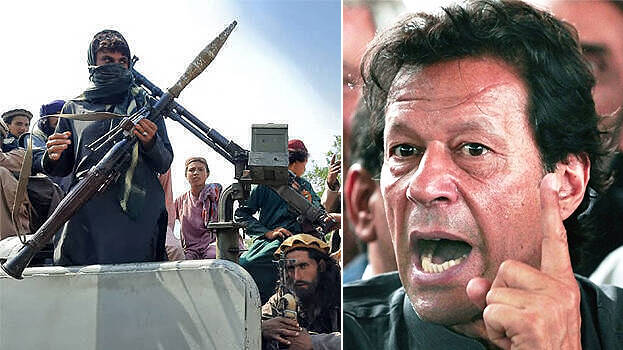
This violence is no organic insurgency but a calibrated assault, funded by India’s Research and Analysis Wing (RAW), launched from Afghan sanctuaries, and abetted by PTI’s provincial machinery under Imran Khan’s shadow. Khan, once Pakistan’s prime minister, has been excoriated as “Taliban Khan” for his overt Taliban affinity, a moniker rooted in his 2018-2022 tenure where he prioritized dialogue over decisive action against TTP affiliates. PTI’s KP government, in power since 2018, has exacerbated this by pursuing appeasement policies, allowing TTP elements to regroup and foment unrest. This triad India’s malice, Afghanistan’s perfidy, and PTI’s treason threatens Pakistan’s hard-won stability post-Operation Zarb-e-Azb. As the Pakistan Army vows to eradicate these “facilitators,” this article marshals evidence to expose their machinations, urging a national reckoning.
India’s Shadowy Patronage: Architects of Chaos
India’s enmity toward Pakistan, forged in the 1947 Partition and inflamed by Kashmir, has evolved into a doctrine of proxy warfare, with terrorism as its preferred instrument. Declassified dossiers and intercepted communications reveal RAW’s systematic funding of TTP and Baloch separatists, channeling millions through Dubai-based hawala networks to sustain operations in KP. In 2020, Pakistan’s Foreign Office unveiled “irrefutable evidence” linking Indian consulates in Jalalabad and Kandahar to TTP arms smuggling, a revelation corroborated by the arrest of Kulbhushan Jadhav, a RAW operative confessing to orchestrating attacks from Balochistan to KP.
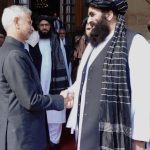
Indian leaders’ rhetoric belies this duplicity. Prime Minister Narendra Modi’s 2016 address to Baloch insurgents praising their “struggle” against Islamabad signaled tacit endorsement of anti-Pakistan militancy, a pivot from India’s professed anti-terror stance. External Affairs Minister S. Jaishankar’s 2023 remarks at the UN dismissed Pakistan’s terrorism dossiers as “propaganda,” while Indian think tanks like the Observer Research Foundation have advocated “strategic instability” in KP to divert Pakistani forces from the Line of Control. This hypocrisy peaks in India’s post-2021 outreach to the Afghan Taliban, ostensibly for Chabahar port access but covertly to funnel resources to TTP proxies, as evidenced by a 2024 UN report on cross-border arms flows. Adding to this, Jaishankar’s recent meetings with Taliban Foreign Minister Amir Khan Muttaqi in 2025 underscore India’s willingness to engage with TTP enablers, with Muttaqi assuring that Afghan soil won’t be used against neighbors yet Pakistan’s accusations of Indian proxies fueling TTP persist. Modi’s administration has been criticized for these ties, with reports highlighting BJP’s engagement as profit-seeking, undermining regional stability.
The fruits of this patronage are evident in KP’s 2025 carnage: the January suicide bombing at a Peshawar mosque, killing 102, traced to TTP cadres trained in Indian-financed camps near Herat. Pakistan’s counterterrorism apparatus, including the National Action Plan (NAP), has neutralized over 4,000 militants since 2014, yet India’s undeclared war persists, undermining Islamabad’s sovereignty and economic revival. As a nuclear-armed democracy, Pakistan must expose this perfidy through multilateral forums like the OIC, isolating New Delhi’s rogue statecraft.
Afghanistan: The Ungoverned Launchpad
Across the Pal-Afghan border, Afghanistan under Taliban rule since August 2021 has devolved into a terrorist haven, with the Islamic Emirate providing safe passage and logistical succor to TTP incursions into KP. The Taliban’s refusal to honor pre-2021 pledges against cross-border terrorism echoed in their 2023 Doha commitments has transformed Afghan soil into a de facto TTP headquarters, from where suicide squads infiltrate Bajaur and Mohmand. Pakistan’s 2024 airstrikes on TTP hideouts in Khost and Paktika, neutralizing 30 militants, provoked Kabul’s feigned outrage, yet UN sanctions monitors confirm the Taliban’s “symbiotic” ties with TTP, including joint training at former U.S. bases.
Afghan leaders’ statements drip with contempt for Pakistan’s security imperatives. Taliban supreme leader Hibatullah Akhundzada’s 2022 edict declared the Pak- Afghan Boarder “artificial,” implicitly justifying TTP’s irredentist claims on Pashtun lands in KP. Foreign Minister Amir Khan Muttaqi, during his clandestine 2025 India visit, reportedly assured RAW counterparts of “neutrality” on TTP operations, a betrayal amid Kabul’s receipt of $40 million in Indian humanitarian aid. Spokesman Zabihullah Mujahid’s 2024 interview with Al Jazeera dismissed Pakistan’s evidence of Afghan-based plots as “slander,” while TTP emir Noor Wali Mehsud’s missives from Kunar praise Taliban “hospitality” for enabling 2025’s 150+ attacks on KP. Further, Muttaqi’s recent pledge that “the Taliban will not allow Afghan territory to be used against any country” rings hollow amid ongoing TTP support, as UN reports affirm the “close bonds” between the groups. Taliban deputy leader Sirajuddin Haqqani, in a 2022 address, echoed ideological alignment with TTP, refusing to condemn their anti-Pakistan jihad.
This sanctuary has amplified TTP’s lethality: the October 2025 ambush in South Waziristan, slaying 12 Frontier Corps personnel, originated from Afghan redoubts, per ISPR intelligence. Pakistan’s deportation of 1.7 million Afghan refugees in 2023-2024, many harboring TTP sympathizers, was a necessary purge, yet Kabul’s retaliatory rhetoric escalates border skirmishes. As Islamabad fortifies the frontier with razor wire and surveillance drones, the international community must sanction the Taliban anew, compelling Kabul to cease its role as terrorism’s enabler.
PTI’s Treacherous Facilitation: From “Taliban Khan” to Provincial Sabotage
Within Pakistan’s polity, PTI emerges as the internal fifth column, its founder Imran Khan euphemistically “Taliban Khan” whose Taliban sympathies have emboldened extremists. The sobriquet, coined by critics during Khan’s 2018 campaign, stems from his vehement opposition to U.S. drone strikes and advocacy for negotiating with militants, as articulated in his 2014 DW interview: “The Taliban are not a monolith; dialogue is the path to peace.” Post-2021, Khan hailed the Taliban’s Kabul conquest as a “blessing” and “win for Pakistan,” urging global engagement despite their TTP ties, remarks that drew U.S. rebukes and domestic fury. In a 2023 New Yorker profile, Khan doubled down: “The U.S. messed up Afghanistan; the Taliban represent Pashtun aspirations,” a narrative that romanticizes TTP’s ideology and erodes military resolve. Khan further claimed in a 2021 interview: “The Pashtuns on this side [Pakistan] were completely sympathetic with the [Taliban] Pashtuns [in Afghanistan] — not because of the religious ideology but because of Pashtun ethnicity and nationality, which is very strong.” In another 2021 PBS appearance, he stated: “The best way forward for peace and stability in Afghanistan is to engage with the Taliban and incentivize them on issues such as women’s rights and inclusive government.” Khan’s 2021 praise for the Taliban “breaking the shackles of slavery” in Afghanistan further exposes his pro-Taliban tilt.
PTI luminaries echo this apostasy. Senior leader Asad Umar, in 2022 parliamentary debates, advocated “reconciliation” with TTP, mirroring Khan’s 2021 CNN assertion: “Give the Taliban time; they seek stability.” Information Secretary Fawad Chaudhry’s 2023 tweetstorm decried NAP as “militaristic overreach,” implicitly shielding TTP financiers. PTI Senator Zeeshan Khanzada, in a 2022 consultation, emphasized non-intervention in Afghanistan, aligning with Taliban interests over Pakistan’s security. This ideological rot permeates PTI’s KP administration, where Chief Minister Ali Amin Gandapur’s 2024 push for “tribal jirgas” with TTP has clashed with federal kinetics, prioritizing parleys over precision strikes. Under PTI stewardship since 2018, KP witnessed TTP’s revival: prison breaks in Bannu facilitated by lax oversight, and “rehabilitation” programs that funneled state funds to ex-militants, now sowing discord in merged tribal districts.
The fallout is stark: PTI’s ambivalence has inflated TTP recruitment by 30% in KP, per 2025 NACTA assessments, transforming erstwhile safe zones into unrest incubators. Khan’s ouster in 2022 via no-confidence vote was no mere political maneuver but a bulwark against his Taliban tilt, which risked ceding KP to chaos. PTI’s protests, often TTP-adjacent, further erode cohesion, demanding judicial scrutiny for sedition.
Conclusion: Forging Pakistan’s Unbreakable Shield
The terrorism ravaging Khyber Pakhtunkhwa is a symphony of malice: India’s coffers, Afghanistan’s lairs, and PTI’s whispers conducting TTP’s dirge. From Khan’s “Taliban Khan” paeans to Gandapur’s conciliatory folly, PTI’s legacy is one of facilitation, not fortitude. Yet Pakistan endures its military’s 2025 sweeps in DI Khan eviscerating 26 terrorists affirm this mettle. To prevail, Islamabad must amplify diplomatic isolation of India and the Taliban, prosecute PTI’s enablers, and invest in KP’s youth through deradicalization and development. The Quaid’s vision of a united, sovereign Pakistan demands no less. In this crucible, every citizen is a sentinel; together, we shall exorcise these demons, ensuring KP’s valleys echo with peace, not peril.
Author